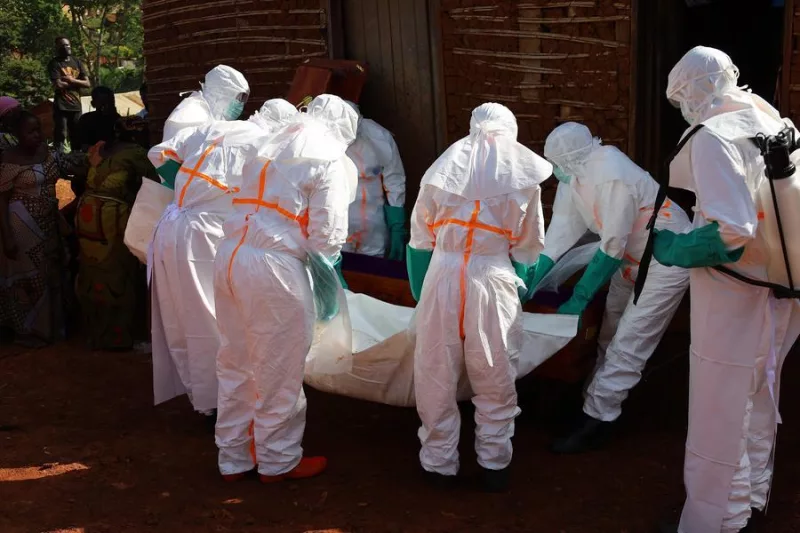
Kenya's Health Cabinet Secretary Aden Duale confirmed the country's first case of Ebola, a Kenyan who had lived in the Democratic Republic of Congo. The patient became ill in DRC, traveled by road to Kampala, then flew to Nairobi, and was taken to Nairobi Hospital by relatives. He was isolated and tested, and both the National Virology Reference Laboratory and KEMRI independently confirmed the Bundibugyo strain. Tragically, he died within days of landing.
The patient had 28 contacts, including family members and health workers, who are in isolation, while 23 passengers and four crew from his flight are being traced. Each will wait out 21 days. Kenya has confirmed an imported Ebola case, not an Ebola outbreak. A virus entering a country and a virus establishing sustained transmission within that country are different epidemiological events. One tests the permeability of borders, and tests detection.
The distinction between an imported case and an outbreak is crucial. If no contact falls ill, this episode will close as one imported case, and one death. If even one contact becomes infected, Kenya will record its first locally acquired infection, changing the description, response, and global reaction. Precedents exist; in 2014, a young man traveled from Guinea to Dakar carrying Ebola, and Senegal traced his contacts, with no further cases.
The Ebola case raises questions about Kenya's preparedness and systemic gaps. The incident highlights the need to examine what happens when the first layer of screening fails. Does the hospital recognize the risk? Does somebody ask the travel-history question? Is the patient isolated? Can a specimen be collected safely? Can Kenya confirm the diagnosis itself? Can contact tracing be done rapidly and effectively?
In this case, several important measures worked; the patient was isolated, and the government had the capacity to confirm the disease domestically. The government observed International Health Regulations on WHO notification, and contact tracing began immediately. Kenya has been preparing for months, with over 652,000 incoming travelers screened, 267 suspected samples tested, and roughly 5,000 health workers trained in Ebola prevention and management.
WHO reports that Kenya's preparedness score increased from 66 percent in May to 82 percent in July. However, preparedness is often underappreciated, as its greatest achievement is that something does not happen. Laboratories that stand ready but receive no positive samples may appear underutilized, and health workers trained for an outbreak that never arrives may seem to have attended just another workshop.
The imported case has made Kenya's preparedness auditable, and the focus should shift to identifying weaknesses illuminated by this case. The incident highlights the importance of information and public cooperation. A public health system works differently when travelers accurately disclose symptoms and travel history. Effective communication of risk is crucial to prevent further transmission.
Key points
- Kenya confirms first Ebola case in a patient who traveled from DRC
- The case triggers concerns over systemic gaps in preparedness and detection
- WHO reports Kenya's preparedness score increased from 66 percent to 82 percent between May and July