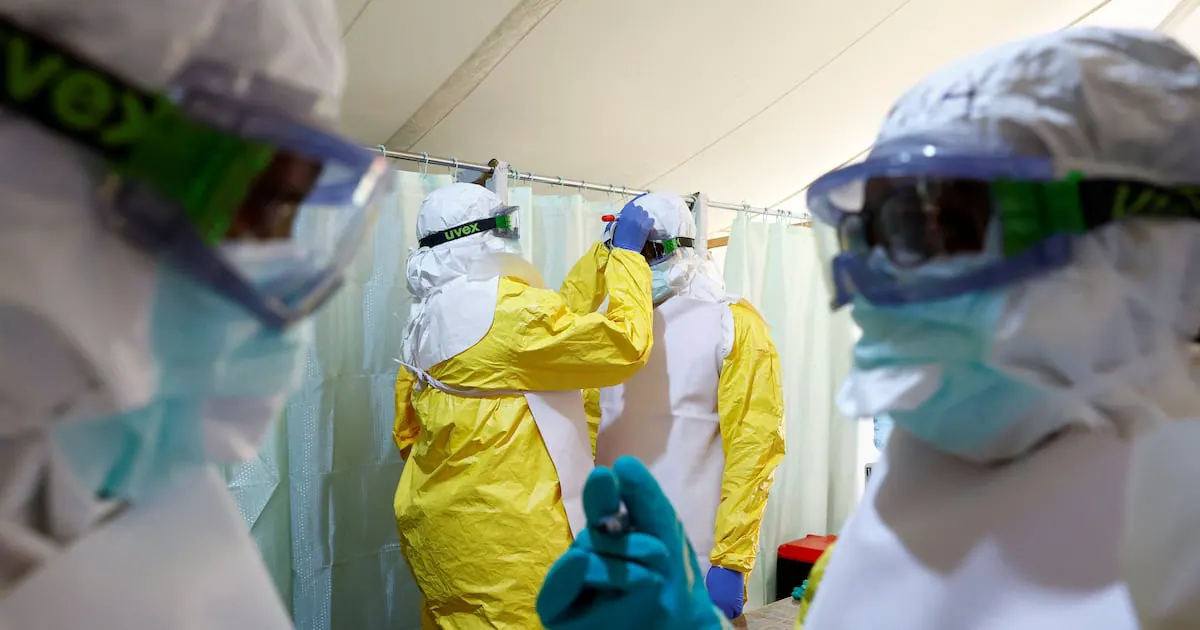
Kenya has confirmed its first Ebola case, with a Kenyan citizen dying in Nairobi after traveling from the Democratic Republic of Congo. The patient, who had lived in the Congo for seven years, had been ill for about a month before traveling by road to Uganda's capital, Kampala, and then flying to Nairobi. Kenya's health minister, Aden Duale, reported that the patient had passed through health screening at Nairobi's international airport before being taken to Nairobi Hospital by a relative.
The patient was admitted to the hospital with symptoms including fever, chills, and bleeding beneath the skin, and was quickly placed in isolation. Despite medical efforts, the patient died late on Monday. The Africa Centres for Disease Control and Prevention (Africa CDC) has dispatched a high-level team to Kenya to provide support, emphasizing the importance of sustained preparedness across the region to combat the outbreak.
This case marks Kenya as the fourth country to record a case linked to the Ebola epidemic in eastern DRC, which has reported over 8,000 cases, the second-largest outbreak on record. The DRC outbreak, caused by the rare Bundibugyo strain, has been blamed for more than 4,000 deaths since it was declared in mid-May. The strain can cause fever, vomiting, diarrhea, and, in severe cases, internal and external bleeding.
The World Health Organisation (WHO) has expressed support for the Kenyan and Ugandan governments, recommending against travel restrictions on countries affected by the outbreak. WHO director-general Tedros Adhanom Ghebreyesus stated that the organization is working closely with local authorities to manage the situation. The Kenyan government has identified 28 people who came into contact with the patient, including relatives and healthcare workers.
Health authorities are working to trace another 23 passengers and four crew members who were on the patient's Jambojet flight. Kenya's health ministry director-general, Patrick Amoth, suggested that the patient may have passed through airport screening because medication had masked his symptoms. The incident has raised questions about the effectiveness of measures in place to prevent the spread of the virus across borders.
The Kenyan government has taken steps to enhance preparedness, with nearly 5,000 health workers trained on prevention and management. The UN's senior Ebola coordinator, Julien Harneis, expressed confidence in Kenya's ability to manage the disease, expecting a "solid health response." However, concerns remain about the potential for further spread, particularly given the porous borders in the region.
The patient was scheduled to be buried on Tuesday under protocols designed to prevent further spread of the virus. Meanwhile, Uganda has denied any involvement in the case, with government spokesperson Alan Kasujja stating that the country does not have Ebola. A 50-bed Ebola quarantine camp built by the US on an air force base in central Kenya remains empty, but Kenyan officials have indicated it could be used to receive patients.
Key points
- The patient, a Kenyan citizen, died in Nairobi after traveling from the Democratic Republic of Congo.
- The Africa CDC has dispatched a high-level team to Kenya to provide support and enhance preparedness.
- The incident has raised questions about the effectiveness of measures in place to prevent the spread of the virus across borders.