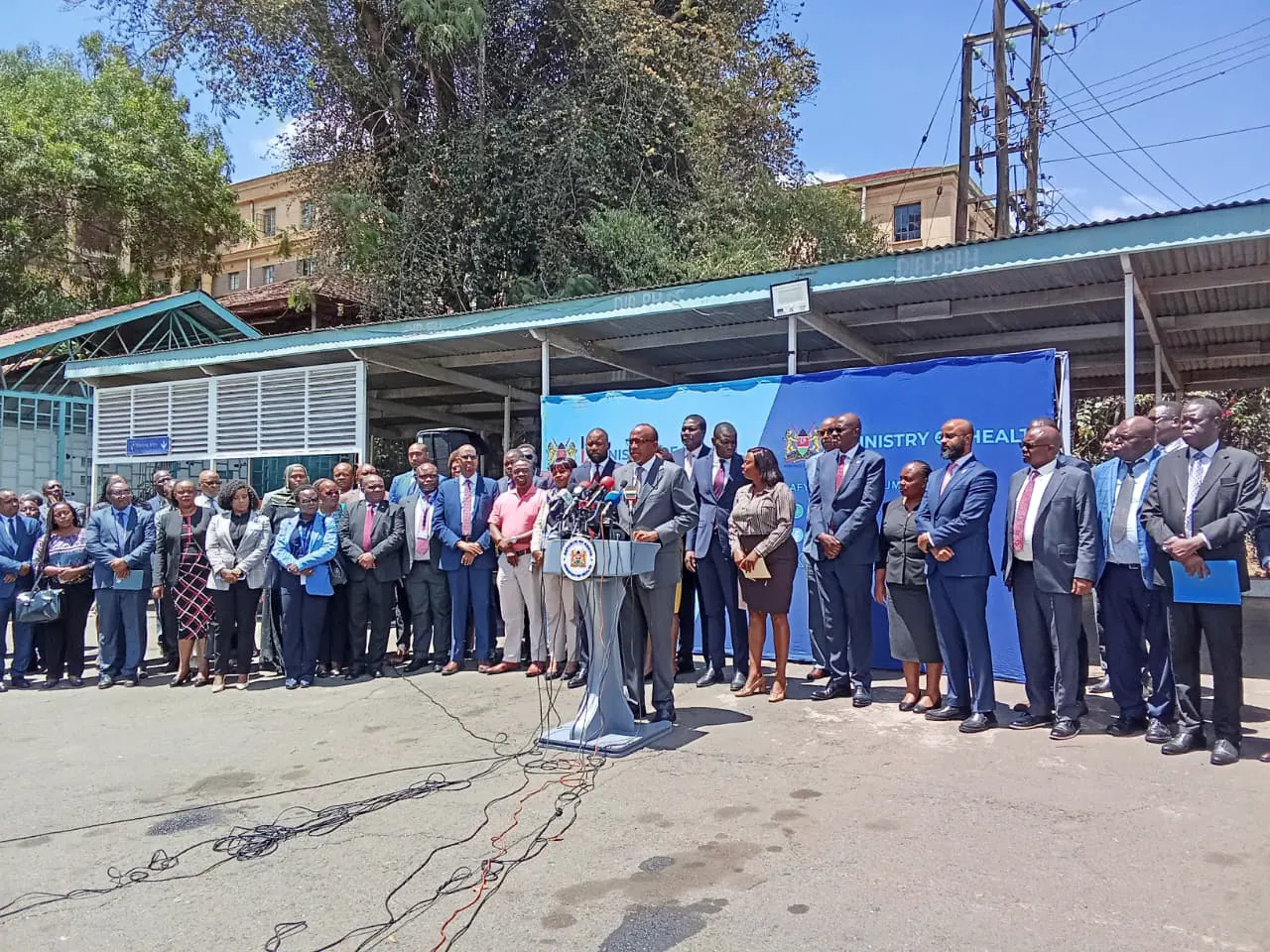
Kenya has confirmed its first case of Ebola, according to Health Cabinet Secretary Aden Duale. The patient, a Kenyan citizen living in the Democratic Republic of Congo (DRC), traveled by road from the DRC to Kampala before boarding a flight to Nairobi, arriving on Saturday, October 3, 2026, at 1:10 PM. The patient had been living in the DRC for seven years and fell ill about a month ago.
The patient was admitted to a Nairobi hospital after presenting with symptoms including fever, chills, intense fatigue, muscle pain, sore throat, and bleeding under the skin at injection sites. Duale stated that based on the patient's presentation and travel history to the DRC, a doctor considered the case as Viral Haemorrhagic Fever. The patient was screened at the Port Health and Immigration desk before being taken to Nairobi Hospital, where they were isolated and later transferred to the hospital's East Wing Isolation Facility.
Laboratory tests confirmed the case as Ebola Bundibugyo Virus Disease at the National Virology Reference Laboratory and KEMRI laboratory. Duale reported that 28 contacts, including family members and health workers, have been identified, while authorities are tracing 23 passengers and four crew members who were on the same flight as the patient. So far, 652,584 travelers have been screened, and 267 samples have been tested since Kenya heightened surveillance for Ebola.
The Ministry of Health has heightened surveillance and testing for Ebola, with 267 samples tested and only one returning positive. Duale reassured the public that all systems are in place to mitigate the spread of the disease and urged them not to panic. He emphasized the importance of maintaining frequent handwashing, avoiding close contact with sick people arriving from countries reporting active Ebola transmission, and seeking care at recognized health facilities when unwell.
The patient received treatment in several hospitals while in the DRC before traveling to Kenya. Kenya has been proactive in its response to the Ebola outbreak, with the Ministry of Health working to contain the spread of the disease. Authorities are working to quarantine those at risk to protect the public.
The public has been advised to take precautions to prevent the spread of Ebola. This includes avoiding close contact with sick people arriving from countries reporting active Ebola transmission and seeking care at recognized health facilities when unwell. The Ministry of Health continues to monitor the situation and provide updates.
Kenya's first Ebola case has prompted a swift response from health authorities, who are working to contain the spread of the disease. The Ministry of Health will continue to provide updates and guidance to the public.
Key points
- The patient, a Kenyan citizen, traveled from the DRC via Uganda before arriving in Kenya.
- Laboratory tests confirmed the case as Ebola Bundibugyo Virus Disease.
- Authorities have identified 28 contacts and are tracing 23 passengers and four crew members who were on the same flight as the patient.