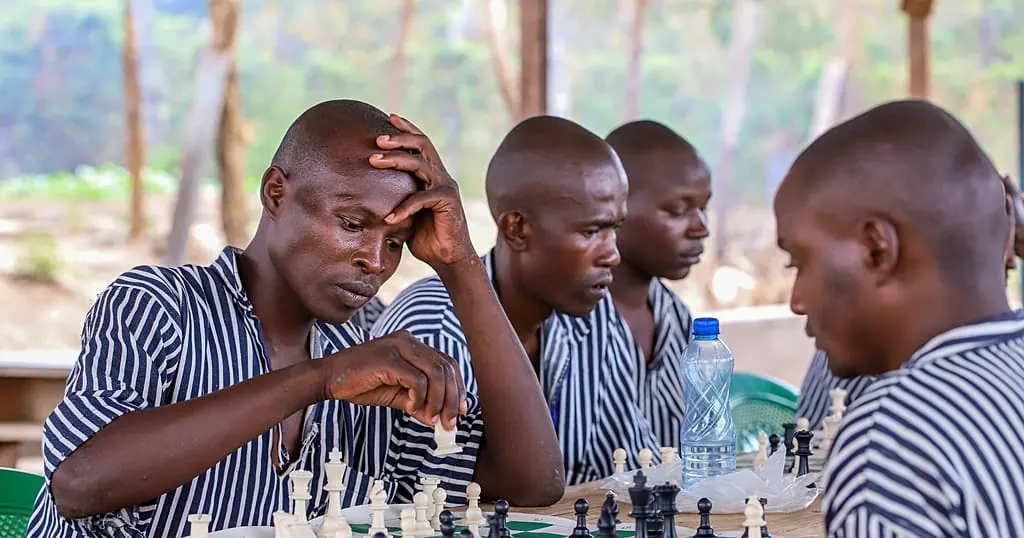
In Kenya, prisoners have been embracing the game of chess as a way to pass time and aid in their rehabilitation. Brian Gatonye, a 28-year-old inmate serving a three-year sentence for assault, has been playing chess for about 18 months. He credits the game with teaching him valuable life skills, such as patience and wise decision-making. Gatonye says that before acting, he now takes a moment to consider the consequences of his actions.
The increasing popularity of chess among Kenyan prisoners has led to its incorporation into rehabilitation programs in the country's prisons. Humphrey Young, Superintendent of Maranjau Prison, notes that many inmates are petty offenders who have committed crimes like assault. Through chess, they can learn to manage their anger and develop skills to live harmoniously with society. The introduction of chess aims to rehabilitate offenders and prepare them for reintegration into society.
The benefits of chess in rehabilitation programs are not limited to individual prisoners. Phyllis Ngigi, director of the Gift of Chess programme, a non-profit organization that distributes chess sets, believes that the game can help reduce recidivism rates. Research has shown that chess can help inmates develop patience, make better decisions, and manage their anger. By keeping prisoners engaged and focused, chess provides a constructive outlet for their energy.
The Gift of Chess programme has been instrumental in promoting the game in Kenyan prisons. The organization, along with government and international chess federation support, has helped establish chess programs in several prisons. These programs have been operating for several years, with a growing number of inmates participating. The initiative aims to provide prisoners with a positive and productive way to spend their time.
Brian Gatonye's experience with chess is a testament to the game's positive impact. He says that playing chess has helped him become less impulsive and more thoughtful in his decision-making. Gatonye's newfound skills will likely benefit him after his release in November next year. By learning valuable life skills through chess, inmates like Gatonye can increase their chances of successful rehabilitation.
The Kenyan government's support for chess programs in prisons reflects its commitment to rehabilitation and reducing recidivism rates. By partnering with organizations like the Gift of Chess programme, the government can provide prisoners with constructive activities that promote personal growth and development. As the popularity of chess continues to grow among Kenyan prisoners, its benefits are likely to extend beyond the prison walls.
As chess programs expand in Kenyan prisons, their impact on rehabilitation and recidivism rates will be closely monitored. With the support of organizations like the Gift of Chess programme and government backing, the game is poised to continue making a positive difference in the lives of prisoners. Key initiatives like these can contribute to a safer and more rehabilitative prison environment.
Key points
- Chess has become part of rehabilitation programs in Kenyan prisons to help inmates manage anger and develop life skills.
- The Gift of Chess programme has distributed chess sets to prisons and believes the game can reduce recidivism rates.
- Chess programs in Kenyan prisons have been supported by the government and international chess federation.