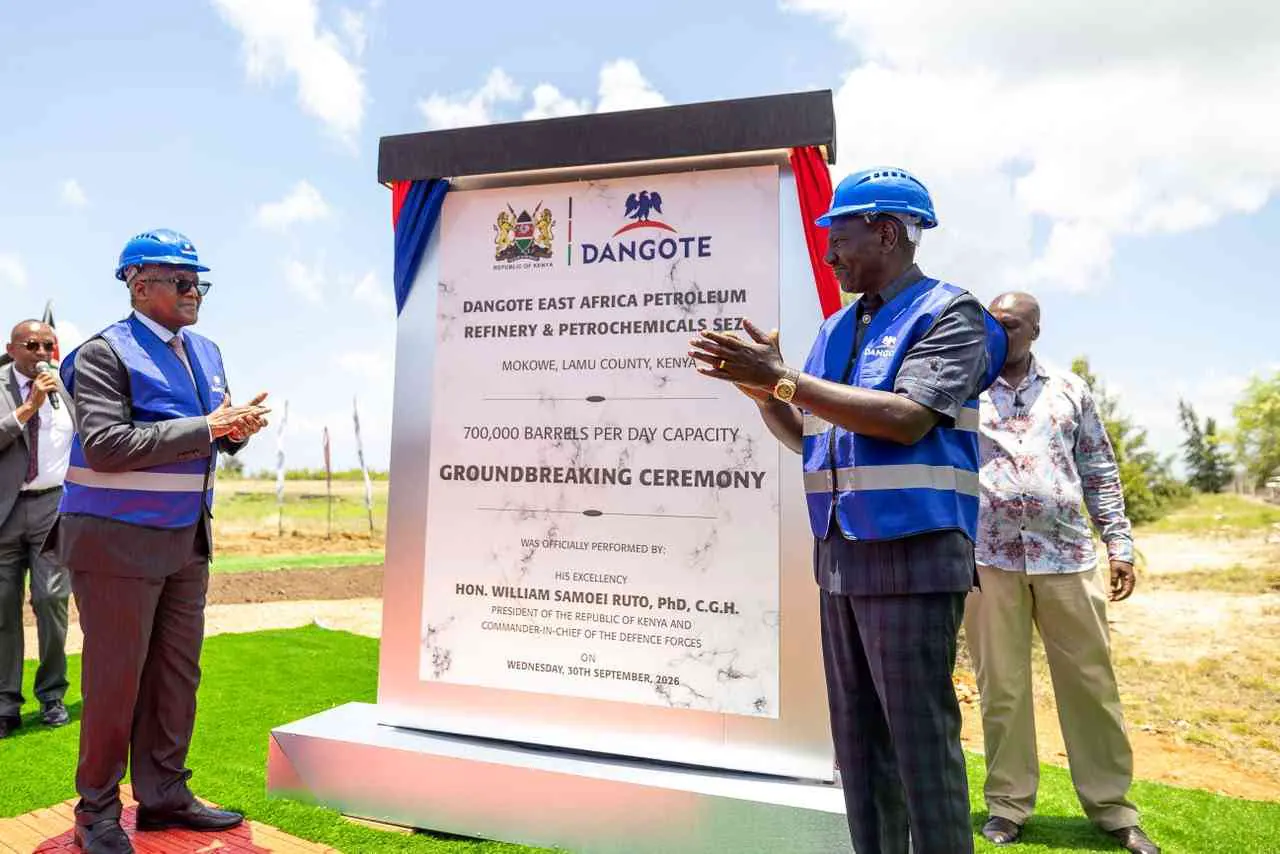
On Wednesday, President William Ruto and businessman Aliko Dangote marked the beginning of construction on the Sh2.2 trillion Lamu oil refinery. The project, despite facing a court battle over land, has the backing of the Kenyan government and Dangote Group. Ruto emphasized the project's significance, stating it would support regional development and industrialization. The refinery is expected to process 700,000 barrels of crude oil per day, supplying refined petroleum products to Kenya and East Africa.
The project has encountered a hurdle with over 130 residents moving to court over the land earmarked for the refinery. Protesters took to the streets on Tuesday, demanding that their concerns be addressed before the project proceeds. The Malindi Environment and Land Court has ordered parties to maintain the status quo on the disputed land until October 14. However, Dangote remains resolute, dismissing concerns that the court case would deter him from the project.
Dangote expressed readiness to face those challenging the investment, stating, "We are not really scared of people taking us to court. Anybody who wants to cause trouble, we are ready for his trouble and we will give him headache." Ruto also warned against attempts to use court cases or demands for money to frustrate investors, assuring that the government would support the project.
The Lamu oil refinery is designed to generate up to 1,000 megawatts of electricity and create demand for transporters, engineers, contractors, and service providers. Ruto linked the investment to Kenya's dependence on imported petroleum products, stating that the country spent Sh530 billion last year on petroleum imports. The refinery is expected to anchor wider industrial development around Lamu Port.
The project is a partnership between the government and the private sector, with the state providing policy, infrastructure, and regulation. The government will take a stake in the refinery by deploying public assets and using the National Infrastructure Fund. Ruto confirmed that Kenyans would have an opportunity to buy shares in the refinery through the Nairobi Securities Exchange.
The groundbreaking ceremony was attended by several African leaders, including Ethiopian Prime Minister Abiy Ahmed, Uganda President Yoweri Museveni, and Benin President Patrice Talon. Dangote has pledged to complete the refinery within 40 months. The project aims to help Africa retain more value from its natural resources by processing raw materials closer to the markets where they are consumed.
Ruto described the investment as a significant step towards energy security, industrialization, and regional integration. He emphasized that the refinery would not eliminate Kenya's import bill overnight but would support the growth of petrochemical and manufacturing industries around Lamu. The project is expected to create opportunities for businesses linked to transport, energy, construction, and manufacturing.
Key points
- The Lamu oil refinery project has the backing of the Kenyan government and Dangote Group despite a court challenge from over 130 residents.
- The project aims to process 700,000 barrels of crude oil per day and supply refined petroleum products to Kenya and East Africa.
- The refinery is expected to generate up to 1,000 megawatts of electricity and create demand for transporters, engineers, contractors, and service providers.