Kenya has launched an intensive contact-tracing and quarantine operation after confirming its first Ebola death. The fatality involves a Kenyan man who had lived in the Democratic Republic of the Congo (DRC) for several years and became ill there during an ongoing Ebola outbreak. He travelled to Kenya for treatment through Kampala and Entebbe in Uganda on October 3 and went directly to hospital after arriving in Nairobi.
The World Health Organisation (WHO) and regional health partners are supporting efforts to prevent the imported case from developing into wider community transmission. WHO Representative in Kenya, Dr Neema Kimambo, said the next few days would be critical to determining whether the virus can be contained before it spreads within communities. The Kenyan government is working to identify all people who may have come into contact with the patient.
Health authorities have already identified several categories of contacts, including relatives, social contacts and health workers involved in the patient’s admission and treatment. About 10 relatives have been identified and placed under quarantine, according to Kimambo. Some of the relatives voluntarily came forward and had cooperated with health authorities as contact-tracing activities intensified.
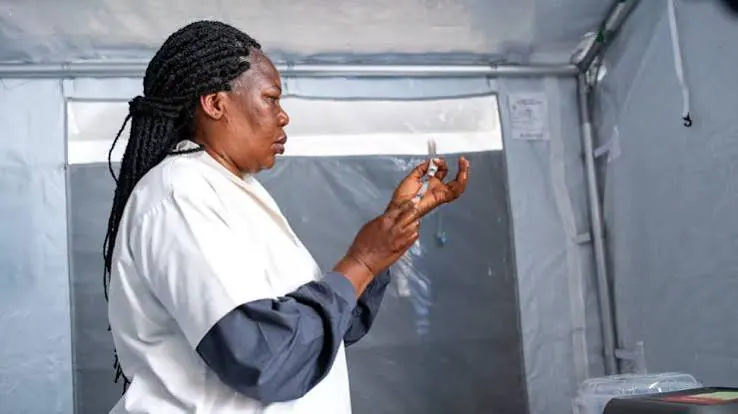
The response has also focused on healthcare workers who may have been exposed during the patient’s treatment. Twenty-one health workers, laboratory personnel and other hospital staff who attended to the patient have been contacted and assessed as part of the surveillance operation. Although infection-prevention and control measures were reportedly used by health professionals during the patient’s treatment, authorities are preparing to quarantine affected personnel.
The investigation has extended beyond hospitals and family members. The Kenyan government is working with the airline involved in the patient’s journey to identify approximately 23 passengers and four crew members who travelled on the flight linked to the case. The scale of the tracing operation reflects the importance of identifying potentially exposed people before they develop symptoms and potentially transmit the virus to others.
Health authorities are relying on quarantine, surveillance and rapid testing to break possible chains of transmission. Kimambo said the coming days would be particularly important because the incubation period could range between two and eight days. Effective contact listing and monitoring during this period could determine whether Kenya manages to contain the case or faces further infections.
The confirmed death has shifted Kenya’s preparedness efforts into an active containment operation. Public awareness will also be critical, with residents encouraged to maintain high standards of hygiene and reduce unnecessary physical contact. Anyone who develops symptoms is advised to seek medical attention promptly. The response carries wider regional significance, with continued coordination between Kenya, Uganda and the DRC important in monitoring cross-border movements and identifying potential contacts.
Key points
- The Kenyan government has launched a contact-tracing and quarantine operation to contain the spread of Ebola after confirming its first death.
- The WHO and regional health partners are supporting efforts to prevent the imported case from developing into wider community transmission.
- The response involves identifying and monitoring contacts, including relatives, health workers, and passengers who travelled on the same flight as the patient.