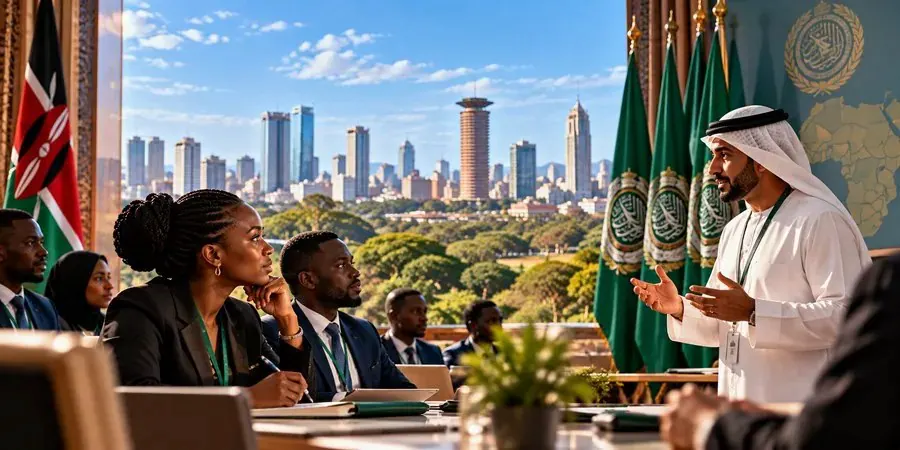
The second edition of the Diplomacy in the Middle East Region programme was held in Nairobi from 28 September to 2 October 2026. The programme was co-hosted by the League of Arab States Mission in Nairobi and Kenya's Foreign Service Academy. Diplomats and foreign-policy practitioners attended the five-day event, which examined political, economic, cultural, and geopolitical dynamics shaping the Middle East.
A senior official from Kenya's Foreign Service opened the programme, calling on participants to deepen their understanding of the forces reshaping regional policy and market conditions. The curriculum equipped Kenyan officials with frameworks relevant to active bilateral and multilateral engagement. This initiative aims to strengthen Africa-Middle East diplomatic ties through structured knowledge sharing and technical assistance.
The programme provides a platform for experience exchange among participants, allowing officials to test diplomatic approaches, compare regional assessments, and build working relationships before future negotiations begin. This peer learning extends the programme's value beyond the classroom. The League of Arab States, founded in 1945, brings deep institutional experience to the programme, giving Kenyan officials a structured entry point into Middle Eastern policy architecture and market dynamics.
Kenya already maintains active economic relationships with multiple Arab states, with trade, remittances, and infrastructure finance depending on consistent policy communication between ministries and counterpart institutions. The training programme enhances diplomatic capability, which may not produce immediate investment figures but raises the quality and speed of government-to-government dealings. This is particularly important in a corridor where commercial volumes are rising.
The involvement of the League of Arab States in the programme gives Kenyan officials a structured entry point into Middle Eastern policy architecture and market dynamics. For institutional investors and sovereign-fund managers, the programme signals a structural reinforcement of institutional channels that underpin cross-border cooperation. Strong diplomatic infrastructure supports faster deal execution and reduces friction in regulatory coordination.
The programme's second edition indicates continuity of intent on both sides, which is itself a market signal. Governments repeat frameworks they expect to need. As Africa-Middle East capital flows broaden across infrastructure, energy, and agribusiness, well-trained diplomatic cadres become a competitive advantage for host governments. Kenya is positioning its foreign service to meet that demand.
Investors and policymakers should watch for follow-on agreements, expanded programme cohorts, and joint working groups emerging from this year's Nairobi sessions as concrete indicators of deepening institutional alignment. The programme is a strategic move by Kenya to enhance its external engagement, particularly with Arab states. By investing in diplomatic training, Kenya is laying the groundwork for future cooperation and investment opportunities.
Key points
- The programme enhances diplomatic capability, which may not produce immediate investment figures but raises the quality and speed of government-to-government dealings.
- The involvement of the League of Arab States gives Kenyan officials a structured entry point into Middle Eastern policy architecture and market dynamics.
- Well-trained diplomatic cadres become a competitive advantage for host governments as Africa-Middle East capital flows broaden across infrastructure, energy, and agribusiness.