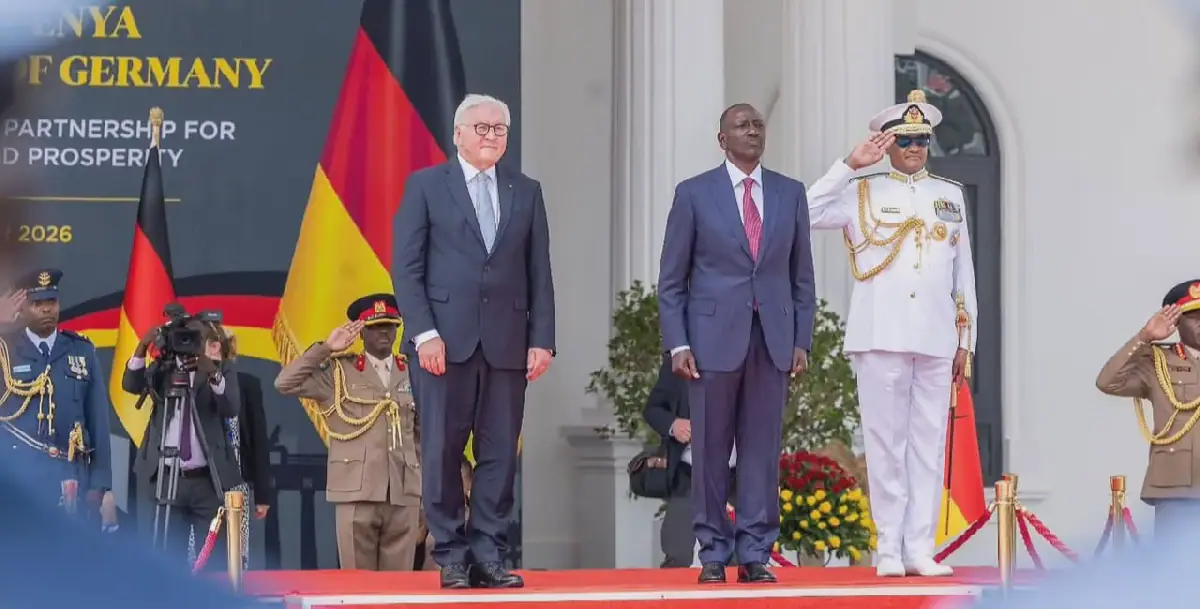
Kenya and Germany have agreed to expand employment opportunities for Kenyans seeking work in Europe. President William Ruto announced new measures to simplify recruitment procedures, improve German language training, and accelerate the recognition of professional qualifications. This follows bilateral talks between Ruto and German President Frank-Walter Steinmeier at State House in Nairobi on November 25, 2026.
The number of Kenyans employed in Germany has increased from 7,170 in March 2024 to 9,500 in March 2026, reflecting progress under the two countries' overseas employment partnership. The number of Kenyan trainees contributing to Germany's social security system also increased from 820 to 1,260 over the same period. These developments indicate a growing partnership between the two countries in the employment sector.
A key development during Steinmeier's visit was the signing of a Memorandum of Understanding between Kenya and telc, a German language examination and certification institution. This agreement aims to expand access to internationally recognized German language examinations and certification within Kenya. Prospective workers can now prepare for opportunities in the German labor market without having to travel abroad for the examinations.
The cooperation will involve introducing German language learning materials, vocational training resources, and support for institutions involved in language education. This includes teacher development and efforts to improve the quality and accessibility of German language training. The new certification arrangement does not automatically guarantee employment or visas; applicants must still satisfy professional, language, and immigration requirements.
Beyond employment, the discussions covered investment, trade, agriculture, technology, and development cooperation. Ruto welcomed Germany's commitment of €52.5 million in development cooperation funding for Kenya between 2026 and 2028. This funding builds on Germany's existing development partnership with Kenya, particularly in renewable energy, agriculture, water, and sanitation, infrastructure, and technical and vocational education.
The two countries also discussed opportunities to expand Kenyan exports to Germany and other European markets, including cut flowers, avocados, and fresh vegetables. Cooperation in agricultural mechanization, irrigation, climate-smart farming, and cold-chain infrastructure was also highlighted as an opportunity to improve productivity and strengthen food security. Digital cooperation and maritime cooperation were also explored during the talks.
Steinmeier's visit marks a significant step in Kenya and Germany's relationship, moving beyond traditional development cooperation towards greater trade, private-sector investment, technology transfer, and employment opportunities. The two countries have maintained diplomatic relations for over six decades, with Germany remaining one of Kenya's established development and economic partners.
Key points
- Kenya and Germany have agreed to expand employment opportunities for Kenyans seeking work in Europe.
- The number of Kenyans employed in Germany has increased from 7,170 in March 2024 to 9,500 in March 2026.
- Germany has committed €52.5 million in development cooperation funding for Kenya between 2026 and 2028.