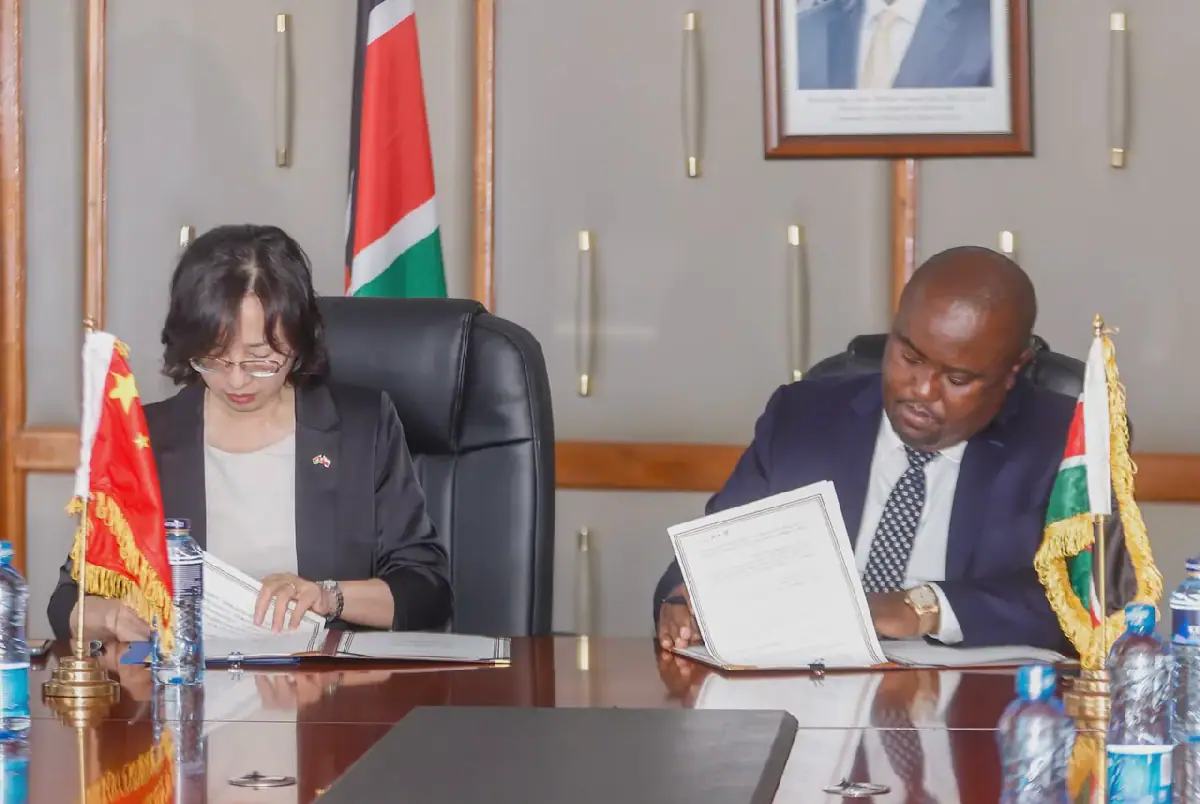
Kenya and China have partnered to bring solar power to underserved areas through the Africa Solar Belt Project. The project aims to deploy 80 solar systems to improve electricity access to off-grid communities. The agreement was signed by Kenya's Ministry of Energy and Petroleum and China's Ministry of Ecology and Environment. This initiative is part of China's broader climate cooperation efforts.
The Memorandum of Understanding (MoU) establishes the framework for the Africa Solar Belt Project. The project will install solar photovoltaic systems at selected locations, including Tana River and Kilifi counties, as well as Maasai Mara University. These installations will provide reliable electricity to schools, health facilities, and water supply systems. The goal is to enhance learning conditions, support digital education, and improve essential services.
The project will have a significant impact on schools, health facilities, and water systems. For schools, the project aims to improve learning conditions and support digital education. Health facilities and water systems will also benefit from a more consistent power supply. This will lead to improved delivery of essential services and better living conditions for communities beyond the national grid.
The United Nations Children's Fund (UNICEF) is supporting the programme with matching funds, technical expertise, and other resources. UNICEF's focus is on improving services for children and vulnerable communities. The government of Kenya and the People's Republic of China have stressed the importance of effective coordination to ensure the proper operation, maintenance, and long-term sustainability of the solar installations.
The initiative aligns with Kenya's Vision 2030 and the Bottom-Up Economic Transformation Agenda (BETA). These initiatives prioritize equitable access to essential services, inclusive development, and improved livelihoods. The project is part of China's Ten-Hundred-Thousand Initiative and the Belt and Road South-South Cooperation Initiative on Climate Change.
The signing of the MoU was attended by Chinese Ambassador to Kenya, Guo Haiyan, and Energy Principal Secretary, Alex Wachira. The two nations reiterated their commitment to strengthening cooperation in renewable energy and climate action. This partnership demonstrates Kenya and China's commitment to addressing climate change and improving the lives of their citizens.
The Africa Solar Belt Project is expected to have a lasting impact on the lives of communities in Kenya. With the deployment of 80 solar systems, thousands of people will have access to reliable electricity. This will lead to improved education, healthcare, and economic opportunities. The project's success will depend on effective coordination and maintenance of the solar installations.
Key points
- Kenya and China have partnered to deploy 80 off-grid solar power systems to improve electricity access in remote communities.
- The project aims to enhance learning conditions, support digital education, and improve essential services.
- The initiative aligns with Kenya's Vision 2030 and the Bottom-Up Economic Transformation Agenda (BETA).