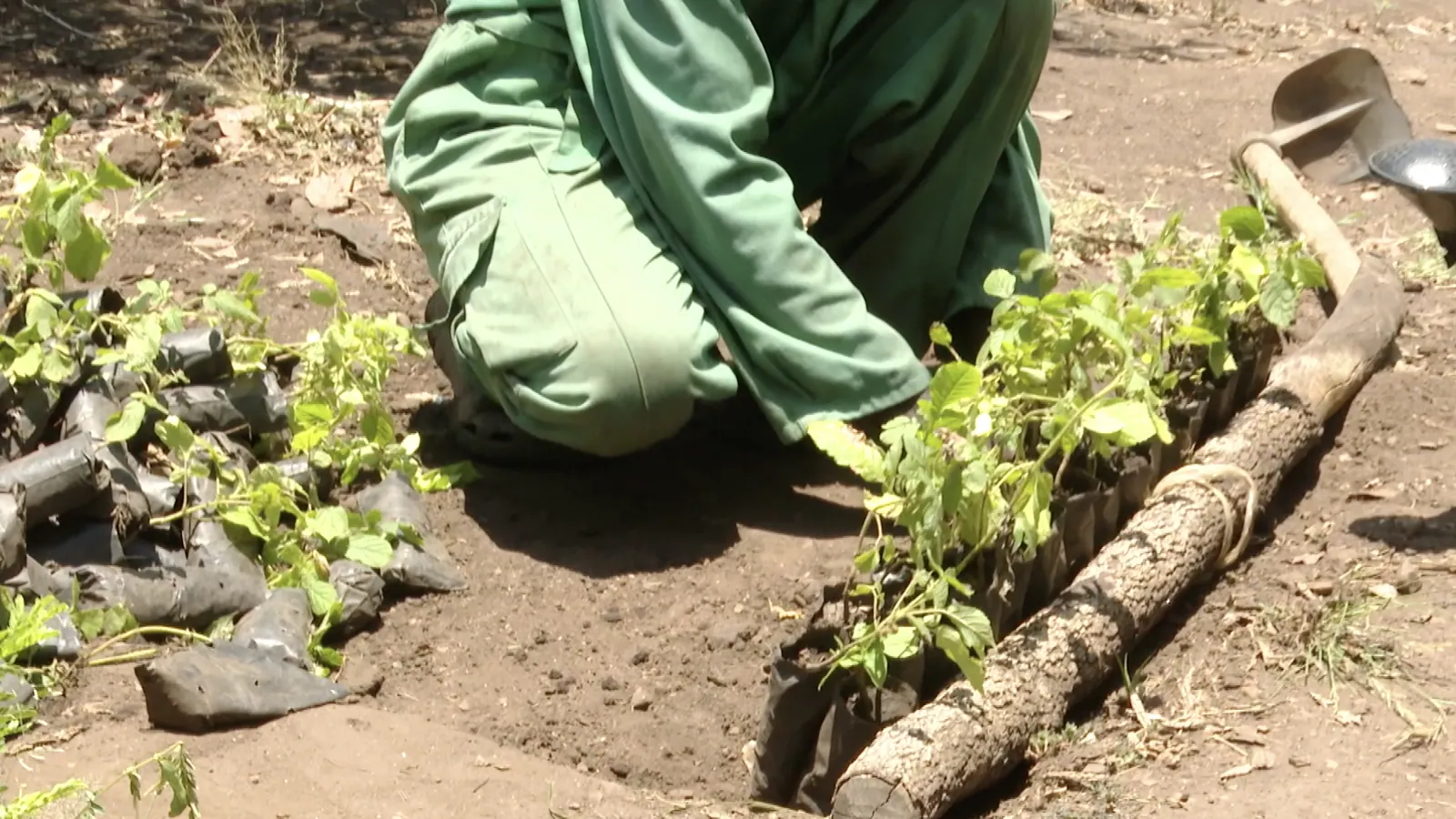
In Uganda's Rwenzori region, a unique approach to sustainable farming and environmental conservation is taking root. Farmers in Kasese are increasingly turning to tree planting not only to restore degraded land but also as a source of income. This initiative is a collaboration with Ecotrust, an organization that has been working with hundreds of farmers in the region. By investing in trees, these farmers are not only contributing to environmental conservation but also exploring new avenues for financial stability.
The project, often referred to under the broader umbrella of carbon farming, allows farmers to earn money from carbon credits. These credits are generated from the carbon dioxide absorbed by the trees planted on their land. The process begins with Ecotrust providing the necessary support and resources for farmers to plant trees on their farms. As the trees grow, they absorb carbon dioxide from the atmosphere, and the farmers can then sell the carbon credits on the market. This innovative approach has the dual benefit of mitigating climate change and providing a new source of income for the farmers.
The impact of this initiative is multifaceted. On the environmental side, the planting of trees is helping to restore degraded lands, improve soil quality, and increase biodiversity. Trees also play a crucial role in water cycle regulation, which can lead to better agricultural productivity and reduced risk of natural disasters like landslides and floods. Economically, the income from carbon credits is empowering farmers to invest in their livelihoods. They can use these earnings to improve their homes, educate their children, or expand their agricultural activities.
Ecotrust's role in this initiative has been pivotal. The organization provides technical support, monitors the growth of the trees, and facilitates the sale of carbon credits. This support system ensures that farmers are not only able to plant trees but also to benefit financially from their efforts. The collaboration between Ecotrust and the farmers of Kasese is a testament to the potential of partnerships in driving sustainable development and environmental conservation.
The success of this project in Kasese has broader implications for Uganda and similar regions. It demonstrates that with the right support and incentives, farmers can play a crucial role in environmental conservation. Moreover, it shows that sustainable farming practices can go hand in hand with economic development. As more farmers adopt this approach, there is potential for significant positive change, both in terms of environmental health and economic stability for rural communities.
Looking ahead, the goal is to scale up this initiative to reach more farmers and regions. This will require continued support from organizations like Ecotrust, as well as government policies that encourage sustainable farming practices. The enthusiasm and commitment of the farmers in Kasese serve as a powerful example of what can be achieved when communities are empowered to take charge of their environmental and economic futures.
As the project continues to grow, it will be important to monitor its impact closely. This includes assessing the environmental benefits, such as carbon sequestration and biodiversity improvement, as well as the economic benefits to the farmers. By doing so, stakeholders can identify best practices and areas for improvement, ensuring that the initiative continues to deliver its promise of sustainable development and environmental conservation.
Key points
- Hundreds of Kasese farmers are earning income through carbon farming by planting trees with Ecotrust support.
- The initiative not only restores degraded land but also provides farmers with a new source of income through carbon credits.
- Ecotrust plays a crucial role by providing technical support and facilitating the sale of carbon credits to farmers.