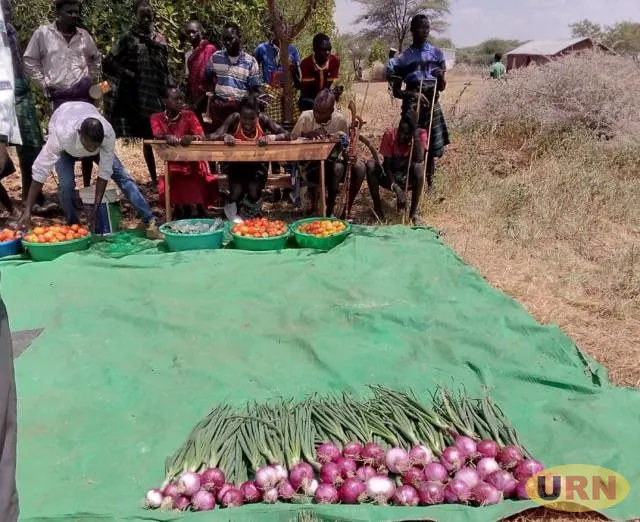
Consumers in Karamoja, Uganda, are increasingly concerned about the safety of vegetables brought into the region from outside, citing a lack of information about production practices, chemical use, and safety controls. The region relies heavily on fresh produce from other parts of the country, including tomatoes, eggplants, onions, and cabbage. This has led to worries about the potential risks associated with consuming these vegetables.
A recent global study estimated that between 402 and 433 million people suffer unintentional acute pesticide poisoning every year, with approximately 11,000 deaths annually. The study, published in Frontiers in Public Health, highlighted that farmers and farm workers bear the greatest burden, with East Africa among the regions recording high estimated numbers of non-fatal cases. This has raised concerns about the need for stronger measures to reduce exposure, particularly among farmers and farm workers.
In Karamoja, residents have reported instances of illness after consuming vegetables from outside the region. Simon Osege, a resident of Kakoliye Ward in Moroto Municipality, developed stomach problems after eating eggplant from Moroto Central Market. He discovered that the eggplant may have been sprayed with chemicals shortly before harvesting and taken directly to the market. This incident has heightened concerns about the safety of vegetables in the region.
Vegetable vendors in Moroto also face the same information gap. Alice Akol, a tomato vendor at Moroto Central Market, stated that traders typically receive vegetables after they have already been harvested and packed for transportation. As a result, vendors are unsure about the production practices used and can only rely on washing the produce before cooking. Akol noted that tomatoes now remain fresh for longer periods than in the past, but the chemicals used are unknown.
Moroto District Agricultural Officer Francis Okwii expressed concern about the safety of vegetables transported into the region. The district is planning to explore measures for regulating and inspecting vegetables brought into Karamoja from other regions. This move aims to ensure that consumers have access to safe and healthy produce.
The Eastern and Southern Africa Small-Scale Farmers Forum-ESAFF Uganda has emphasized the importance of equipping journalists with accurate information to improve public understanding of food systems. Hakim Baliraine, ESAFF Uganda National Chairperson, stated that consumers deserve to know where their food comes from and how it is produced. This knowledge will enable them to distinguish between agroecological produce and conventional products.
The concerns in Karamoja highlight the need for better information, regulation, and traceability to assure consumers that the food reaching their tables is safe. As the district considers stronger inspection of vegetables brought in from other regions, residents and traders emphasize the importance of transparency in food production practices. This will help mitigate the risks associated with consuming vegetables from outside the region.
Key points
- Consumers in Karamoja are questioning the safety of vegetables brought in from outside the region due to concerns over production practices and chemical use.
- A global study estimated that between 402 and 433 million people suffer unintentional acute pesticide poisoning every year, with approximately 11,000 deaths annually.
- The district is planning to explore measures for regulating and inspecting vegetables brought into Karamoja from other regions to ensure consumer safety.