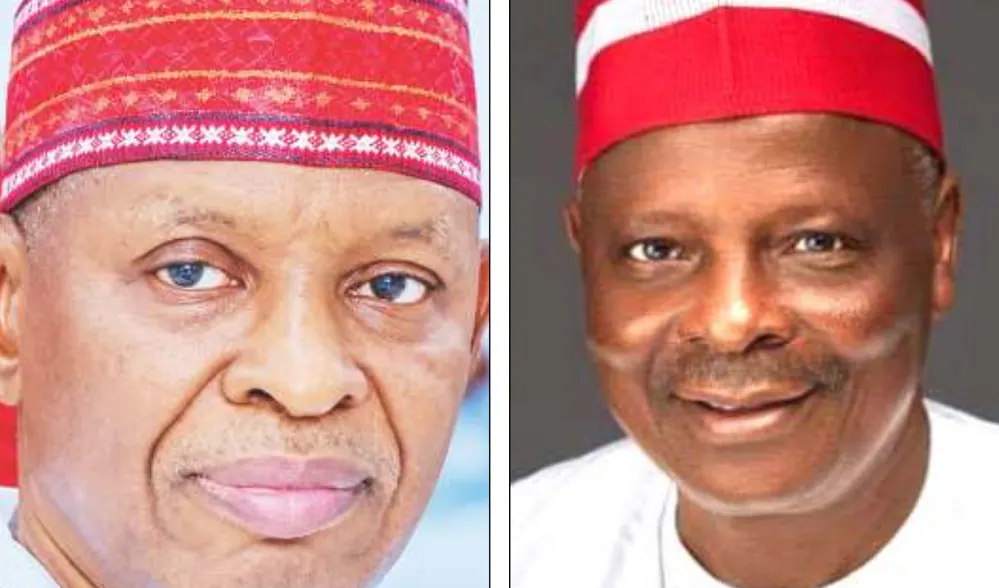
The political dynamics in Kano, Nigeria, have undergone significant changes since the 2023 governorship election, setting the stage for a highly contested 2027 election. Governor Abba Kabir Yusuf, who won the governorship under the New Nigeria Peoples Party (NNPP) with the backing of Rabiu Musa Kwankwaso, defected to the All Progressives Congress (APC) in January. This move has transformed the political landscape, pitting the APC against the Nigeria Democratic Congress (NDC), where Kwankwaso now leads.
The 2023 governorship election saw Yusuf secure 1,019,602 votes, defeating the APC candidate, Nasiru Yusuf Gawuna, who garnered 890,705 votes. The election outcome was initially disputed, with the tribunal and Court of Appeal declaring Gawuna the winner, but the Supreme Court ultimately restored Yusuf's victory in January 2024. This electoral history demonstrates Kano's capacity to produce a substantial opposition vote when a well-organized local structure aligns with a popular candidate and influential political sponsor.
Yusuf's defection to the APC has significantly impacted the state's political landscape, as he moved with a substantial number of elected officials, including members of the state House of Assembly, National Assembly members, and local government chairmen. This shift has given the APC an advantage, as it now controls the state's executive apparatus. Yusuf has defended his decision, citing the need to align Kano with the Federal Government and support President Bola Ahmed Tinubu and the APC in 2027.
The APC is assembling a broad coalition, bringing together influential figures such as former governors Abdullahi Ganduje and Ibrahim Shekarau, as well as Deputy Senate President Barau Jibrin. Shekarau's return to the APC is particularly significant, as it provides access to a different generation of political networks and helps build a coalition large enough to contain the old Kwankwasiyya machine. The APC camp recently presented over 136,000 new members at the Sani Abacha Stadium, showcasing its efforts to expand its base.
On the other hand, the NDC has positioned itself as a formidable opponent, with Kwankwaso placing his political weight behind former Deputy Governor Aminu Abdussalam Gwarzo. The African Democratic Congress (ADC) also has a candidate in the race, Ibrahim Ali Amin, popularly known as Little. However, the contest has largely become a two-bloc confrontation between the APC and the NDC, making Kano's 2027 election a test of whether incumbency and federal power can outweigh the grassroots movement that delivered Kano in 2023.
The power struggle within the APC, particularly between Barau and Abubakar Kabir Bichi, has raised concerns about the party's unity ahead of the 2027 election. However, Governor Yusuf has intervened, brokering a truce between the two leaders at a meeting in Abuja on October 7, 2026. This development aims to prevent divisions within the party and ensure a unified front in the senatorial district and campaign for President Bola Tinubu.
As the 2027 governorship contest approaches, Kano's political landscape remains fluid, with both the APC and NDC vying for control. The election will test the strength of incumbency, the impact of federal power, and the resilience of grassroots movements in shaping the state's political future. Key players are positioning themselves for a highly contested election, which will likely have significant implications for Kano's governance and political trajectory.
Key points
- The 2027 Kano governorship contest has become a two-bloc confrontation between the APC and NDC.
- Yusuf's defection to the APC has given the party an advantage, with control of the state's executive apparatus.
- The election will test whether incumbency and federal power can outweigh the grassroots movement that delivered Kano in 2023.