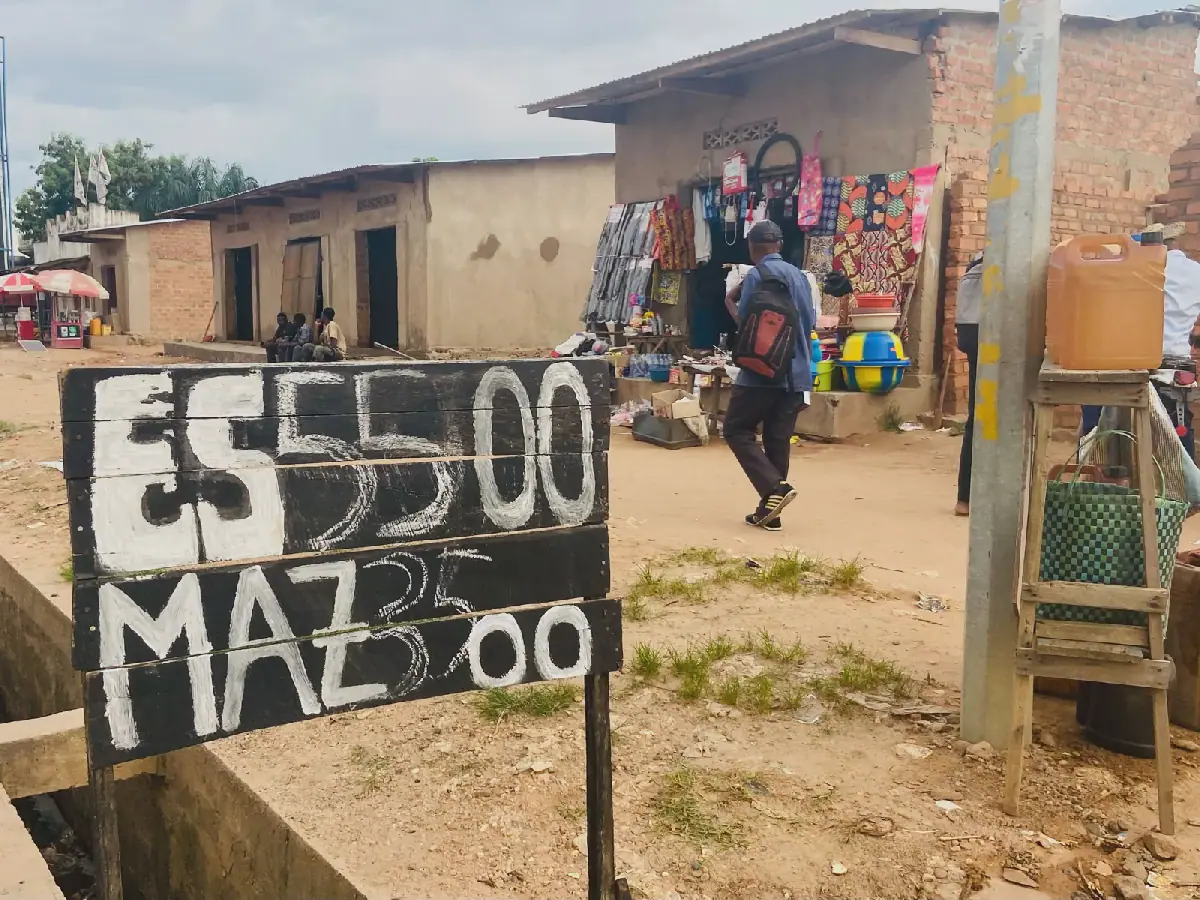
The price of fuel in Kananga, a city in the Central Kasaï province of the Democratic Republic of Congo, has experienced a significant increase. At local reselling stations, commonly referred to as "Kadhafi," the price of a liter of fuel now ranges between 5,500 and 6,000 Congolese francs. This marks a substantial rise from about 3,500 francs just a week ago. According to several wholesalers, the surge is attributed to a fuel shortage resulting from the closure of the border between the Democratic Republic of Congo and Angola, which is a primary supply corridor for the city.
The rapid increase in fuel prices has had immediate effects on urban transportation costs. Motorcycle taxi drivers have adjusted their fares upward to compensate for the rise in their expenses. A student at the University of Notre-Dame du Kasaï shared her experience, stating that previously she would pay between 1,500 and 2,000 Congolese francs for a motorcycle ride. Today, motorcycle taxi drivers are asking for between 3,000 and 4,000 Congolese francs. This situation particularly affects students, workers, and pupils who rely on public transportation daily.
Despite the fare increase, many motorcycle taxi drivers claim they are struggling to make their activities profitable. The decrease in the number of clients has reduced their daily earnings, making it difficult to pay the required installments to motorcycle owners. One motorcycle taxi driver expressed his frustration, stating, "We no longer have enough clients. It's a struggle. With the increase in fuel prices, it has become difficult to gather the daily payment."
According to wholesalers interviewed by Radio Okapi, a significant portion of the fuel consumed in Kananga usually comes from Angola. The current scarcity on the local market is linked to the closure of the border between the two countries, which disrupts the supply of service stations and resellers. In some city service stations, the price of a liter of fuel has risen to 7,500 Congolese francs, compared to about 4,000 francs a week ago.
The situation is affecting not only the general public but also transporters. With increased fuel costs and decreased client numbers, many are finding it hard to sustain their businesses. The impact of the fuel shortage and price hike is widespread, affecting daily commuters, students, and the overall economy of the region.
Efforts to mitigate the crisis are not detailed in the information provided. However, it is clear that the closure of the Angola border has had a significant impact on fuel availability and prices in Kananga. The situation calls for a swift resolution to the border closure or an alternative solution to ensure a steady supply of fuel to the region.
In related news, similar fuel price increases have been reported in other parts of the Democratic Republic of Congo. For instance, in Mbuji-Mayi, the price of fuel has also risen to 6,000 Congolese francs per liter. The situation highlights the interconnectedness of regional events and their impact on local economies.
Key points
- Closure of the Angola border leads to fuel shortage and price surge in Kananga.
- Urban transportation costs increase as fuel prices rise.
- Local businesses and commuters struggle with the economic impact of the fuel crisis.