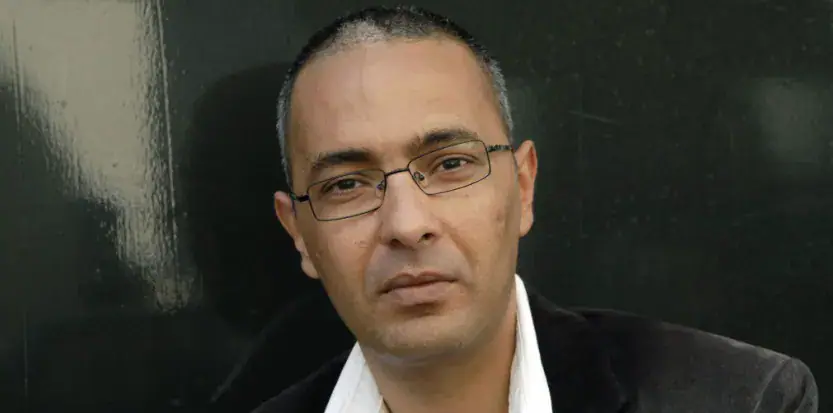
A court in Oran, Algeria, has sentenced French-Algerian writer Kamel Daoud and his ex-wife, psychiatrist Aïcha Dahdouh, to five years in prison. The sentence was handed down in absentia, as the couple resides in France. They were found guilty of divulging professional secrets, misappropriating medical records, and invading the privacy of Saâda Arbane, a woman who claims Daoud used elements of her life in his novel Houris.
Saâda Arbane, a survivor of a massacre during Algeria's "dark decade," had accused Daoud of using her story without her consent in his novel, which won the 2024 Goncourt Prize. Daoud has consistently denied the allegations. The couple was also ordered to pay a fine of 300,000 Algerian dinars (approximately €2,000) each. This is not Daoud's first run-in with Algerian justice; in April 2026, he was sentenced to three years in prison and a €32,000 fine for his novel Houris.
Aïcha Dahdouh has maintained that she never breached medical confidentiality and did not share Saâda Arbane's medical records with her husband. In an interview with Casbah Tribune, Dahdouh stated that her family and Arbane's family were acquainted, and that Arbane knew Daoud before the novel's publication. Dahdouh also revealed that she and Daoud are in the process of getting a divorce.
The case has also been pursued in France, where Daoud was cleared of defamation charges brought by Arbane in September 2026. The Paris tribunal ruled that Daoud's statements in an interview with Le Figaro did not identify Arbane. However, the French court's decision did not address the allegations related to the use of Arbane's personal story in the novel Houris.
Kamel Daoud reacted to the Algerian court's decision on social media, expressing his concerns about the price of freedom of expression. He quoted Victor Hugo, saying, "Je resterai proscrit, voulant rester debout" ("I will remain an outcast, wanting to remain standing"). Daoud has faced intense media scrutiny and campaigns of defamation in Algeria.
The case has sparked concerns about freedom of expression and the relationship between writers and their sources. Daoud's novel Houris has been widely acclaimed, but the allegations of plagiarism have led to a protracted and complex legal battle. The outcome of the case and its implications for writers and intellectuals in Algeria and beyond remain to be seen.
The international community has been following the case closely, with many expressing concerns about the implications for freedom of expression. As Daoud and Dahdouh face a lengthy prison sentence, their supporters and advocates will likely continue to raise awareness about the case and its potential consequences for writers and intellectuals.
Key points
- Kamel Daoud and Aïcha Dahdouh were sentenced to five years in prison in Algeria for divulging medical secrets and invading privacy.
- The case is related to allegations that Daoud used elements of Saâda Arbane's life in his novel Houris without her consent.
- Daoud and Dahdouh reside in France and were sentenced in absentia.