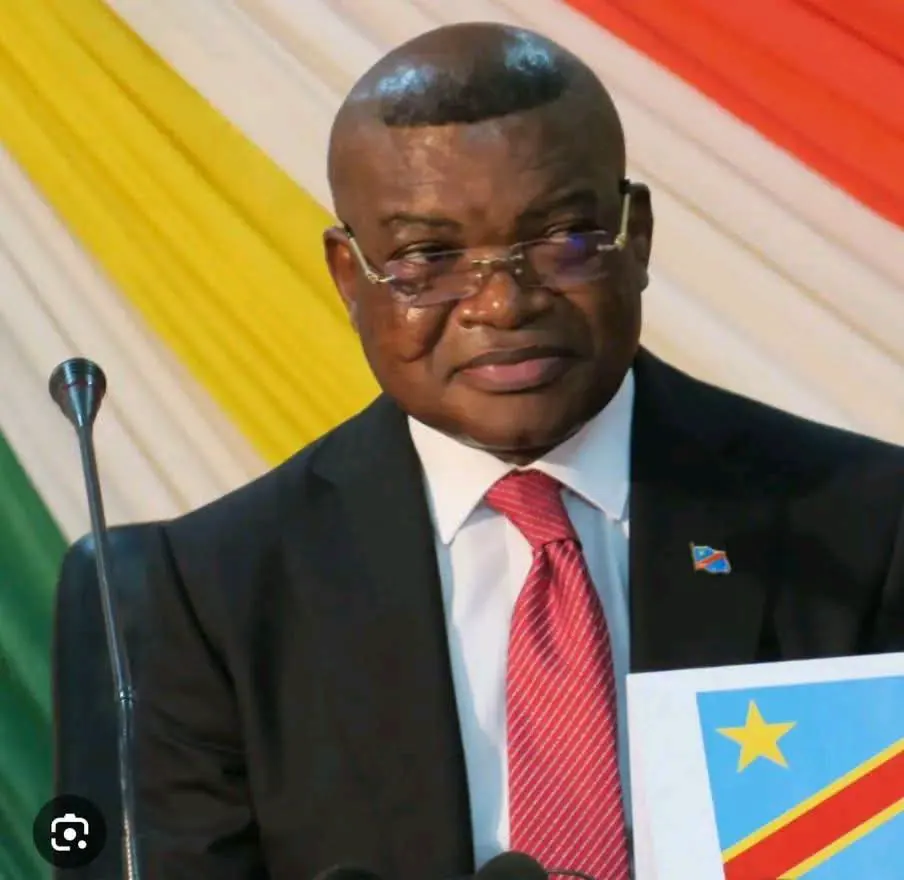
Kalev Mutond, a former top official in the Democratic Republic of the Congo's intelligence agency, has passed away in Paris at the age of 69. He had been receiving medical treatment for a year prior to his death. Mutond was known for his role as the director of the Agence Nationale de Renseignements (ANR), often compared to the Gestapo, under the regime of Joseph Kabila. His tenure was marked by allegations of human rights abuses and repression of opposition figures.
During his time at the ANR, Mutond was instrumental in orchestrating the security apparatus and suppressing dissent against the Kabila regime. One notable case involved Moïse Katumbi, the former governor of Katanga, and his former chief of staff, Professor Huit Mulongo Kalonda. In 2016, Kalonda was arrested and falsely accused of possessing a pistol from the governor's office, which was later escalated to charges of possessing war weapons and ammunition. This case highlighted the alleged lengths to which Mutond and the ANR would go to silence opposition.
Professor Huit Mulongo Kalonda's ordeal included being held as a personal prisoner of Joseph Kabila at the Kasapa prison, where he reportedly suffered inhumane conditions. His wife passed away while he was incarcerated. Despite his experiences, Kalonda has spoken about the importance of forgiveness, stating that he has pardoned those who wronged him, including Mutond. Kalonda's story was documented in his book, "Voyage au bout de la Kasapa," which details his experiences as a prisoner in the DRC.
Mutond's legacy is also marked by allegations of torture and arbitrary arrests. A collective of former prisoners of opinion filed a complaint against him for these alleged crimes. However, Professor Kalonda chose not to participate in the collective complaint, opting instead to focus on forgiveness. His stance on forgiveness and not seeking vengeance has been a consistent message, emphasizing the importance of moving forward without rancor.
The news of Mutond's death has brought mixed reactions, with some viewing it as a consequence of his actions. His passing in Paris, away from the country he once served, marks the end of an era for those who suffered under his watch. The reactions from those who knew him and those affected by his actions reflect the complex and often painful history of the DRC's recent past.
Kalev Mutond's story is intertwined with that of many who suffered under the Kabila regime. His role in the ANR and the allegations of human rights abuses against him remain a significant part of the DRC's narrative on governance and human rights. The impact of his actions and the legacy he leaves behind continue to resonate with those who advocate for justice and accountability in the country.
As the DRC continues to navigate its complex political landscape, the stories of figures like Kalev Mutond serve as a reminder of the challenges of the past and the ongoing quest for justice and reconciliation. The country's path forward will likely be influenced by its handling of such legacies and its commitment to addressing the grievances of those who suffered under previous regimes.
Key points
- Kalev Mutond, former director of the ANR, died in Paris at the age of 69 after a year of medical treatment.
- Mutond was known for his role in the ANR under Joseph Kabila's regime and allegations of human rights abuses.
- Professor Huit Mulongo Kalonda, a victim of Mutond's actions, has spoken about forgiveness, highlighting the complexities of justice and reconciliation in the DRC.