Joseph Kabila, the former President of the Democratic Republic of the Congo, has taken on a new role as the head of the Front for National Refoundation (FRN), a move that has sparked silence from Congolese religious leaders who previously advocated for inclusivity. The FRN is a new politico-military platform that succeeds the Alliance of Congolese Forces/M23 (AFC/M23). Kabila's new role has raised questions about the commitment of religious leaders to their previous stance on inclusivity.
In May 2025, Congolese actors, including the Catholic Church and the Church of Christ in Congo (ECC), called for a national dialogue that would include all stakeholders, including rebels. The initiative was driven by the understanding that peace cannot be achieved by excluding those who are involved in the conflict. The C64 coalition, led by Martin Fayulu, Jean-Marc Kabund, Moïse Katumbi, Augustin Matata Ponyo, and Delly Sesanga, strongly supported this idea and insisted that Kabila and the AFC/M23 should be part of the dialogue.
However, on October 12, 2026, Kabila launched the FRN, with Corneille Nangaa, Bertrand Bisimwa, and Makenga as vice-presidents. The move marked a significant shift in Kabila's stance, as he openly assumed the leadership of a structure aimed at overthrowing the current government. The Congolese government has condemned the move, describing it as an attack on the Republic.
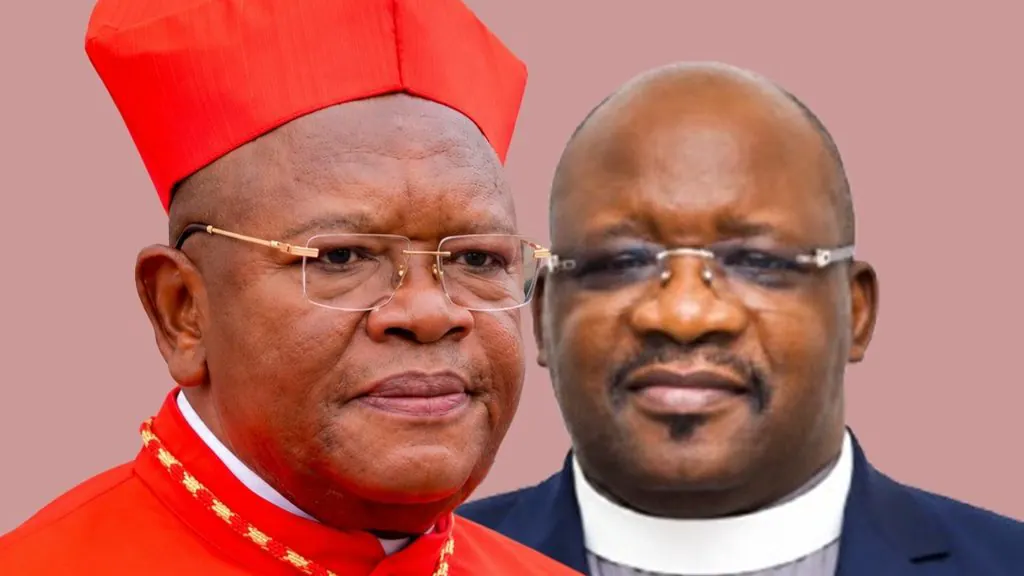
The silence of Congolese religious leaders, including the ECC and the Catholic Church, has been notable in the face of Kabila's new role. The C64 coalition, which had previously insisted on Kabila's participation in the dialogue, has also fallen silent. The only voice to speak out has been Martin Fayulu, who has rejected the use of arms to resolve the crisis and advocated for an inclusive national dialogue.
Analysts have expressed concern that the silence of religious leaders may be seen as a tacit endorsement of Kabila's actions. The situation has also raised questions about the future of the C64 coalition, with some observers suggesting that Fayulu's stance may create divisions within the group.
The Congolese people are eagerly awaiting a response from religious leaders and the C64 coalition on Kabila's new role. The situation has sparked concerns about the potential for further conflict and the role of external actors, including Rwanda, which has been accused of supporting the AFC/M23.
As the situation continues to unfold, it remains to be seen how Congolese religious leaders and politicians will respond to Kabila's new role and the implications for the country's fragile peace. One thing is certain, however: the silence of these leaders will have consequences, and the people of the Democratic Republic of the Congo will be watching their actions closely.
Key points
- The silence of Congolese religious leaders on Joseph Kabila's new role has raised questions about their commitment to inclusivity.
- Kabila's new role as head of the FRN has sparked concerns about the potential for further conflict in the Democratic Republic of the Congo.
- The situation has also raised questions about the future of the C64 coalition and the role of external actors in the conflict.