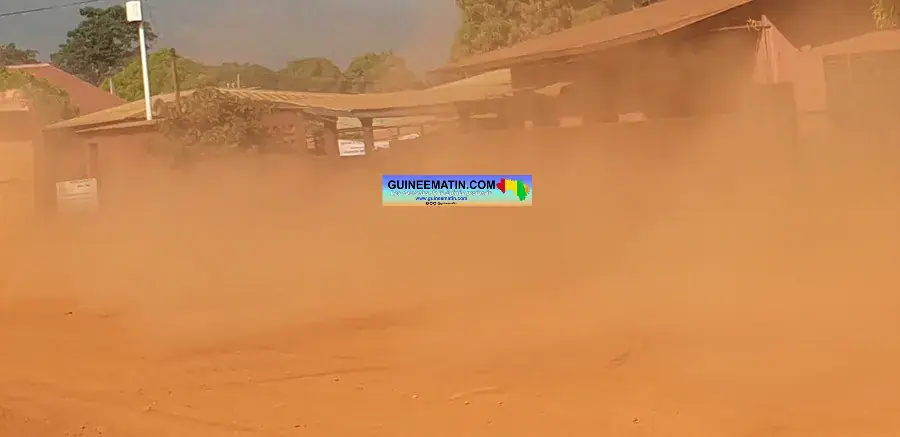
The onset of the dry season in Guinea's Kérouané commune has brought significant challenges for its residents. Several neighborhoods are experiencing a substantial increase in dust levels, primarily due to unpaved roads frequently used by vehicles and ongoing construction activities. This surge in dust particles in the air has led to a daily degradation of air quality. The situation is particularly concerning for vulnerable groups such as children, the elderly, and individuals with pre-existing respiratory conditions.
The impact of the dust pollution on daily life in Kérouané is multifaceted. Residents are often exposed to large clouds of dust whenever vehicles pass through the unpaved roads. Beyond the discomfort, there are growing concerns about potential health consequences, especially for young children, the elderly, and those already suffering from respiratory issues. The situation has become a significant source of worry for many families, who are calling for immediate intervention to mitigate the effects of the dust.
One family, that of Nagnouma Diawara, is currently facing difficulties due to the dust pollution. Her young daughter, just over a year old, is ill with a respiratory issue caused by the dust. In an interview with Guineematin.com, Nagnouma Diawara expressed her concerns and appealed for help. She requested that the local authorities arrange for water tankers to regularly wet the roads to reduce the dust and also called for the paving of all roads in the urban commune of Kérouané.
In response to the growing concerns, the Mayor of Kérouané, Laye Sékou Touré, has offered reassurance. He stated that several measures are being considered to alleviate the nuisance caused by the dust. While specific details of these measures were not provided, the mayor's commitment to addressing the issue has been noted by the residents.
The situation in Kérouané highlights the broader challenge of managing environmental health risks in rapidly growing urban areas. The commune's infrastructure, like many in Guinea, appears to be struggling to cope with the demands of its population and the environmental stresses associated with the dry season. Efforts to improve road conditions and implement dust control measures are crucial to improving the quality of life for residents.
The health implications of prolonged exposure to dust pollution are well-documented. Respiratory issues, such as asthma and chronic obstructive pulmonary disease (COPD), can be exacerbated by poor air quality. For vulnerable populations, such as children and the elderly, the risks are even greater, making it imperative for local authorities to act swiftly to mitigate these risks.
As the dry season progresses, the residents of Kérouané are hopeful that their concerns will be addressed. The implementation of effective measures to control dust pollution would significantly improve their living conditions and reduce the health risks associated with poor air quality. The situation in Kérouané serves as a critical reminder of the importance of environmental management in urban planning and the need for proactive measures to protect public health.
Key points
- Local authorities are considering several measures to alleviate dust pollution in Kérouané.