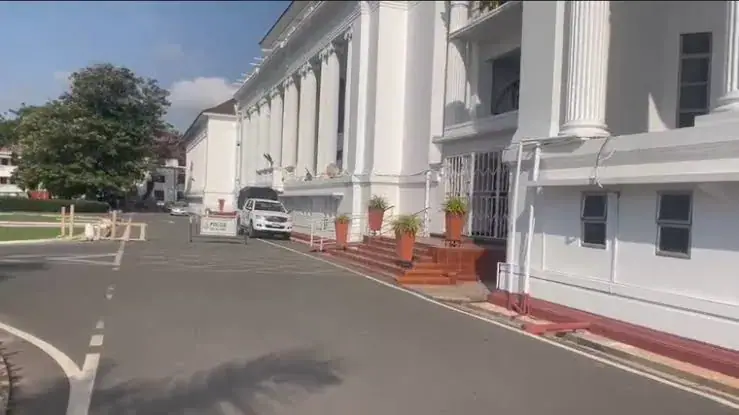
Court activities in Accra have been severely disrupted following the commencement of an indefinite nationwide strike by the Judicial Service Staff Association of Ghana (JUSAG). The strike, which began on November 2, is in response to delays in approving and implementing the association's members' 2026 salary review. Several key court facilities, including the Supreme Court, Court of Appeal, and various high and district courts, were inaccessible as security personnel prevented members of the public from entering the premises.
The strike action, which was announced by JUSAG earlier, is a result of months of disagreement over the implementation of a revised salary structure for Judicial Service employees. JUSAG is demanding the approval of the Judicial Council's recommendations on the 2026 salary review and payment of the revised salaries in November, along with outstanding arrears covering January to October 2026. In compliance with the strike instructions, gates to the affected court facilities were kept locked, and some court entrances had red pieces of cloth displayed as a symbol of the association's protest.
The strike has significant implications for the court system, raising concerns about delays in court proceedings and other judicial services. Litigants and legal practitioners who depend on the courts for the resolution of cases are likely to be affected by the industrial action. The duration of the strike will depend on the outcome of engagements between JUSAG, Judicial Service management, and the relevant government authorities.
In response to the strike, Judicial Secretary Musah Ahmed has appealed to JUSAG's leadership and members to reconsider their position and return to work while negotiations continue. Mr. Ahmed stated that Judicial Service management had been engaging relevant government stakeholders in high-level discussions aimed at resolving the disagreement and securing a sustainable outcome.
Mr. Ahmed acknowledged the frustration among staff over the delay in implementing the salary review but maintained that management was committed to addressing their concerns. He expressed hope that a resolution could be reached through ongoing negotiations, which would enable court operations to resume as normal.
The impact of the strike on the justice system is already being felt, with many court cases likely to be delayed or adjourned. The Ghanaian public is eagerly awaiting a resolution to the impasse, which would allow court operations to resume and the justice system to function effectively.
As the strike continues, all parties involved are under pressure to find a swift resolution to the dispute. The outcome of the negotiations between JUSAG, Judicial Service management, and government authorities will determine the duration of the strike and the future of court operations in Ghana.
Key points
- The Judicial Service Staff Association of Ghana (JUSAG) began an indefinite strike on November 2 over delays in implementing its members' 2026 salary review.
- The strike has disrupted court operations, affecting several key court facilities in Accra, including the Supreme Court and Court of Appeal.
- Judicial Secretary Musah Ahmed has appealed to JUSAG to reconsider its position and return to work while negotiations continue.