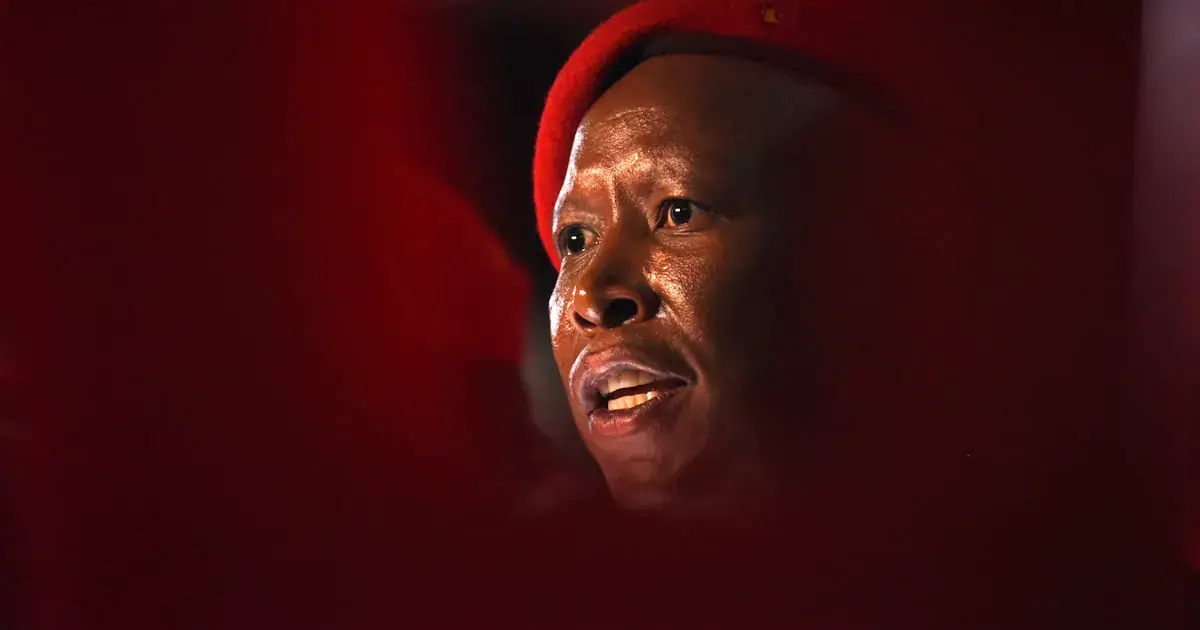
The Economic Freedom Fighters (EFF) was once a dominant force in South African politics, known for its youthful energy and bold stance against the ruling ANC. Founded by Julius Malema in 2013, the party made a significant impact in the 2014 general elections, securing 25 seats and 6.35% of the vote. By 2019, it had almost doubled its representation to 44 seats and 10.80%, becoming the third-largest party in the country. However, in 2024, the EFF's fortunes began to decline, with the party falling to 9.52% and 39 seats, overtaken by the MK Party.
According to analysts, the cause of the EFF's decline is not external factors such as the ANC or DA, but rather Julius Malema's leadership style. Malema's increasing reliance on himself, rather than the collective leadership, has been cited as a major factor. In its early days, the EFF was a collective effort, with Malema, Floyd Shivambu, Mbuyiseni Ndlozi, Dali Mpofu, and Godrich Gardee each playing a distinct role. However, over time, Malema purged individuals who could challenge him, leading to a brain drain that has hindered the party's growth.
Malema's shift from a revolutionary leader to a more affluent lifestyle has also contributed to the EFF's decline. The party was born out of the Marikana protests, student movements, and worker unrest, with its MPs wearing overalls to symbolize their connection to the working class. However, Malema's current lifestyle, marked by luxury items and a Sandton capitalist image, has created a contradiction that has alienated many of its supporters. South Africans are not oblivious to the disconnect between Malema's rhetoric on economic freedom and his personal life.
The EFF's strategy of disruption in parliament, which was effective against former President Jacob Zuma, has not yielded the same results against President Cyril Ramaphosa. In a coalition era, the party's inability to negotiate budgets and build municipalities has exposed its limitations. The EFF's collapse in coalitions in Johannesburg and Ekurhuleni, due to disagreements over positions and tenders, has demonstrated its inability to govern effectively. Voters are increasingly prioritizing service delivery, such as fixing potholes, over the party's theatrics.
Malema's disconnection from the youth has also contributed to the EFF's decline. The party was once closely associated with the "Fees-Must-Fall" movement, but today, young people are gravitating towards other parties, such as the MK Party, ActionSA, and TikTok independents. Malema's leadership style, which is perceived as outdated, has failed to resonate with the younger generation, who are more concerned with issues like jobs, data, and housing.
The EFF's toxic reputation has made it challenging for the party to form coalitions with other parties. Malema's tendency to insult others, threaten journalists, and change positions overnight has created an environment of distrust. In a coalition era, the ability to form alliances is crucial, and the EFF's isolation is a direct result of Malema's leadership. The party's stagnation is not due to a rejection of its ideas, but rather a rejection of its leader.
The decline of the EFF serves as a cautionary tale about the dangers of ego and the importance of collective leadership. The party's future prospects will depend on its ability to reinvent itself and reconnect with its core supporters. As the party struggles to survive, it remains to be seen whether it can regain its former glory or will continue to decline into obscurity.
Key points
- The EFF's decline is attributed to Julius Malema's leadership style, marked by his ego, luxury lifestyle, and inability to form coalitions.