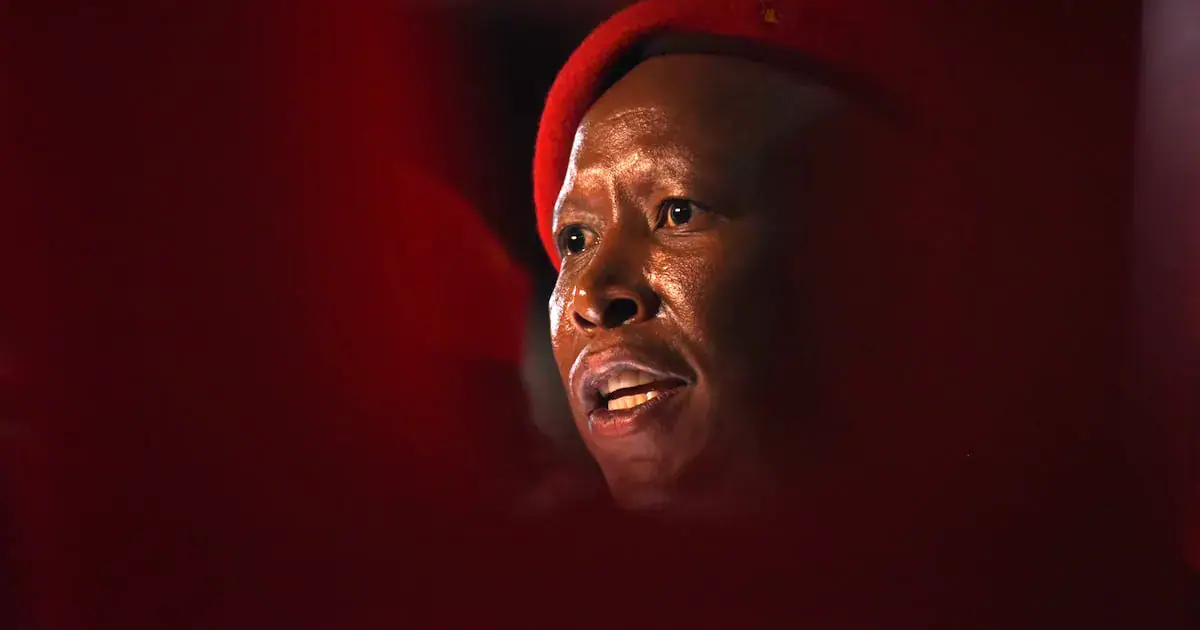
The Economic Freedom Fighters (EFF) party, once a dominant force in South African politics, has seen a significant decline in its influence and popularity. Founded in 2013 by Julius Malema, the party made its mark in 2014 by entering parliament with 25 seats and 6.35% of the vote. By 2019, it had almost doubled its seats to 44 and secured 10.80% of the vote, becoming the third-largest party in the country. However, in 2024, the EFF's fortunes began to dwindle, with the party falling to 9.52% and 39 seats, overtaken by the MK Party.
According to analysts, the cause of the EFF's decline is not external factors such as the ANC or DA, but rather Julius Malema himself. One of the primary reasons cited is that Malema made the EFF about himself, rather than the movement. Initially, the EFF was a collective effort with members like Floyd Shivambu, Mbuyiseni Ndlozi, Dali Mpofu, and Godrich Gardee, each contributing their unique skills. However, over time, Malema purged individuals who could challenge him, resulting in a party that has lost its best brains and can no longer grow.
Malema's shift from a revolutionary leader to someone more focused on comfort has also contributed to the EFF's decline. The party was born out of the Marikana protests, student movements, and shack dwellers' struggles, with its members wearing overalls to symbolize their connection to the working class. However, Malema's current lifestyle, marked by luxury and wealth, has created a contradiction that South Africans find difficult to reconcile. The party's red overalls, once a symbol of its revolutionary spirit, now appear to be a costume rather than a uniform.
The EFF's strategy of disruption in parliament, which was effective against former President Jacob Zuma, has proven ineffective against President Cyril Ramaphosa. In a coalition era, the party's inability to negotiate budgets and build municipalities has led to its downfall. The EFF's failure to govern and build municipalities has resulted in voters losing trust, with many now prioritizing service delivery over the party's theatrics.
Malema's disconnection from the youth has also contributed to the EFF's decline. The party's power was once rooted in its appeal to young people, particularly during the "Fees-Must-Fall" movement. However, with Malema now 45, his message and approach have become outdated, and many young people have turned to other parties, such as the MK Party, ActionSA, and TikTok independents.
The EFF's toxic reputation has made it challenging for the party to form coalitions with other parties. Malema's leadership style, marked by insults, threats to journalists, and frequent changes in position, has made it difficult for other parties to trust and work with the EFF. In a coalition era, the party's inability to form alliances has sealed its fate, leaving it to stagnate and potentially die alone.
The decline of the EFF is not a reflection of the rejection of its ideas, but rather a rejection of Julius Malema's leadership. South Africans still demand land reform, jobs, and dignity, but Malema's ego, luxury lifestyle, purges, and refusal to share power have strangled the party he once built. As the party continues to struggle, it remains to be seen whether it can recover from its current woes and regain its former glory.
Key points
- The EFF's decline is attributed to Julius Malema's leadership, marked by his ego, luxury lifestyle, and inability to form coalitions.
- Malema's disconnection from the youth and his outdated approach have contributed to the party's decline.
- The EFF's toxic reputation has made it challenging for the party to form coalitions with other parties.