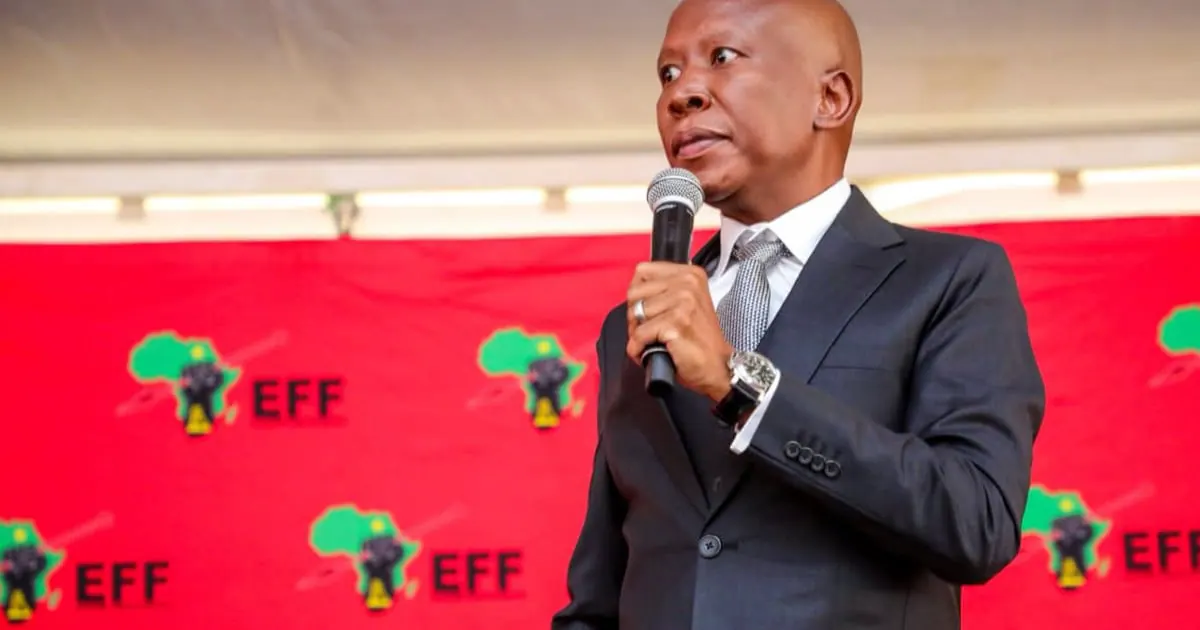
Economic Freedom Fighters (EFF) leader Julius Malema has formally apologized to Supreme Court of Appeal (SCA) Judge Keoagile Matojane for questions posed during a 2021 interview before the Judicial Service Commission (JSC). The apology comes seven years after Matojane, then serving on the High Court bench, ordered the EFF to pay damages to former Finance Minister Trevor Manuel.
The controversy began when Malema suggested that the appointment of former South African Revenue Service (SARS) commissioner Edward Kieswetter had been corrupt. Matojane ordered the EFF to pay damages to Manuel, and Malema later lost a legal challenge against Parliament after the Powers and Privileges Committee found that he had breached the code of ethical conduct by retaliating against Matojane during the interview.
The committee ordered Malema to apologize to Matojane and the JSC. After failing to deliver the apology earlier this year, Speaker Thoko Didiza set Malema a 30 September deadline to tender his apology publicly in the house. Malema delivered his apology through a Sepedi proverb, stating that when a person errs, they should not be punished too harshly but rather corrected with love and guidance.
The apology was part of the ordinary business of the house, and Didiza briefly explained the sanction and nature of the offence. Malema was not the only EFF member of Parliament to deliver an apology in the house. The party's spokesperson, Sinawo Thambo, apologized to Democratic Alliance MP Kevin Mileham following a complaint of assault outside the Parliamentary dome on budget day in February.
Malema's apology marks a significant development in the ongoing saga. The EFF leader's comments during the 2021 interview sparked a heated debate about judicial independence and the limits of parliamentary oversight. The Supreme Court of Appeal plays a crucial role in shaping the country's jurisprudence, and Judge Matojane's intervention in the matter highlighted the importance of protecting the integrity of the judiciary.
The incident also raises questions about the relationship between Parliament and the judiciary. The Powers and Privileges Committee's finding that Malema had breached the code of ethical conduct underscores the need for lawmakers to exercise restraint when interacting with members of the judiciary. The incident serves as a reminder of the delicate balance between the different branches of government.
Malema's apology is a significant step towards resolving the matter. However, the incident has already had a lasting impact on the country's discourse around judicial independence and parliamentary accountability. As the country continues to grapple with these complex issues, the Supreme Court of Appeal will likely play a crucial role in shaping the contours of the debate.
Key points
- Malema apologized to Judge Matojane for questions posed during a 2021 interview before the Judicial Service Commission.
- The apology was ordered by the Powers and Privileges Committee after Malema lost a legal challenge against Parliament.
- Malema delivered his apology through a Sepedi proverb, stating that when a person errs, they should not be punished too harshly but rather corrected with love and guidance.