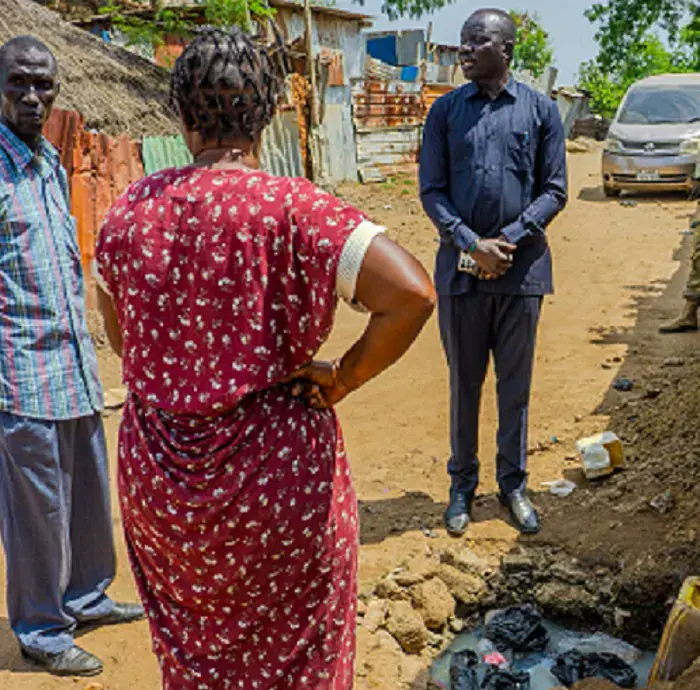
The Juba City Council in South Sudan's capital has arrested 14 people in the Hai Sujun neighborhood for violating public health regulations. The arrests were made during an enforcement operation following the council's November 11 compliance deadline. The council requires households and businesses to install soak pits and septic tanks for wastewater disposal. This move aims to improve sanitation and prevent public health risks.
Deputy Mayor for Environment and Waste Management, Stephen Lomude, led the operation and addressed the media. He stated that many families and businesses lack proper drainage infrastructure, resulting in dirty water being discharged onto public roads. Lomude warned that improper waste disposal creates severe public health risks, including food contamination and the spread of waterborne diseases.
Lomude explained the risks associated with poor waste disposal practices. He used an analogy of throwing cabbage on the roadside, which can lead to the spread of diseases like diarrhea. The council's goal is not to shut down businesses but to urge residents and business owners to comply with sanitation regulations to protect public health and the environment.
The council cautioned residents against pouring wastewater containing food remains, meat, and bones onto roads. Such practices damage public infrastructure and create unhygienic conditions. Lomude instructed property owners to build basic filtration systems on their premises, including soak pits with charcoal and bricks, and cover them properly.
To meet municipal standards, residents and businesses must construct proper soak pits. Lomude provided instructions on how to build a soak pit, including digging a hole about one and a half meters deep, filling it with charcoal and bricks, and covering it properly. A pipe should be installed to direct wastewater into the soak pit.
The Juba City Council will continue enforcing the directive to prevent wastewater from flowing onto public streets and damaging roads. South Sudan's capital, Juba, has struggled with limited drainage infrastructure, leaving many neighborhoods without centralized sewage systems. As a result, some households and businesses discharge wastewater and solid waste into open drains and onto roads.
The latest operation signals an intensified effort by Juba City Council to improve sanitation and ensure compliance with public health regulations across the capital. The council aims to prevent poor sanitation, road damage, and increased risk of waterborne disease outbreaks. Residents and business owners are urged to comply with the regulations to maintain a healthy environment.
Key points
- The Juba City Council arrested 14 people for violating public health regulations by not installing soak pits and septic tanks for wastewater disposal.
- The council aims to improve sanitation and prevent public health risks associated with poor waste disposal practices.
- Residents and businesses are required to construct proper soak pits to meet municipal standards and prevent wastewater from flowing onto public streets.
Reporting sources
- Juba City Council arrests 14 over soak pit violations · sudanspost.com