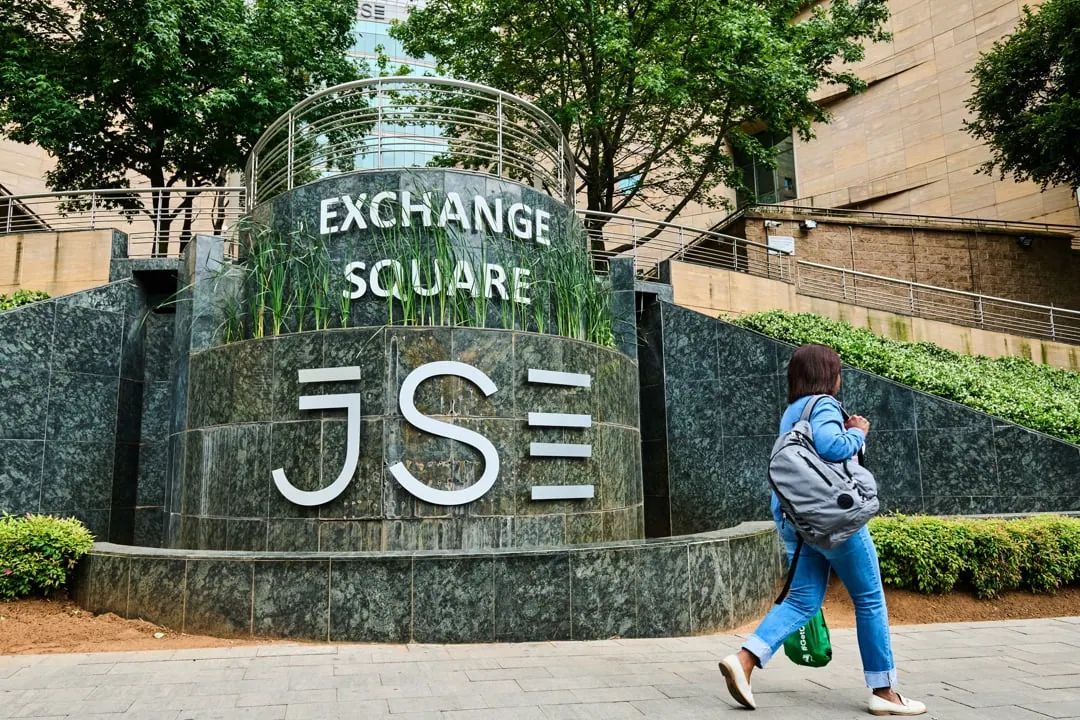
The Johannesburg Stock Exchange (JSE) has reported a substantial decline in September, with losses amounting to R1.6 trillion. This downturn marks a significant shift in the market, particularly when compared to the high point reached at the end of February, prior to the onset of the Iran conflict. The JSE had achieved its highest level to date at that point. Market analysts are closely monitoring the situation to understand the underlying causes of this decline.
The decline of the JSE in September has raised concerns among investors and market experts. The JSE's performance is often seen as a barometer of the overall health of South Africa's economy. A decline of this magnitude can have far-reaching implications, affecting not only the stock market but also investor confidence and the broader economy. The South African economy has been facing various challenges, including high unemployment and slow economic growth.
According to recent data, the JSE's Top-40 index declined by 0.3%, while the All Share Index (ALS) and the Resources Index (RES) also experienced losses. The Financial Index (FIN) and the Industrial Index (IND) followed suit, with declines of 1.0% and 0.4%, respectively. These losses reflect a broader trend of market volatility, which has been influenced by various factors, including global economic conditions and local economic challenges.
The rand has also been under pressure, with fluctuations against major currencies. Against the US dollar, the rand traded at 16.69, down 0.1%. Against the British pound, it traded at 22.07, largely unchanged. The rand's performance has a significant impact on the JSE, as many companies listed on the exchange have operations and revenues denominated in foreign currencies.
Commodity prices have also been a focus, with platinum, palladium, gold, and silver experiencing price movements. Platinum rose by 2.5%, while palladium remained largely unchanged. Gold and silver prices increased by 0.5% and 2.1%, respectively. These price movements can influence the performance of mining companies listed on the JSE.
The decline in the JSE in September has significant implications for investors and the broader economy. The loss of R1.6 trillion in market value is a substantial blow, and market participants will be closely watching for signs of recovery in the coming months. Various factors, including global economic trends, local economic conditions, and company-specific performance, will influence the market's direction.
As the market continues to navigate these challenges, investors and analysts will be paying close attention to economic indicators, company earnings reports, and global market trends. The JSE's performance is a critical aspect of South Africa's economic landscape, and its fluctuations can have far-reaching consequences. Market participants will be seeking signs of stabilization and recovery in the coming months.
Key points
- The JSE declined significantly in September, wiping out R1.6 trillion in market value.