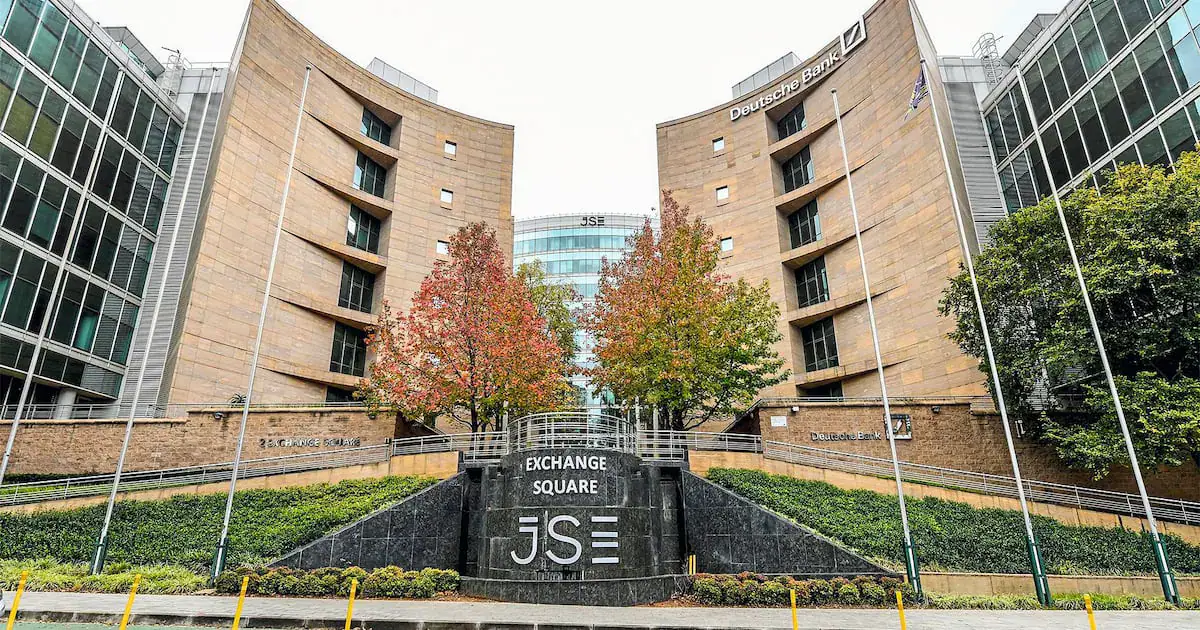
The Johannesburg Stock Exchange (JSE) is planning to become a multi-currency platform, a first in its 135-year history, as part of South Africa's capital market reforms. The South African Reserve Bank recently published draft regulations for a synthetic financial centre (SFC), aiming to bring over R5-trillion in offshore assets back to the country. This move is expected to strengthen South Africa's position as a leading African financial and investment hub.
The reforms, announced by Finance Minister Enoch Godongwana in the budget speech, have been worked on by an industry task force, Operation Phumelela, along with the government and regulators. The JSE, with a market capitalisation of over R23-trillion, is a key player in the task force and has expressed satisfaction with the speed of implementation. JSE Capital Markets chief officer Helina Andhee stated that the next step is to enable multi-currency listings, currently limited to South African rand.
The introduction of multi-currency listings is expected to have a significant impact on the fixed-income market, allowing investors to list bonds in euros and dollars. This move is seen as a crucial step in modernising the JSE's operations and expanding market participation. The JSE's five-year strategic plan, Forge 2031, aims to drive technology-led growth and enhance its position as a leading venue for companies with long-term ambitions in Africa.
The inward listing of Coca-Cola HBC, the world's second-largest Coca-Cola anchor bottler, on the JSE has lifted the market capitalisation of listed groups to R23.3-trillion. The R341bn secondary listing is a significant addition, surpassing those reported over the past two years. JSE CEO Valdene Reddy stated that Coca-Cola HBC's listing reflects the strength and depth of South Africa's capital markets.
Coca-Cola HBC's primary listing remains in London, and the inward secondary listing on the JSE is part of its commitment to South Africa after purchasing Coca-Cola Beverages Africa (CCBA) for $2.6bn. The deal helps HBC diversify from Russia, its top-selling market in 2024, which accounted for 13% of its revenue. The transaction is expected to be concluded this week.
HBC CEO Zoran Bogdanovic emphasised the group's long-term commitment to South Africa and the broader continent, citing tremendous growth potential across Africa. The JSE listing is seen as a sign of confidence in South Africa's deep capital markets, offering international issuers access to institutional capital, liquidity, and world-class market infrastructure.
The reforms and the JSE's expansion plans are expected to enhance its role as a leading venue for companies with long-term ambitions in Africa, connecting global businesses with investors and opportunities across the continent. The successful listing of Coca-Cola HBC is a testament to the JSE's capabilities and its position as a hub for international issuers.
Key points
- The JSE's move to become a multi-currency platform is expected to attract more international issuers and investors.
- The reforms aim to bring over R5-trillion in offshore assets back to South Africa.
- The JSE's expansion plans are part of its five-year strategic plan, Forge 2031.
Reporting sources
- # 4 Rand rules no more: JSE aims to open up to euros and dollars · The Rand Daily Mail