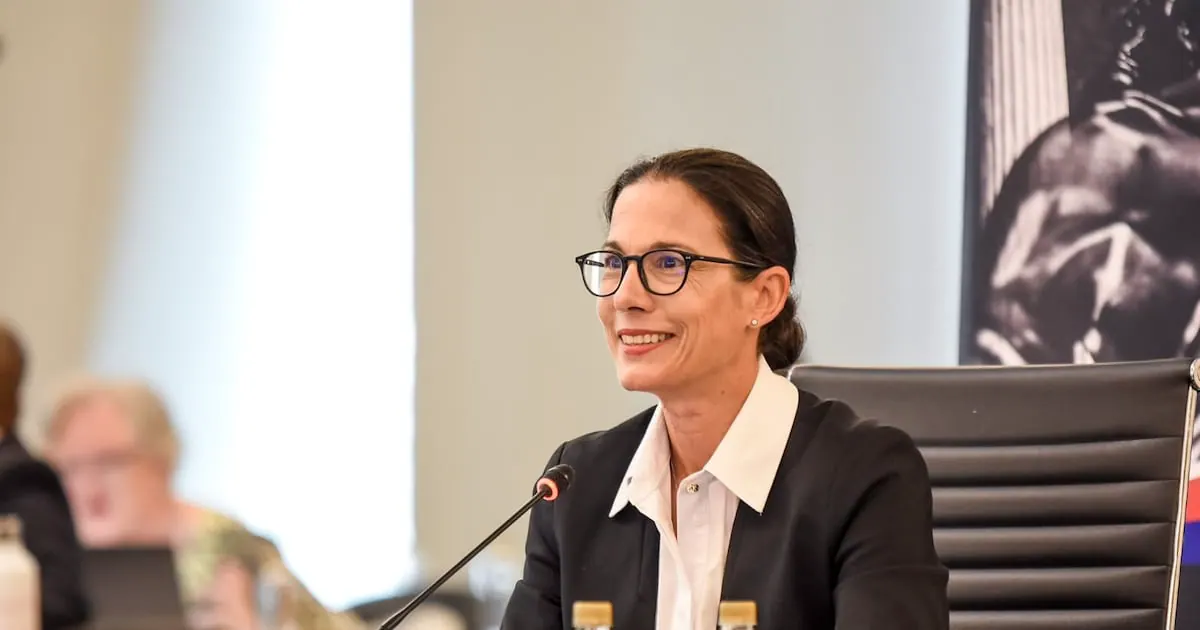
The Judicial Service Commission (JSC) recently interviewed experienced attorney Elzanne Jonker as part of the selection process for three posts at the Western Cape High Court. During the interview, Jonker faced questions over her long-standing representation of the Democratic Alliance (DA), the country's second-largest political party. As a director at Minde Schapiro & Smith Inc, Jonker's firm has handled most cases for the DA. This has led to concerns about her judicial independence.
Justice and Constitutional Development Deputy Minister Andries Nel, an ANC member, asked Jonker about her representation of the DA and how she would respond to perceptions questioning her impartiality. Jonker emphasized that she acted in a representative capacity and never held membership or affiliation with any political party. She likened her role to that of representing any other client, stating that her professional obligations remained intact.
This was not the first time Jonker faced scrutiny over her association with the DA. During the April JSC interviews, she had to address similar concerns. In response, Jonker highlighted her record as an acting judge, where she delivered judgments, demonstrating her ethics and independence. She expressed confidence in her ability to maintain high ethical standards, stating that her relationship with the DA had always been professional.
Commissioner Carol Steinberg raised concerns about fairness in the interview process, citing the example of advocate Mikateko Maluleke, who declared her ANC membership and was appointed as a judge without similar scrutiny. Meanwhile, Jonker received support from prominent lawyers, including advocate Anton Katz SC and advocate Lerato Zikalala. Katz praised Jonker's professionalism, ethics, and commitment to the rule of law.
The issue of perception continued to be a focal point, with several commissioners, including Fasiha Hassan-Duma, inquiring about the need for a cooling-off period before Jonker could take a post as a judge. Jonker disagreed with the notion, stating that she would recuse herself from DA matters she had worked on if appointed to the bench. However, she saw no need for a prolonged cooling-off period, citing her high ethical standards and experience as an acting judge.
Jonker explained that she had stepped down as a director in her firm and taken a consultant position while acting in the high court. She emphasized that her conduct as an attorney and acting judge reflected her commitment to upholding the law. The JSC interviews are ongoing, with the commission continuing to assess candidates for the Western Cape High Court posts.
The debate over perceptions of lawyers representing political parties has sparked discussion about the role of advocates and attorneys in South Africa. As the JSC continues its interviews, candidates like Jonker must navigate concerns about their professional affiliations and judicial independence. The commission's decisions will ultimately shape the composition of the Western Cape High Court.
Key points
- Elzanne Jonker faces scrutiny over her representation of the DA.
- Jonker emphasizes her professional obligations and ethics.
- The JSC continues to assess candidates for the Western Cape High Court posts.