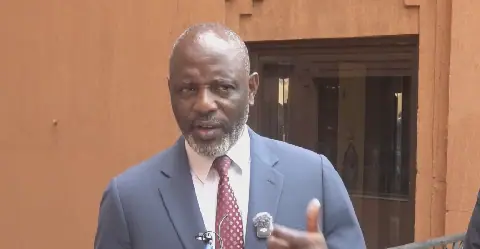
Ghana's democratic governance has deepened since the inception of the Fourth Republican Constitution in 1992, with a notable achievement being the peaceful transfer of power from one government to another. However, the system faces several challenges, including the winner-takes-all syndrome, inability to drive transformative socioeconomic development, and excessive monetization. These issues have sparked concerns about the state of democracy in the country. According to Prof. Adams Sulemana Achanso, the excessive monetization of Ghana's democratic governance is a major concern that needs to be addressed.
The concept of democracy emphasizes individual dignity and equality, where every individual has equal rights and is their own master. In a democratic system, the sovereign power of the state resides in the people, who exercise it directly or through elected representatives. This concept stresses mutual respect among individuals, which is essential for democracy to function. Ghana's democratic governance has its roots in the colonial era, but it wasn't until the Fourth Republic that it took hold. The country's democratic journey has been marked by periods of military intervention, with the first being in 1966.
Ghana's democratic governance has been lauded for ensuring peaceful transfers of power, but it has also been criticized for its inability to transform the country's socioeconomic development. The winner-takes-all syndrome has contributed to social fragmentation and a pull-him-down syndrome, making it challenging for the political elite to build consensus on national issues. This syndrome has also led to opposition parties devising strategies to undermine the government's development efforts. As a result, the country's democratic governance has been unable to drive transformative socioeconomic development across all sectors.
Another significant challenge facing Ghana's democratic governance is excessive monetization. The system is expensive to establish and maintain, with institutions such as the three arms of government, the fourth estate, and the ombudsman requiring significant funding. While the state covers some of these expenses, political parties rely heavily on private financing, which has undesirable consequences for national development. Private financing leads to the winner-takes-all syndrome, with individuals investing in political parties expecting returns in the form of political appointments or business contracts.
The private financing of political parties has resulted in a scramble for political positions, both electoral and appointive. This has increased monetization, as candidates compete to woo voters and appointing authorities. Consequently, corruption, favoritism, and nepotism have become prevalent, negatively affecting national development. According to Prof. Achanso, democratic governance is a contractual agreement between the government and the citizenry, which he refers to as a social contract. This contract is based on mutual respect and equality among human beings.
The concept of every human being having an equal stake in democratic governance presupposes that everyone can be a ruler and decide on the sharing of national resources. However, due to the impracticality of direct democratic governance, indirect or representative democratic governance is practiced worldwide. For individuals to relinquish their rulership by electing others to represent them, they must share the national resources fairly. This contractual agreement between the government and the governed is essential for the distribution of national resources, security, and development programs.
In conclusion, Prof. Adams Sulemana Achanso argues that democracy should not be for sale. The excessive monetization of Ghana's democratic governance has led to significant challenges, including corruption and the winner-takes-all syndrome. To address these issues, it is essential to revisit the concept of democratic governance and ensure that it serves the people, rather than private interests. By doing so, Ghana can strengthen its democratic institutions and promote sustainable socioeconomic development.
Key points
- Excessive monetization of Ghana's democratic governance has led to significant challenges, including corruption and the winner-takes-all syndrome.