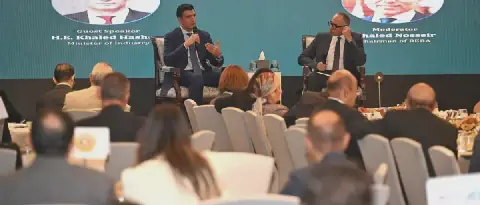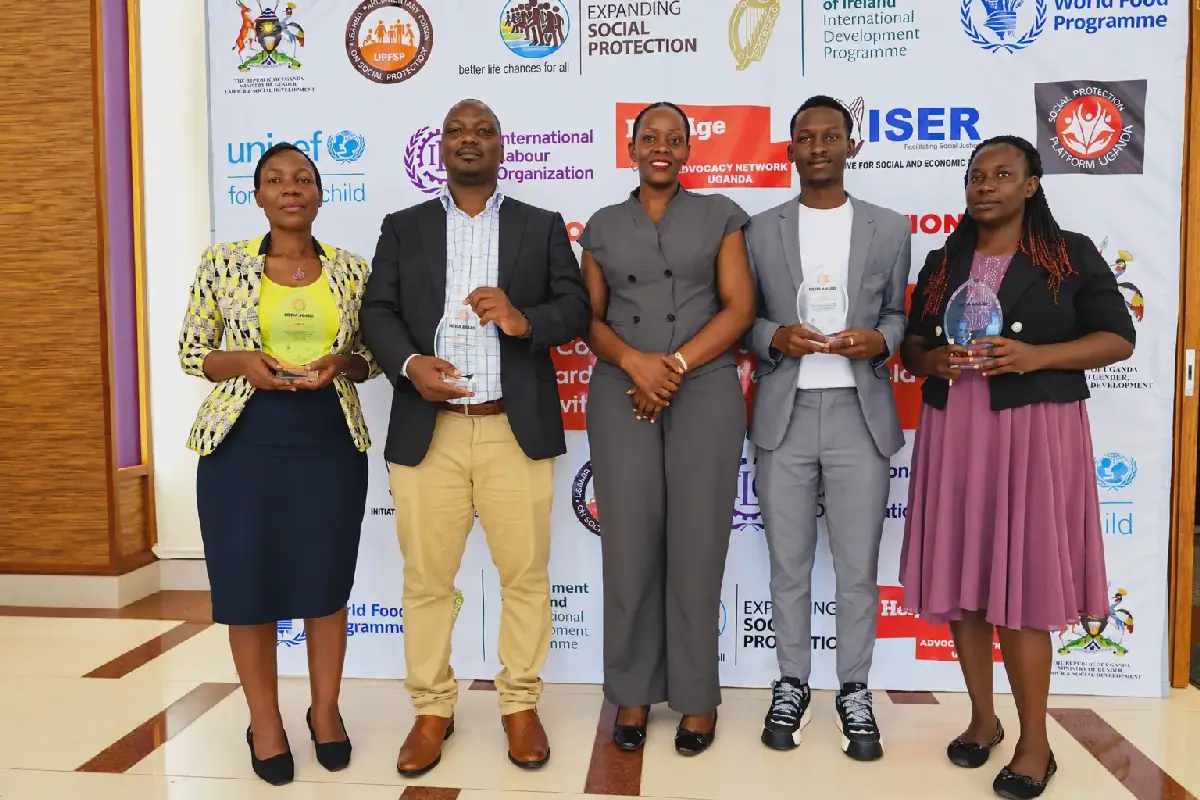
The National Social Protection Dialogue 2026, held in Kampala, Uganda, brought together stakeholders to discuss how social protection can contribute to Uganda's socio-economic transformation. The dialogue, themed "The Contribution of Social Protection Towards Attainment of the 10-Fold Growth Strategy," aimed to strengthen the resilience and livelihoods of vulnerable populations. During the event, journalists who demonstrated commitment to accurate reporting on social protection and climate change were honoured.
The awards, organised by the Social Protection Platform Uganda, recognised the critical role journalists play in amplifying the voices of vulnerable groups and bringing emerging social, economic, and environmental challenges to policymakers' attention. The Minister of Gender, Labour and Social Development, Lt. Gen. Henry Tumukunde Kakurugu, presented the awards, emphasising the need for social protection interventions to go beyond providing assistance to vulnerable people and create opportunities for their participation in Uganda's development process.
Lt. Gen. Kakurugu stressed that vulnerable people should not be viewed merely as beneficiaries of government and development programmes but as active participants who can contribute to economic and social transformation when given the right opportunities and support. This perspective underscores the broader objective of strengthening social protection systems to address vulnerability while supporting people in building resilient livelihoods and participating in national development.
Daphine Akampurira, Coordinator of the Social Protection Platform Uganda, explained that the awards aimed to encourage journalists to produce accurate, well-researched, and impactful stories connecting climate-related risks with the need for stronger social protection systems. Akampurira noted that climate change increasingly affects communities through droughts and floods, with vulnerable groups bearing a disproportionate share of the consequences.
Akampurira highlighted that quality journalism can help demonstrate these effects and provide policymakers with information to guide the design of social protection programmes capable of responding to climate-related shocks. The awards focused on the quality of journalism, including evidence-based reporting, proper research, and credible sourcing. Journalists were expected to demonstrate a connection between climate change and social protection, an area where there is still limited understanding among journalists.
Four journalists were recognised in different media categories for their reporting: Paul Kiberu (radio), Jane Nafula (print), Adiah Nakuti (broadcast), and Kiva Nelson (online). The recognition aims to encourage journalists to pay greater attention to issues affecting vulnerable populations, particularly those threatened by climate-related shocks, and to investigate the underlying causes and consequences of climate-related vulnerabilities.
The initiative is part of a broader effort to engage journalists through training and capacity-building initiatives aimed at improving the quality and impact of reporting on social protection and climate change. By documenting the experiences of vulnerable households and examining existing programmes, journalists can play a critical role in connecting communities experiencing climate-related challenges with decision-makers responsible for designing interventions.
Key points
- Journalists in Uganda were recognised for their commitment to accurate reporting on social protection and climate change.
- The awards aimed to encourage evidence-based reporting on the intersection of climate change and social protection.
- The initiative seeks to strengthen journalists' knowledge and skills in reporting on social protection and climate change.