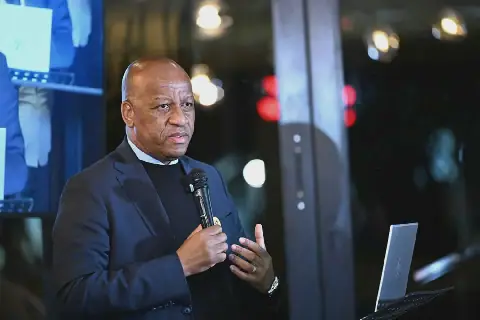
Jean-Luc Kienge, a prominent journalist and founder of VAC Radio, has been hospitalized in Montreal after being injected with a hazardous chemical that altered his blood. Kienge is also the president of the New Congo Civil Society (NSCK). He is known for his tireless reporting, particularly on the situation in the Democratic Republic of the Congo during Joseph Kabila's 18-year rule.
The NSCK, under Kienge's leadership, filed a complaint in February 2026 against two Canadian citizens, Lisette Kabanga Tshibwabwa and Jean-Claude Bukasa, who are high-ranking officials in the National Cybersecurity Council (CNC). The CNC is accused of being a tool of the tyrannical regime of Mabundi 1st Fatshi Tshivube in the Congo. The complaint alleges that these individuals were involved in arbitrary arrests, torture, kidnappings, and illegal detentions of opponents, journalists, and human rights defenders.
On August 30, 2026, TikToker Denise Duchaussoy Mukendi was arrested in Dar es Salaam, Tanzania. The next day, Kienge received a threatening phone call from Kinshasa, allegedly because his phone number was found on Mukendi's phone. This incident has raised concerns about the safety of journalists and the potential for reprisals against those who speak out against the regime.
Kienge's health condition is currently a cause for concern. After being injected with the unknown chemical, he was kept in intensive care to determine the substance used. He has since been discharged, but his condition remains precarious, with reports indicating that he has lost weight and is weakened.
The hacking group responsible for the incident has previously targeted Kienge's work, successfully making the Réveil FM website disappear for a week. This latest attack has sparked fears for Kienge's safety, and there are concerns that further harm may come to him if action is not taken.
Freddy Mulongo Mukena, a journalist and author of the article, has called for accountability, stating that if anything bad happens to Kienge, Lisette Kabanga Tshibwabwa will be held responsible. Mukena has emphasized the importance of protecting freedom of expression and ensuring that those who speak out against injustice are not silenced.
The situation surrounding Kienge's poisoning and the threats against him highlights the risks faced by journalists and human rights defenders in the Democratic Republic of the Congo and abroad. It also underscores the need for greater protection and support for those who work to expose human rights abuses and hold those in power accountable.
Key points
- Journalist Jean-Luc Kienge was poisoned with a hazardous chemical in Montreal, allegedly in retaliation for his work exposing human rights abuses in the Democratic Republic of the Congo.