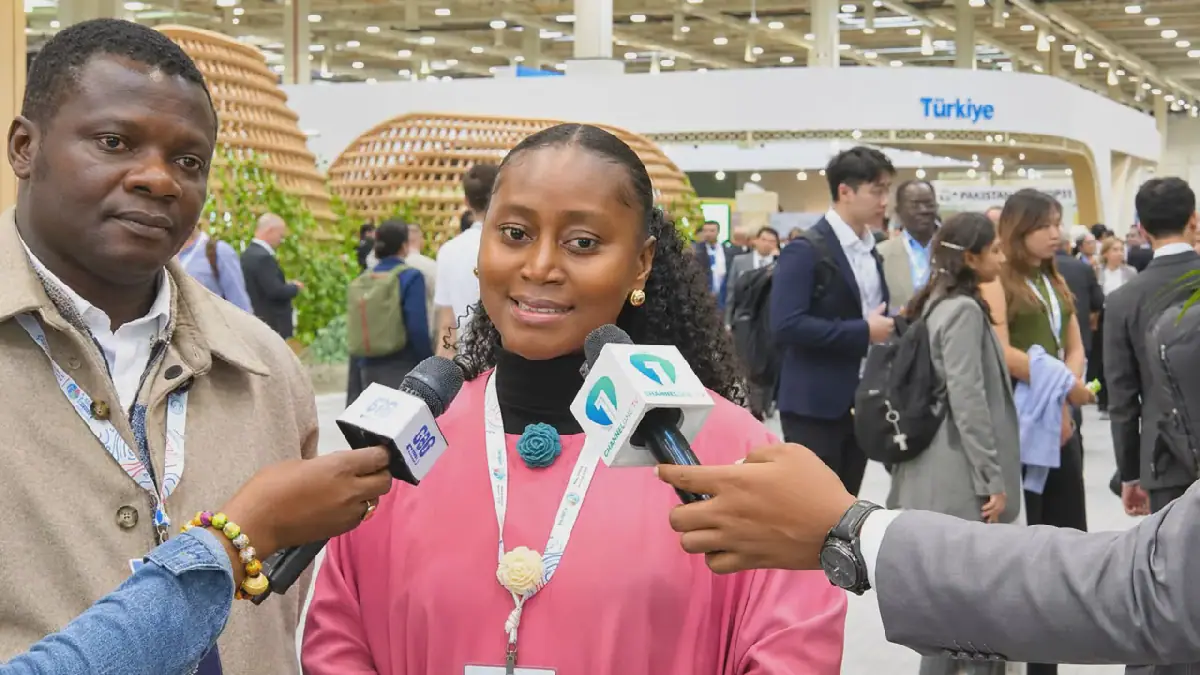
Dr. Gloria Boamah, Senior Sustainability Officer at Jospong Group, has highlighted the significant role of waste management in creating employment opportunities in Ghana. Speaking at the Nigerian Pavilion at COP31, she emphasized that waste management has evolved into a green economy that generates jobs beyond traditional waste collection. According to Dr. Boamah, Jospong Group's operations in solid, liquid, medical, and plastic waste management, as well as resource recovery, have directly employed 6,500 people.
Dr. Boamah noted that Jospong Group has created green jobs for approximately 250,000 people over the past 20 years. She stressed that the sector offers employment opportunities for professionals such as chemical and electrical engineers, environmental compliance officers, and young people. The green jobs created by Jospong Group contribute to Ghana's economic growth and provide a sustainable livelihood for many individuals.
Dr. Boamah emphasized the need for Africa to shift from conventional waste disposal methods to recycling, composting, treatment, and resource recovery. She cited the significant gap in waste management practices between the Global South and other regions, where most countries still adopt traditional waste collection and disposal methods. Jospong Group's operations serve as an example of a successful waste management model that can be replicated in other parts of Africa.
The Jospong Group is implementing two flagship projects: waste composting and alternative wetting and drying in rice production. These projects aim to reduce emissions and create new opportunities for green jobs. The composting projects, authorized across Ghana, are expected to reduce emissions by about 1.5 million tonnes of carbon dioxide equivalent (CO₂e). The projects are subject to monitoring, reporting, verification, and independent assessment before carbon credits can be issued.
Dr. Boamah also highlighted the potential of carbon markets under Article 6 of the Paris Agreement to finance green projects and support Ghana's climate targets. Ghana has established bilateral carbon market agreements with Switzerland, South Korea, Sweden, Singapore, and Liechtenstein. These agreements can help Ghana achieve its target of reducing emissions by about 64 million tonnes by 2030.
Other panellists at the discussion emphasized the need for improved access to climate finance for young people and the adoption of artificial intelligence (AI) as a tool to enhance productivity. They urged the adoption of AI to augment human capabilities rather than replace workers. The discussion underscored the importance of innovative solutions and partnerships in addressing climate change and promoting sustainable development.
The Jospong Group's waste management operations demonstrate the potential for green jobs creation and sustainable development in Ghana. As the country continues to implement innovative waste management solutions, it is likely to create more employment opportunities and contribute to a reduction in greenhouse gas emissions. The success of Jospong Group's operations serves as a model for other countries in the region to adopt sustainable waste management practices.
Key points
- Jospong Group's waste management operations have created green jobs for 250,000 people in Ghana over the past 20 years.
- The company's operations have directly employed 6,500 people in various waste management roles.
- Ghana aims to reduce emissions by about 64 million tonnes by 2030, supported by carbon market agreements with several countries.
Reporting sources
- Jospong’s waste operations create green jobs for 250,000 people – Dr Gloria Boamah · Ghana Broadcasting Corporation