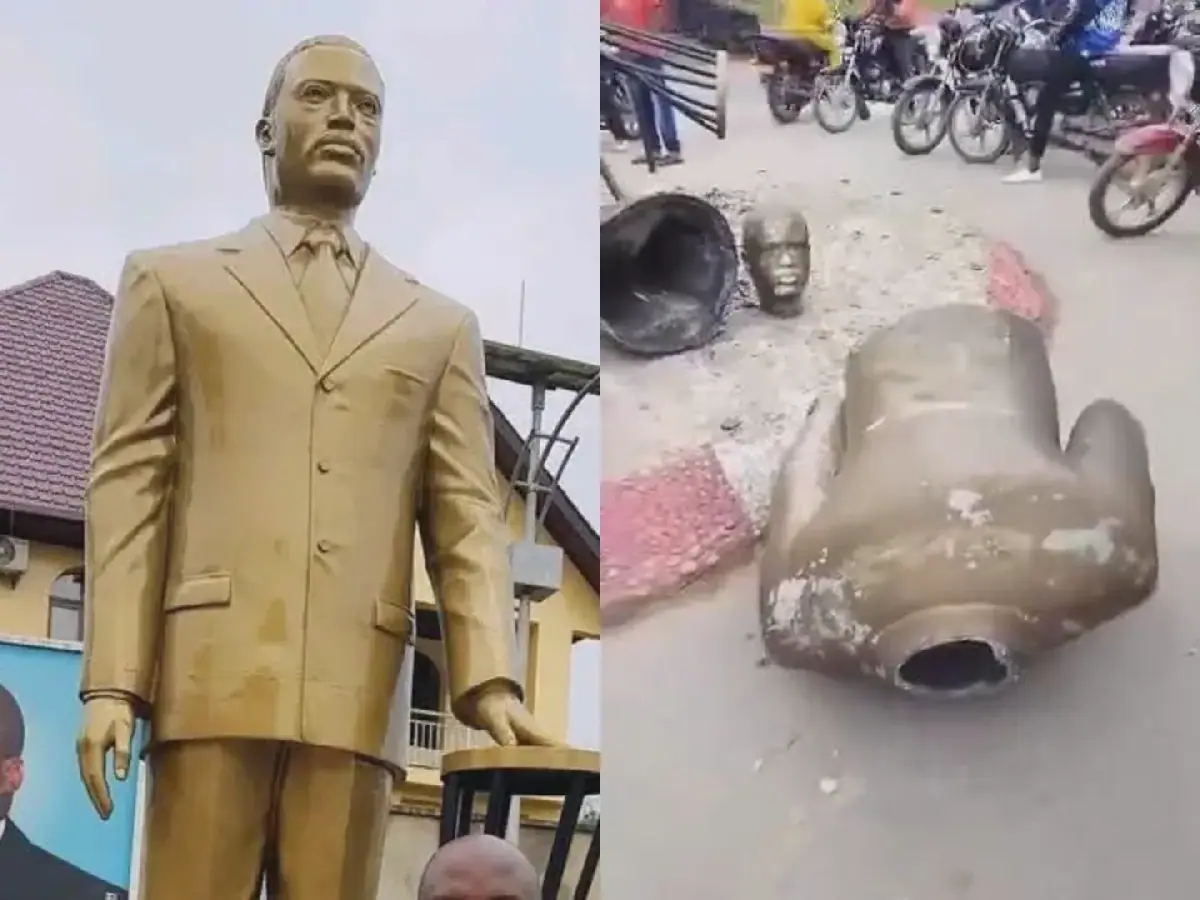
A monument dedicated to Joseph Kabila, the former President of the Democratic Republic of Congo, was completely destroyed in Kindu, a city in Maniema Province. The demolition was captured on camera and shared on social media on November 17, 2026. The monument, located at the 'Monument du Cinquantenaire' in Kindu, was recently set on fire by residents. According to local reports, the destruction of the monument was not ordered by any government authority.
The demolition of the monument is part of a broader government effort to rename infrastructure, public spaces, and roads named after Joseph Kabila. The initiative was launched by the Deputy Prime Minister and Minister of Interior, Jacquemain Shabani, who instructed provincial governors to identify and rename all public spaces, infrastructure, and roads bearing Kabila's name. The government cites the need to uphold national values and prevent political interests from influencing the country's history.
Joseph Kabila ruled the DRC from 2001 to 2019 and recently formed a new political and military front, the Front pour la Refondation de la Nation (FRN), after allying with the Alliance des Forces Catholiques et des M23 (AFC/M23). The Kinshasa government accuses Kabila of plotting against the state and has imposed a death penalty on him. The government's actions against Kabila's legacy have sparked controversy and debate across the country.
The monument's destruction has sparked mixed reactions from the public, with some viewing it as a necessary step to distance the country from Kabila's legacy. Others see it as an attempt to erase the country's history and cultural heritage. The incident has also raised concerns about the role of politics in shaping the country's narrative and identity.
The government claims that renaming public spaces and infrastructure is essential to upholding national values and preventing the glorification of individuals who may have compromised national interests. The move is seen as part of a broader effort to redefine the country's history and cultural identity. However, critics argue that the government's actions may be motivated by a desire to suppress dissent and opposition.
The destruction of the monument has also sparked debate about the role of historical figures and their legacies in shaping the country's identity. Some argue that the government's actions are an attempt to rewrite history and erase the country's cultural heritage. Others see it as a necessary step to promote national unity and prevent the glorification of individuals who may have contributed to the country's instability.
The incident has sparked concerns about the potential for further unrest and instability in the region. The government has urged citizens to remain calm and to respect the country's laws and institutions. The situation remains volatile, with many calling for calm and restraint.
Key points
- The government of the Democratic Republic of Congo has launched an initiative to rename infrastructure and public spaces named after former President Joseph Kabila.
Reporting sources
- RDC: Ikibumbano cya Joseph Kabila cyasenywe · https://umuseke.rw/