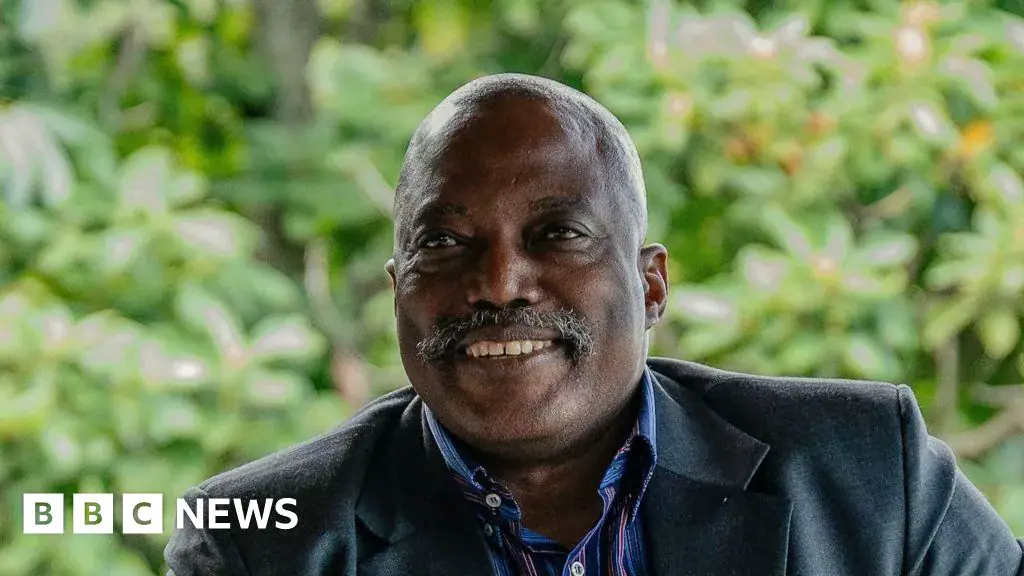
Former President Joseph Kabila of the Democratic Republic of Congo has launched a new rebel movement, the Front for the Refoundation of the Nation (FRN), with the goal of toppling current President Félix Tshisekedi. Kabila, who ruled DR Congo for 18 years, had handed power to Tshisekedi in 2019. The move has sent shockwaves through the country, with many questioning the implications of Kabila's involvement with the M23 rebels. The M23 rebels have been fighting in eastern DR Congo, seizing control of several cities, including Goma and Bukavu.
Kabila's career has been marked by shifting alliances and the use of force in DR Congo's volatile politics. As a commander in the rebel alliance that brought his father to power in 1997, Kabila has a long history of involvement in the country's conflicts. His decision to join the FRN and work with the M23 rebels is seen as a strategic move to regain influence in the country. Policy analyst Henry-Pacifique Mayala believes Kabila had few options for regaining power and may have sought assurances that the partnership with the M23 would serve his interests.
The alliance between Kabila and the M23 rebels brings together a former head of state with a rebel group that has made significant military gains in eastern DR Congo. However, it is unclear whether they can achieve their goal of ousting President Tshisekedi. Tshisekedi has strong American backing, controls the political system, and has a significant amount of money at his disposal. The C64 coalition of opposition parties has refused to back Kabila's rebellion, instead calling for direct talks with both Tshisekedi and Kabila to pursue a "genuine and inclusive national dialogue".
Kabila has framed his confrontation with Tshisekedi as a fight against authoritarianism, invoking Section 64 of the constitution, which calls on citizens to resist anyone who seizes power or exercises it in violation of constitutional provisions. He has accused Tshisekedi of using the death penalty to intimidate civilians, politicians, and members of the military. Tshisekedi has responded by saying that Kabila's actions are proof that he has never loved the country or its inhabitants.
The conflict in DR Congo has been ongoing for years, with various rebel groups and militias vying for control. The M23 rebels have been concentrated in the country's eastern provinces, but Kabila's involvement could give the rebellion a broader reach. However, it is unclear whether the FRN has the capacity to extend its military campaign across the country. Kabila's national reach is also uncertain, as he was often seen as an outsider in Kinshasa during his presidency.
Kabila's decision to join the FRN has raised questions about his relationship with Tshisekedi, who is rumored to be planning to change the constitution to allow him to seek a third term in office. The C64 coalition has campaigned against such a move, and Kabila has likened Tshisekedi to former President Mobutu Sese Seko, who ruled the country as his own personal property for over 30 years. Tshisekedi has maintained that he won the 2018 election legitimately, despite leaked results provided by the Catholic Church suggesting that Martin Fayulu was the true winner.
The situation in DR Congo remains volatile, with many uncertainties about the future of the country. Kabila's involvement with the FRN and the M23 rebels has added a new layer of complexity to the conflict. As the situation continues to unfold, it remains to be seen whether Kabila's rebellion will be successful in toppling President Tshisekedi. One thing is certain, however: the fate of DR Congo hangs in the balance, and the international community is watching closely.
Key points
- Joseph Kabila joins rebel alliance to topple President Félix Tshisekedi
- Kabila's involvement brings experience and networks of a former head of state to the M23 rebels
- The conflict in DR Congo has been ongoing for years, with various rebel groups and militias vying for control