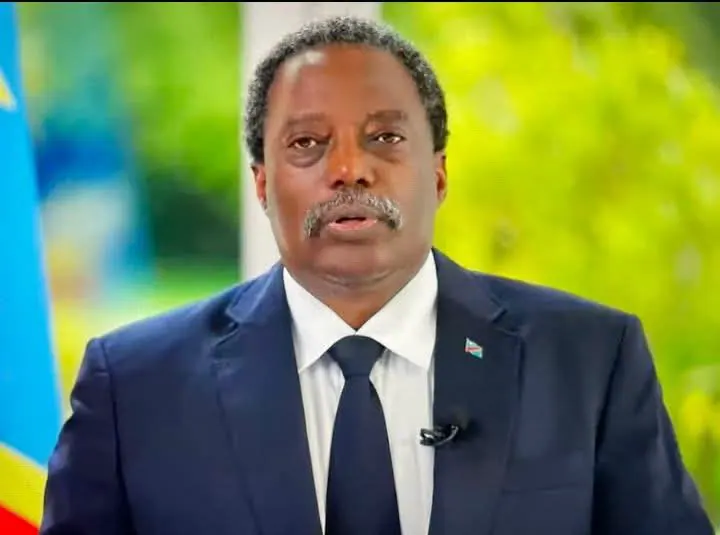
Former DR Congo President Joseph Kabila has publicly criticized current President Felix Tshisekedi's leadership, calling for an end to what he described as a "monstrous" regime. Speaking in Goma on October 9, 2026, Kabila expressed concerns over Tshisekedi's handling of state affairs, accusing him of prioritizing personal interests over national welfare. Kabila highlighted issues such as tribalism, corruption, and the deterioration of state institutions.
Kabila reflected on his own presidency, which ended in 2019, and the progress made during his tenure. He noted that he had left behind a unified country, a reconstituted nation, and a functioning democracy. Kabila also mentioned that he had reduced the national debt and established a professional army. However, he expressed disappointment that Tshisekedi had not built upon these achievements.
According to Kabila, Tshisekedi's regime has devolved into tyranny, with the president considering the country as his personal property. Kabila cited the suppression of freedoms, discrimination against minorities, and the exploitation of state resources for personal gain. He also accused Tshisekedi of surrounding himself with a clique of loyalists who prioritize their own interests over the nation's needs.
Kabila outlined a 12-point plan to address the country's issues, including ending tyranny, restoring democracy, and promoting national reconciliation. He also called for the neutralization of armed groups, the withdrawal of foreign troops, and the promotion of dialogue with neighboring countries. However, he noted that his proposals had been ignored by Tshisekedi's administration.
The security situation in DR Congo has continued to deteriorate, with Kabila criticizing Tshisekedi's handling of the conflict. He noted that the government's strategy has been ineffective, with the military suffering repeated setbacks against armed groups. Kabila also expressed concern over the continued collaboration with foreign-backed militias and the targeting of civilian populations.
Kabila's address was a clear indication of his intention to challenge Tshisekedi's leadership. The former president's criticisms have resonated with many Congolese, who are frustrated with the current government's performance. Tshisekedi's administration has yet to respond to Kabila's remarks, but the speech is likely to spark further debate and potentially mobilize opposition to the current government.
The DR Congo has faced numerous challenges in recent years, including conflict, corruption, and economic instability. Kabila's speech highlighted the need for urgent reforms and a return to democratic principles. As the country prepares for future elections, the political landscape is likely to remain volatile, with Kabila's influence and Tshisekedi's leadership being key factors in shaping the nation's future.
Key points
- Joseph Kabila has called for an end to President Felix Tshisekedi's rule, citing concerns over tribalism, corruption, and a failure to address national issues.