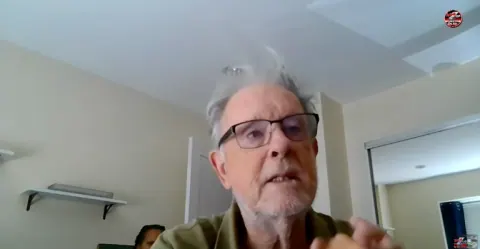
John McIntire, former country director for the World Bank in Senegal, Gambia, Guinea-Bissau, and Cape Verde, has expressed concerns over Senegal's financial situation. In an interview on the "Objection" show on Sud FM on September 20, 2026, McIntire stated that Senegal's debt crisis cannot be resolved by simply rescheduling debt payments. He attributed the beginning of Senegal's debt problems to 2019, when external debt was still considered sustainable.
McIntire cited a report by the Senegalese Court of Accounts from February 2025, which reevaluated the country's debt stock from approximately 75% to nearly 100% of GDP. He now estimates the debt-to-GDP ratio to be between 100% and 130%. The former World Bank official criticized the Senegalese authorities for contracting sovereign loans and guarantees without parliamentary approval and proper communication to the IMF.
McIntire also questioned the role of international institutions, including the World Bank and IMF, in Senegal's debt crisis. He suggested that they should have been aware of the situation and implied that they may have chosen to ignore it or been negligent. McIntire called for sanctions against officials involved, while clarifying that he did not accuse them of corruption or receiving undue benefits.
The former World Bank official praised the announcement of six criminal investigations into Senegal's debt by the Prime Minister before the National Assembly. He expressed confidence that these investigations would lead to indictments, given the secrecy surrounding the proceedings. McIntire also highlighted shortcomings in national control mechanisms, particularly regarding financing for Senelec and certain public investments.
McIntire argued that rescheduling debt payments, as considered by the Senegalese authorities, would not be enough to resolve the crisis. He noted that a significant portion of Senegal's debt, including multilateral debt and debt contracted on the UEMOA regional market, may not be eligible for classical restructuring mechanisms. The former World Bank official suggested that a new IMF program and World Bank budget support might only delay the crisis without addressing the structural imbalance between revenue and expenditure.
McIntire proposed three key solutions to Senegal's debt crisis: having private creditors contribute to the restructuring costs, subjecting adjustment choices to control by elected representatives, and protecting investments that support growth and social gains. He emphasized the importance of preserving essential spending, such as education, healthcare, and infrastructure, and advocated for better valuation of Senegal's oil, gas, and mineral resources.
McIntire also highlighted the potential of solar energy and criticized Africa's slow transition to renewable energy. He recommended a large-scale program of solar installations coupled with storage batteries. The former World Bank official concluded that Senegal's financial recovery should not come at the expense of essential spending and that a deep restructuring of the country's debt is necessary.
Key points
- John McIntire calls for deep restructuring of Senegal's debt to preserve social spending and priority investments.
- McIntire criticizes Senegalese authorities and international institutions for their role in the country's debt crisis.
- The former World Bank official proposes solutions, including private creditor involvement and protection of growth-supporting investments.