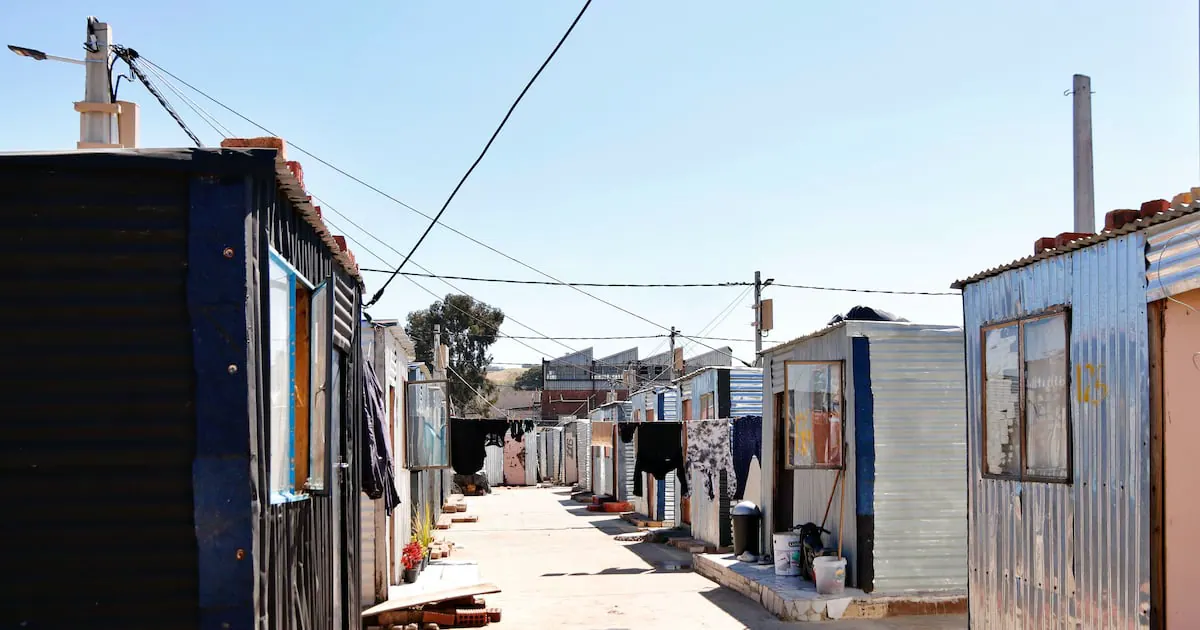
The City of Johannesburg is turning to solar power and battery storage to address the challenge of providing electricity to informal settlements. City Power, the municipal power utility, is investing R517.8-million in solar microgrids across five informal settlements. The alternative electrification programme currently covers Amarasta and Vukani in Alexandra, Shalazile in Denver, The View in Booysens, and Vlakfontein in southern Johannesburg.
Two projects, Amarasta and Shalazile, are complete and operational, while Vlakfontein and Vukani are under construction, and The View is partially complete. According to Isaac Mangena, City Power's general manager for public relations and communication, Johannesburg has over 300 informal settlements, and illegal connections, electricity theft, and meter tampering contribute significantly to the city's electricity losses. City Power's non-technical losses are estimated at approximately R4.5-billion.
The microgrids are not intended to replace conventional electricity infrastructure but are used where conventional grid electrification is constrained. The technology was selected for areas where conventional grid connections are difficult. Mangena explained that providing households with legal electricity connections and meters could help reduce illegal connections and improve safety, reliability, and revenue collection.
The Amarasta pilot project was the starting point for Johannesburg's microgrid programme, developed as an alternative to conventional grid electrification. The pilot was installed during the 2023/4 financial year, and lessons from Amarasta informed subsequent projects in other informal settlements. Shalazile in Denver was established after the 2023 Usindiso Building fire, which killed 77 people and displaced hundreds of residents.
Households connected to the solar microgrids still pay electricity tariffs, and qualifying vulnerable and indigent households can receive support through the City's Expanded Social Package. The Free Basic Electricity programme provides qualifying households with a basic allocation of electricity. The electrification programme began with funding through the Gauteng government's Energy Emergency Response Plan.
Zakhele Khanyile, a resident of the Shalazile settlement, said the government ensured they had electricity when they arrived at the site, although other services are still a work in progress. Residents now pay less for electricity through meter boxes connected to the City Power microgrids. Khanyile added that informal settlements are unlikely to disappear quickly in a city like Johannesburg, which attracts people seeking employment.
The expenditure on the project to date cannot be disclosed because three of the projects are incomplete, and their final financial obligations have not been settled. The R517.8-million is therefore not the final amount spent on the five projects. Frank Spencer, a spokesperson for the South African Photovoltaic Industry Association, said municipal mini-grid budgets could cover different components, and costs differ because budgets may include generation and storage only or other components.
Key points
- Johannesburg invests R517.8-million in solar-powered microgrids for five informal settlements.
- The microgrids provide safer, legal electricity where conventional grid connections are difficult.
- The programme aims to reduce illegal connections and improve safety, reliability, and revenue collection.