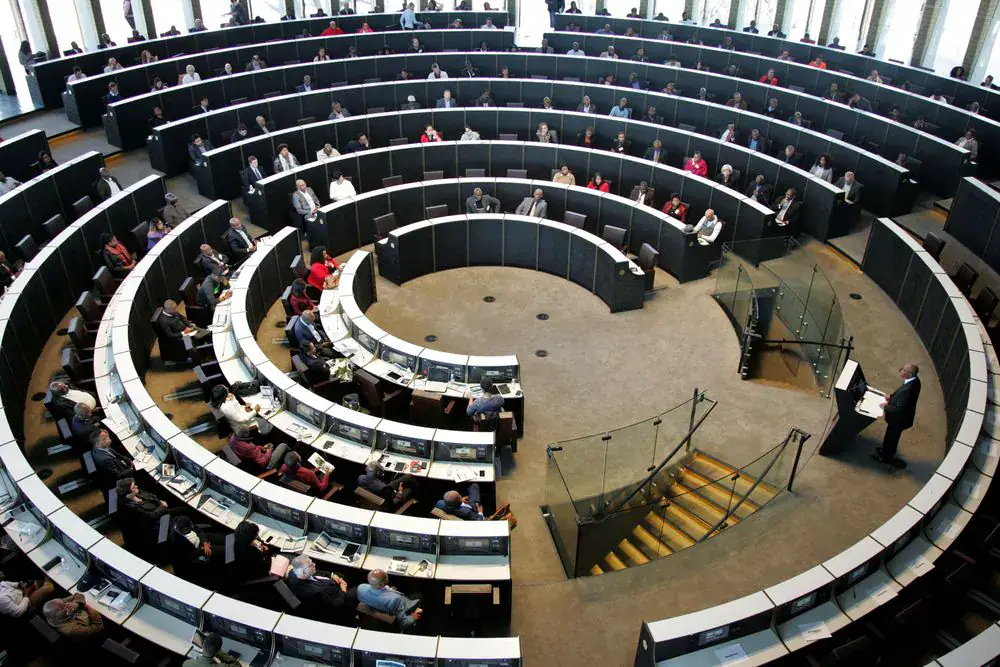
Johannesburg's political future will be decided on Monday as councillors are sworn in and the city elects a new mayor, speaker, and deputy mayor. The inaugural council meeting will convene at 1 pm at the Constance Connie Bapela Council Chamber in Braamfontein, following weeks of coalition negotiations. The meeting will also see the swearing-in of 270 councillors and the election of a chief whip. This follows the November 4 local government elections, in which no party secured an outright majority to govern the troubled metro.
The Democratic Alliance (DA) emerged as the largest party in Johannesburg, securing 91 seats, followed by the African National Congress (ANC) with 63. ActionSA came third with 42 seats, followed by the Economic Freedom Fighters (EFF) with 17, the MK Party with 15, the Patriotic Alliance (PA) with five, and the African Metropolitan Municipalities (AMM) and the South African Communist Party (SACP) with two seats each. The ANC governed Johannesburg through coalition arrangements before the November 4 elections.
The ANC has offered ActionSA the mayoral positions in Johannesburg and Tshwane as part of a proposed coalition deal, while retaining control of Ekurhuleni. Under the proposed deal, ActionSA leader Herman Mashaba would become Johannesburg mayor, while Dr Nasiphi Moya would remain at the helm of Tshwane. The ANC would retain the Ekurhuleni mayoralty, with one of its candidates expected to take the position. An ANC insider said the party was prepared to adjust its coalition demands following its poor electoral performance.
The proposed arrangement recognises the support enjoyed by Mashaba and Moya in their respective municipalities. ActionSA chairperson Michael Beaumont criticised the DA's offer, saying it would have allowed the DA to secure two mayoralties while ensuring both parties shared power. The DA's proposal would see Helen Zille become Johannesburg mayor, Khathutshelo Rasilingwane lead Ekurhuleni, and ActionSA's Moya remain mayor of Tshwane, but without ActionSA involvement.
The DA's prospects of entering government in Gauteng appeared to weaken further after Zille reportedly sent a message of defeat to her Gauteng caucus. The message read that the die was cast and the metros would instead be governed by the ANC, ActionSA, the EFF, the MK Party, and other parties where necessary. Zille added that she would remain in Johannesburg as a part-time councillor "to finish what we started".
ActionSA had previously put forward a proposal that would have allowed the DA to govern two metros, while ensuring both parties had a role in all three administrations. Under that proposal, the DA would take the mayoralties in Johannesburg and Ekurhuleni, while Moya would remain mayor of Tshwane. The parties would share the mayoral committees, with each receiving five seats in every municipality.
The election of the new mayor, speaker, and deputy mayor will take place on Monday, with reports suggesting that MK Party's Johannesburg mayoral candidate, Bongani Baloyi, was being considered for the position of deputy mayor. The DA leader, Geordin Hill-Lewis, said the offer was aimed at avoiding the political battles that had affected previous coalition governments.
Key points
- The ANC and ActionSA are close to a coalition deal that would see Herman Mashaba become the new mayor of Johannesburg.
- The DA's proposal to form a coalition with ActionSA was rejected, leading to the party's possible exclusion from government in Gauteng.
- The new administration in Johannesburg will be elected on Monday, with 270 councillors set to be sworn in.