Johannesburg's street names are more than just labels; they represent the city's history and cultural identity. The city's renaming project, which began in 2004, has been an effort to reclaim the landscape and replace names of old power with people who fought for freedom, democracy, and dignity. The project has not only honoured politicians and struggle heroes but also artists, musicians, journalists, and cultural workers who have made significant contributions to the city.
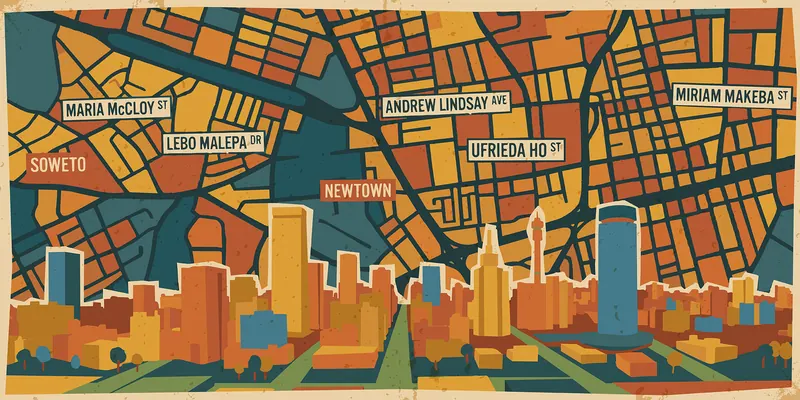
In 2004, the city renamed streets in the Newtown Cultural Precinct, putting legendary singer Miriam Makeba, Drum magazine investigative journalist Henry Nxumalo, sculptor Noria Mabasa, and playwright Barney Simon on the map. This act of cultural cartography was a way of saying that these individuals belong in the city's history and culture. Their names would no longer be confined to archives, history books, or memories of those who knew them.
The article's author, Laurice Taitz-Buntman, an urbanist and founder of Johannesburg In Your Pocket, suggests that the city's street-naming conversation should go beyond honouring political leaders. She proposes naming streets after cultural champions like Maria McCloy, a DJ, fashion designer, publicist, writer, and cultural force who championed African creativity and opened doors for others. McCloy passed away in May at the age of 50.
Other cultural champions who deserve recognition include Lebo Malepa, a tourism pioneer who turned a dump site into a thriving community park in Soweto. Malepa understood that experiencing a city like Johannesburg is not about visiting attractions but about meeting people. Then there is Andrew Lindsay, an artist and founder of Troyeville's Spaza Art Gallery, who took art onto the street and created mosaics with communities of women and young artists.
Ufrieda Ho, a journalist and writer, spent decades studying Johannesburg and wrote a memoir about growing up Chinese in apartheid South Africa. She started a night walk in Kensington that brought the community together. Gail Wilson, an artist and photowalker, documented Johannesburg's heritage and championed the city as she found it. These individuals, according to Taitz-Buntman, changed how we see the city, even though they did not change laws or lead political parties.
The city's policy allows for naming streets after outstanding South Africans from all walks of life, prioritizes naming unnamed features, and stresses community participation. Taitz-Buntman argues that the city's street-naming conversation should include honouring curators, DJs, writers, and photographers who have made significant contributions to the city's culture. This would provide an education for future generations and acknowledge the role of artists and community builders in shaping the city.
The Newtown renaming project understood that a cultural icon on a street sign is not just an honour but also an education. As the city continues to rename streets, it should consider the people who will walk beneath them in the future and what they might discover. Johannesburg was not only made by those who ruled it or fought for freedom but also by people who make the city more alive.
Key points
- Johannesburg's street renaming project aims to honour cultural icons and community builders.
- The city's policy allows for naming streets after outstanding South Africans from all walks of life.
- The street-naming conversation should include honouring artists, writers, and photographers who have made significant contributions to the city's culture.