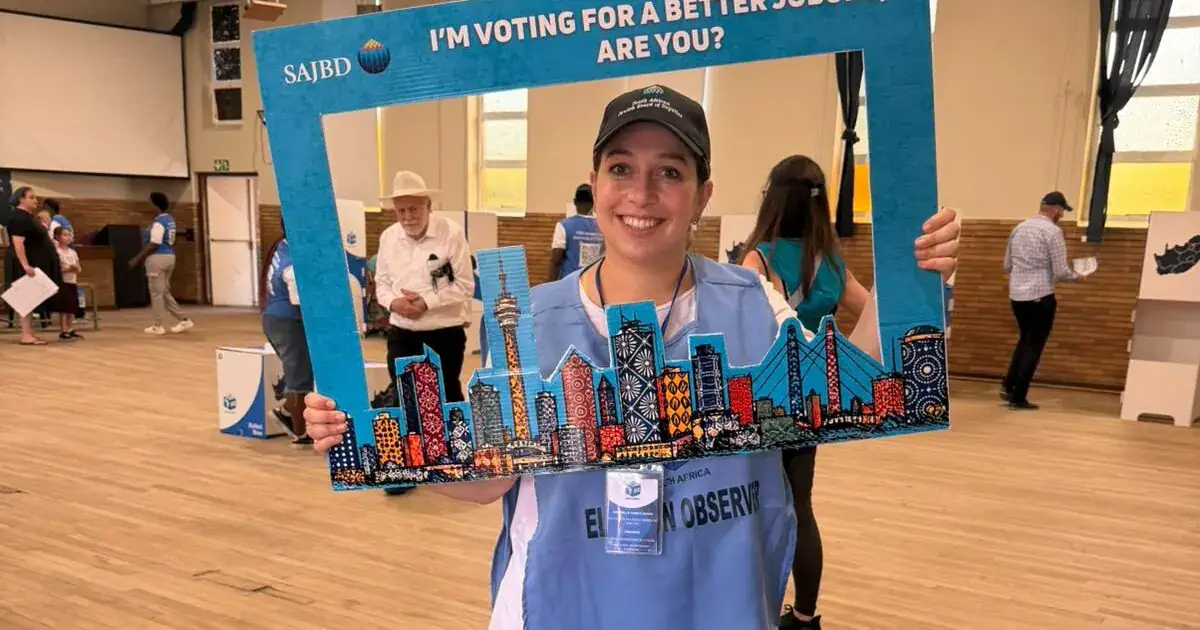
Gabi Farber-Cohen, youth and political liaison at the South African Jewish Board of Deputies (SAJBD), had doubts about her new role's impact after leaving the ANC. However, two and a half years later, she is proud to say that she has made a difference. Farber-Cohen's goal was to get the community to vote, ensure free and fair elections, and strengthen relationships with political leaders shaping Johannesburg's future.
The SAJBD started by hosting the Great Mayoral Debate, bringing together parties from across the political spectrum. The event, themed around "Brewing a Better Joburg," was designed to encourage community engagement and inform attendees about the elections. Young and old, religious and secular, were encouraged to participate, and the event saw a significant turnout. Farber-Cohen also visited schools to encourage matrics to register to vote, witnessing firsthand the excitement of 18-year-olds pulling out their IDs and registering for the first time.
In the weeks leading up to the elections, the SAJBD met with mayoral candidates and delegations from across the political spectrum. They hosted the Patriotic Alliance, the Inkatha Freedom Party, and the Umkhonto weSizwe Party, among others. One of the biggest lessons learned was that engaging with politicians doesn't mean agreeing with them; it means showing up, asking questions, building relationships, and making sure the Jewish community has a seat at the table.
On election day, more than 120 SAJBD election observers volunteered across all nine provinces to help ensure free and fair elections. The observers reported that most voting stations were functioning well, with professional electoral officials and efficient processes. Minor hiccups were reported, but it was encouraging to see that issues raised in previous elections had been addressed. Community members approached observers at voting stations, expressing gratitude for the encouragement to vote.
The SAJBD's efforts had a tangible impact, with many community members changing their minds and deciding to cast their ballots. At Summerwood Primary School, families arrived with their children, eager to show them what participating in democracy looks like. The energy was extraordinary, with one family arriving at 07:00 with their children in their pyjamas. The SAJBD also assisted a 90-year-old Jewish woman and several people with disabilities to cast their votes.
The following day, at the results centre, Farber-Cohen and her colleague Wendy Kahn were warmly greeted by political leaders from across the spectrum. Many remarked on the Jewish community's presence, celebrating or disappointed with their results. For Farber-Cohen, this moment represented the culmination of her efforts, demonstrating that making a difference doesn't necessarily mean being in Parliament; sometimes it means getting people to participate and ensuring the community has a seat at the table.
Johannesburg may be far from perfect, with potholes and a revolving door of mayors, but the local government elections showed that the city is full of people who care enough to make it better. The SAJBD's efforts serve as a reason to be hopeful about the city's future. As Farber-Cohen noted, making a difference can be as simple as giving someone that final push to participate.
Key points
- The SAJBD's efforts led to increased civic participation in Johannesburg's local government elections.
- The organization's engagement with politicians across the spectrum helped build relationships and ensure the Jewish community had a seat at the table.
- The elections demonstrated that making a difference can be achieved through simple actions, such as encouraging people to vote.
Reporting sources
- Potholes, politics, and reason to hope · Jewish Report