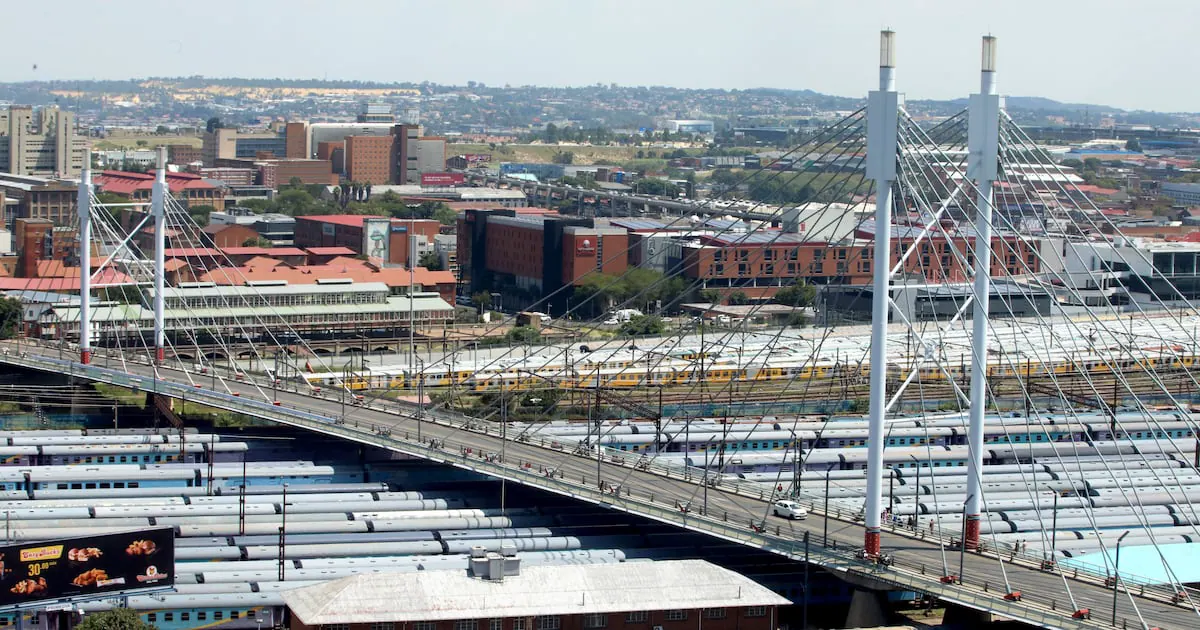
Johannesburg recently celebrated its 140th birthday, marking a significant milestone for the city. However, beneath the celebrations, concerns about its future persist. The city's history is relatively short compared to other human settlements, with Diyarbakir in Turkey having been continually inhabited for 10,000 years. Despite its youth, Johannesburg has played a pivotal role in shaping South Africa's history, particularly with the discovery of gold, which led to the country's colonial and subsequent developments.
The city's current prognosis appears grim, with various factors contributing to its challenges. These include the complexities of coalition governments, characterized by professional spoilers and petty kingmakers, as well as the fragmentation of public and private responsibilities. This has resulted in a myriad of fiefdoms, each with its own administrations, further complicating governance. The author of the article, Tom Eaton, suggests that Johannesburg is unique in that people move there without intending to grow old or die there, making it a city of fortune-seekers.
The potential for coalition brinkmanship in Johannesburg has significant implications for its residents and the broader South African landscape. The rise of populist and radical players, such as March and March, who exploit frustrations and fears, may lead to increased instability. If Johannesburg continues to decline, it may create a power vacuum contested by cynical and radical players, which could have far-reaching consequences for the country. Eaton warns that a failing Johannesburg could become fertile ground for populism, posing risks to South Africa's stability.
The impact of Johannesburg's decline extends beyond its borders, with semigration already altering the physical and economic landscape in Cape Town and other Western Cape towns. A continued influx of people from Johannesburg could intensify anxieties about densification, development, traffic congestion, and property costs. This, in turn, may affect the voting patterns of residents in these areas, potentially leading to coalition chaos in the Western Cape.
The Democratic Alliance (DA), which has traditionally held a stronghold in the Western Cape, may face challenges due to the growing influx of semigrants from Johannesburg. If the DA fails to manage this influx effectively, its support in the region could decline, potentially leading to coalition government instability. This scenario highlights the interconnectedness of Johannesburg's challenges and the broader implications for South Africa.
Eaton emphasizes that Johannesburg's future is crucial to South Africa's prospects, given its historical and ongoing influence. He argues that if Johannesburg is to exist for another 140 years, let alone 40 years, its current decline must be halted. The city's youthful energy and potential can be preserved only if its governance and stability issues are addressed. The upcoming local government elections will be an important step in determining the city's trajectory.
Ultimately, the fate of Johannesburg and South Africa are closely intertwined. The city's ability to overcome its current challenges will have a significant impact on the country's stability and future prospects. As Eaton notes, the future of South Africa hinges on the success of this strange, noisy, and boisterous settlement that has sprung up on the Witwatersrand.
Key points
- Johannesburg's 140th birthday celebrations mask concerns over its future amid coalition chaos and semigration.
- The city's decline could lead to increased instability and populism in South Africa.
- Johannesburg's future is crucial to South Africa's prospects, given its historical and ongoing influence.