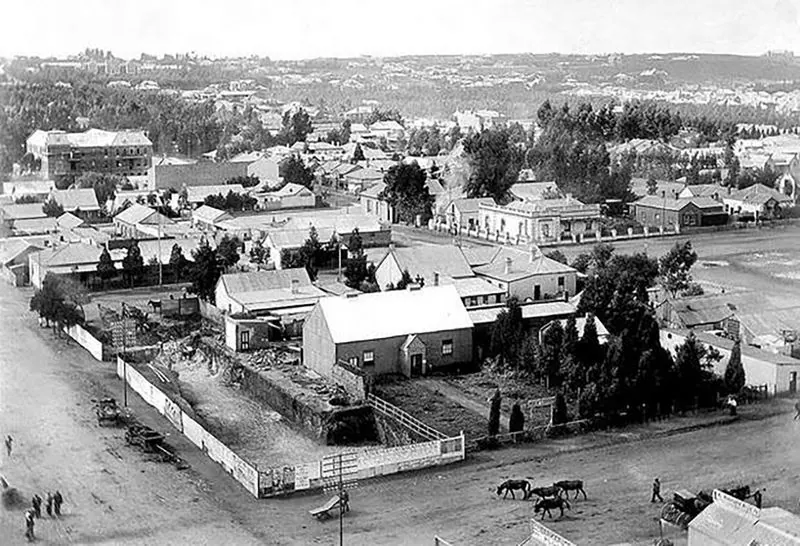
Johannesburg, South Africa's economic powerhouse, is celebrating 140 years of existence. The city sprang to life in 1886 after the discovery of the main gold reef at Langlaagte, west of the current city centre. Within months, open workings spread along the gold-bearing reefs, and tents and corrugated-iron structures covered the open veld. The city's rapid growth brought various amenities, including hotels, theatres, churches, schools, and newspapers. However, the city also faced challenges such as inadequate water, poor roads, dust, mud, and overcrowding.
The city's early growth was marked by rapid development, with 127 saloons, 17 hotels, and several beer halls and spirit merchants by 1889. The white population numbered barely 20,000 at the time. Despite its rough beginnings, Joburg's residents wanted entertainment, with various theatres, circuses, concerts, and sports events. The city's shops became increasingly sophisticated, selling luxuries such as sultana figs and Russian caviar. Money poured into the town, with mining shares traded in bars, restaurants, and on the streets.
The discovery of gold on the Witwatersrand led to the growth of deep-level mining, which allowed gold to be extracted far below the surface. This created the great mining houses and fabulously wealthy Randlords, whose mansions spread across Joburg's northern ridges. However, the mines depended heavily on African migrant labour, and racial segregation and inequality became embedded in the developing city. These inequalities were later entrenched under apartheid.
Joburg's isolation disappeared quickly with the arrival of telegraph and postal services, railways, newspapers, schools, and places of worship. However, the city also experienced disasters, including the Braamfontein dynamite explosion in 1896 and the South African War, which emptied Joburg as thousands fled. Despite these challenges, Joburg recovered, largely due to the resilience of its residents.
By 1986, when Joburg celebrated its centenary, the city was still physically divided by apartheid. The political changes of the 1990s eventually brought previously separate local authorities into new metropolitan structures, and in 2000, Johannesburg was restructured as a single metropolitan municipality. However, the economic centre had already begun shifting north, with corporates moving to Sandton and other northern nodes.
In recent years, Joburg has tried to regenerate its inner city, with mixed results. Newtown and Braamfontein were redeveloped, and the Nelson Mandela Bridge opened in 2003. The city also hosted the football World Cup final at Soccer City in 2010, putting the city and South Africa on the global stage. However, Joburg's mining past continues to pose challenges, with illegal miners targeting the gold left behind in old shafts and infrastructure.
The city's ageing infrastructure is also a concern, with an underground explosion in July 2023 killing one person and injuring dozens. The city's water outages and poor roads are also reminiscent of its early days. Despite these challenges, Joburg remains a resilient city, with a rich history and a strong sense of community. Its 140th birthday is a testament to its enduring spirit.
Key points
- Johannesburg was founded in 1886 after the discovery of gold in the area.
- The city's rapid growth was marked by challenges such as inadequate water, poor roads, and overcrowding.
- Joburg's mining past continues to pose challenges, with illegal miners targeting the gold left behind in old shafts and infrastructure.