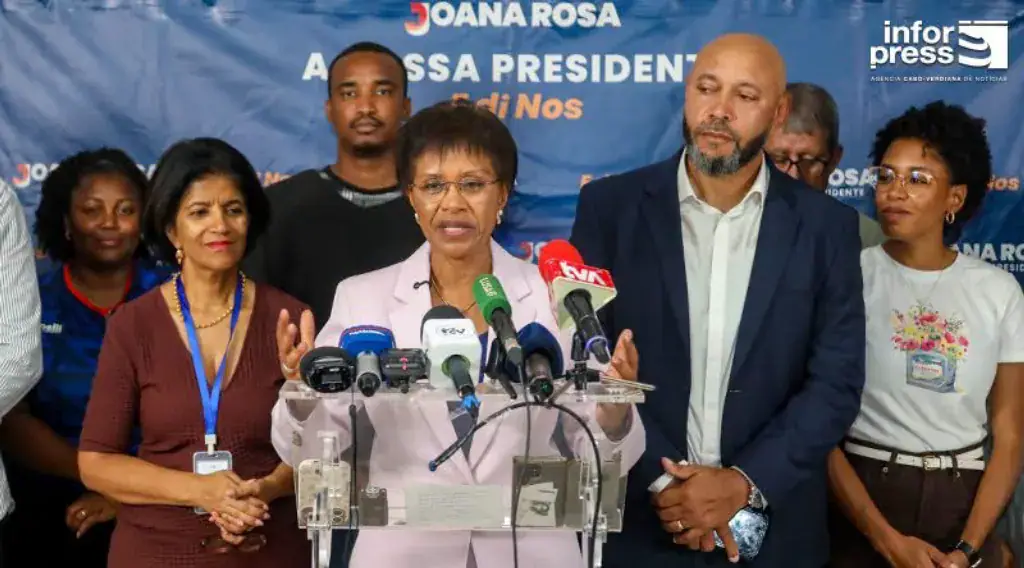
Joana Rosa, the candidate for President of Cabo Verde, has called for a broad reflection among political parties, universities, and civil society to understand the causes of high voter abstention in the recent presidential elections. According to provisional data, the abstention rate was around 68%. Rosa expressed concern that the majority of voters did not participate in the election, describing it as a dark spot in Cabo Verde's democracy.
Rosa emphasized that institutions must find ways to strengthen proximity with citizens and encourage participation in democratic life. She stressed that democracy cannot thrive when the majority of voters choose to abstain. The candidate urged a joint analysis of the situation, involving various sectors, to identify the reasons behind the high abstention rate. This rate surpassed 52% recorded in the 2021 presidential elections.
Rosa accepted the election results, which indicate her defeat and the re-election of José Maria Neves in the first round. She thanked all who supported her campaign and assured that she would continue to be active in politics, both as an elected deputy and as a citizen. Rosa vowed to defend democracy, the rule of law, and the balance of powers, despite her electoral defeat.
The candidate reiterated that her participation in the presidential race was a contribution to equality and the reinforcement of female participation in politics. She pledged to continue monitoring the main national challenges, including poverty reduction, territorial cohesion, regionalization, healthcare, education, and agriculture. Rosa also emphasized the importance of improving the quality of life for Cabo Verdeans, including those living in the diaspora.
According to provisional data from the elections.cv portal, José Maria Neves secured 63.8% (79,732 votes), while Rosa obtained 31.6% (39,436 votes). Other candidates, including Gilson Alves, Antero Lopes, Casimiro de Pina, and Loisito Sousa, received smaller percentages of the votes. Rosa expressed respect for the election results but maintained her concerns about the functioning of the Cabo Verdean political system.
During her campaign, Rosa had raised concerns about the risks of power concentration. She felicitated the re-elected candidate and reaffirmed her commitment to defending strong institutions, independent courts, and the balance of powers. Rosa's campaign focused on promoting democratic values and encouraging citizen participation.
The high abstention rate and election results have sparked reflection on the state of democracy in Cabo Verde. Rosa's call for a broad reflection may contribute to a deeper analysis of the factors influencing voter turnout and the strengthening of democratic institutions in the country. The issue of abstention will likely remain a topic of discussion among politicians, academics, and civil society in the coming days.
Key points
- Joana Rosa urges broad reflection on 68% voter abstention in Cabo Verde presidential elections.
Reporting sources
- Joana Rosa defende reflexão alargada sobre afastamento dos eleitores das urnas · Expresso das Ilhas