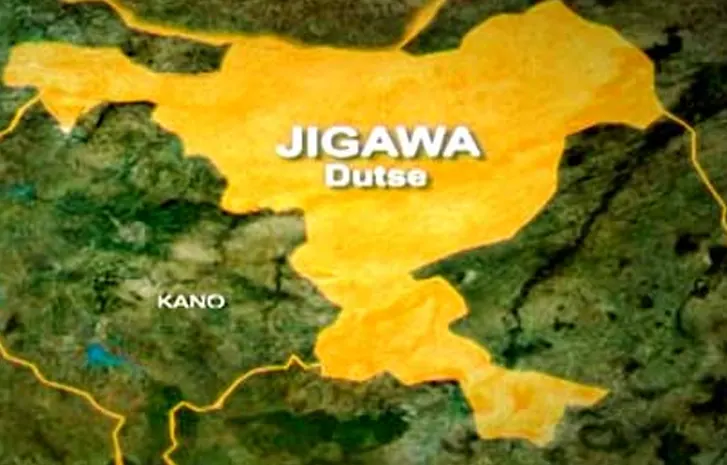
A recent dry spell in Basirka Town, Gwaram Local Government Area of Jigawa State, Nigeria, has prompted residents to hold three days of special prayers for rain. The town, which relies heavily on rainfed farming, has experienced a severe dry spell that has lasted for 17 days, causing concern among residents and farmers. The dry spell has been attributed to climate change and global warming, rather than divine wrath. Basirka Town has a tropical climate with a dry moisture regime, characterized by high temperatures and a short rainy season.
The climatology of Basirka Town indicates that the normal onset period of the rainy season is between May 24 and June 7, while the cessation period is between October 6 and October 29. However, the dry spell in Basirka began around the end of August, indicating a shift beyond the predicted period. This deviation may be associated with the sudden development of El Niño around June 2026. According to Mr. Inuwa Ahmad, a crop farmer in Basirka Town, "It started raining this year around three months ago. It has not rained for the past 17 days."
The impact of the dry spell on crops is another indicator of drought. Mr. Inuwa Ahmad reported that crops such as maize, sorghum, and rice are drying up and dying. A Remote Visual Assessment (RVA) of the fields confirmed that the soils are dry and the crops are experiencing severe moisture stress, with signs of dieback. Even if the rains return, the crops cannot recover again. The situation reflects a drought condition, as the dry spell has gone beyond the moderate dry-spell threshold and has now reached the severe dry-spell level.
The 2026 Climate Guide for Farmers in Nigeria, developed by the Agrocentric Creativity Initiative Platform for Agricultural Awareness Amongst Youths (ACIPAAY), predicted the occurrence of severe dry spells between June and August 2026. However, the dry spell in Basirka began around the end of August, indicating a shift beyond the predicted period. The farmer's account of the onset of the rainy season aligns with the 2026 Climate Guide for Farmers in Nigeria.
The rainy season normally ends between late September and early October, according to Mr. Inuwa Ahmad. This also aligns with the 2026 Climate Guide for Farmers in Nigeria. A severe dry spell can typically last up to 21 days, and this may be worsened by the strong El Niño, exhausting the rest of the narrow window before the typical cessation of the rainy season. This could result in a 100% loss of agricultural inputs and harvests for many farmers, potentially resulting in food insecurity and household economic hardship.
Engr. Auwal Garba Ibrahim, the Jigawa State Chapter Chairman of the All Farmers Association of Nigeria (AFAN), explained that farmers had an engagement with extension agents under the Jigawa State Government during the onset of the rainy season. They were advised to prepare for floods and on crop varieties to plant. However, no flood was experienced, and he described the information as outdated. AFAN has donated about 100 bags of fertilizer to identified affected farmers and, through partnerships, provided cash support to cushion the effects of the drought.
A coordinated approach of Relief, Recovery, and Resilience (3Rs) can help affected farmers manage the immediate impacts while strengthening their capacity to cope with future droughts. The 3Rs framework includes Relief: emergency food and financial support for affected farming households, alongside training and support for alternative livelihoods. Recovery: support for the next growing season through improved or early-maturing crop varieties, agricultural inputs, climate-smart extension services, and livelihood restoration. Resilience: improved access to accurate and reliable localized climate information, climate-smart agricultural practices, irrigation and water management, drought-tolerant and early-maturing varieties, rainwater harvesting, and strengthened early-warning systems.
Key points
- The drought in Basirka Town, Jigawa State, Nigeria, has been attributed to climate change and global warming.
- The 2026 Climate Guide for Farmers in Nigeria predicted the occurrence of severe dry spells between June and August 2026.
- A coordinated approach of Relief, Recovery, and Resilience (3Rs) can help affected farmers manage the immediate impacts while strengthening their capacity to cope with future droughts.