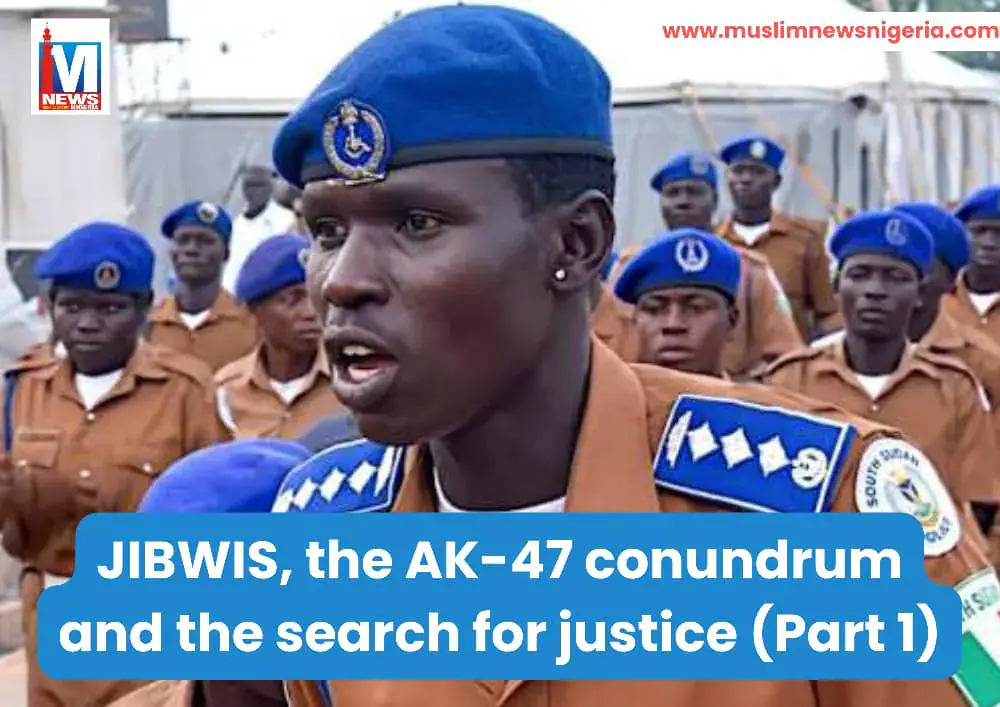
A 22-year-old man, Umar Ibrahim Gandi Maradun, was arrested on October 27 in connection with a viral video that showed him marching with children and teenagers in uniforms associated with Jama'atu Izalatil Bid'ah Wa Iqamatis Sunnah (JIBWIS). In the video, he called for an AK-47 rifle to kill people he described as infidels in Enugu and Plateau states. The video sparked widespread condemnation, with many social media users attacking JIBWIS, Islam, and Muslims generally.
The two JIBWIS factions, led by Sheikh Abdullahi Bala Lau and Sheikh Muhammad Sani Yahaya Jingir, promptly condemned the video and distanced themselves from the inflammatory statements. They reaffirmed their rejection of violence and threats against people of other faiths. The Bala Lau-led faction called on security agencies to investigate the incident, while the Jingir-led faction also made it clear that it rejected violence.
The police have commended themselves for their swift response and for taking steps to investigate the video. Preliminary findings indicated that the video was recorded on Friday, October 23, while the suspect and others were reportedly on their way to a mosque to provide security during Friday prayers and preaching. The authorities also disclosed that pupils from two Islamic schools appeared in the footage.
However, it is equally important to avoid using the actions or statements of an individual to judge an entire religion or its followers. Islam teaches respect for human life, justice, and peaceful coexistence. The Qur'an states in Surah Al-Ma'idah, verse 32, that killing a person unjustly is a grave offence, while Surah Al-Mumtahanah, verse 8, encourages kindness and justice towards those who do not fight Muslims because of their religion or drive them from their homes.
The incident has also highlighted the need for the authorities to extend their searchlight to individuals and other religious groups whose actions and utterances have threatened Muslims, insulted Islam, or fueled religious tensions. There have been documented reports of attacks on Muslim worshippers and mosques in Southwest Nigeria by violent masquerades and traditional worshippers, yet many of these infractions went uninvestigated with no arrests made.
Incidents involving Muslims often attract intense media attention and are seized upon by Islamophobic voices to stigmatize Islam and its followers. However, attacks on Muslims, assaults on mosques, and provocations against Islamic beliefs do not always receive comparable scrutiny. Such selective outrage reinforces perceptions of bias and risks allowing those responsible for offences against Muslims to escape accountability.
Key points
- The police must investigate the incident on its merits, without allowing it to become an excuse for Islamophobic attacks or the demonization of Muslims.
- The authorities should also examine the controversy surrounding traditional religion extremist Tani Olohun and inflammatory statements by prominent Christian figures.
- Condemning a disturbing statement and defending Islam against misrepresentation are not mutually exclusive.