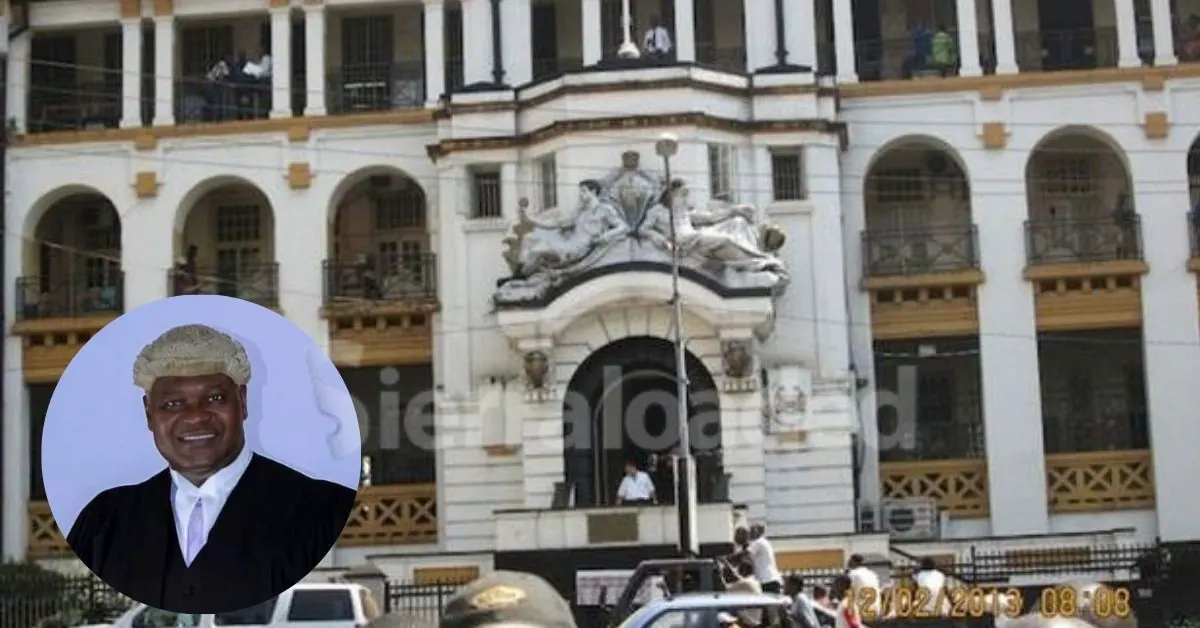
The Supreme Court of Sierra Leone commenced a crucial hearing on the Constitutional Amendment Bill, 2025, with a challenge from the All People's Congress (APC) counsel, Joseph Fitzgerald Kamara, popularly known as JFK. Kamara questioned the state's readiness for the hearing, citing the absence of a Statement of Case from the Office of the Attorney-General and Minister of Justice. This led to a tense exchange between Kamara and Chief Justice Komba Kamanda, who emphasized the need for professional decorum and respect for the judicial process.
The case revolves around the disputed passage of the Constitutional Amendment Bill by Parliament. The APC and other applicants argue that the parliamentary process was flawed, as the Bill was passed without securing the support of at least two-thirds of all Members of Parliament, as required by Section 108(2)(b) of the 1991 Constitution. The controversy escalated on August 10, when opposition lawmakers walked out of Parliament before the final vote, leading Speaker Segepoh Solomon Thomas to rule that the Bill could be passed by a majority of members present and voting.
The Constitutional Amendment Bill proposes significant changes to Sierra Leone's constitutional and electoral framework. Key reforms include reducing the presidential first-round victory threshold from 55% to 50% plus one vote, introducing proportional representation in parliamentary elections, and implementing a 30% minimum quota for women in political nominations. Additionally, the Bill addresses the eligibility of dual citizens to contest parliamentary seats and hold public office.
President Julius Maada Bio has withheld assent to the Bill and referred the constitutional questions surrounding its passage to the Supreme Court under Section 122(1) of the Constitution. The Supreme Court's decision will determine the constitutional questions surrounding the parliamentary process and could clarify how the two-thirds requirement for constitutional amendments should be applied. This decision is expected to have far-reaching implications for Sierra Leone's democratic processes.
Kamara has consistently emphasized that the case is fundamentally about constitutional compliance rather than political interests. He stressed that Parliament, the government, and everyone else must adhere to the Constitution, and that no one is above it, including the President, the Speaker, and Parliament itself. This stance underscores the importance of upholding the rule of law and ensuring that constitutional processes are followed.
The hearing was briefly stood down after Kamara's challenge, before proceedings continued. The Supreme Court's five-member panel will review the case and determine the constitutional validity of the parliamentary process. The court's decision is expected to bring clarity to the constitutional requirements for passing amendments and ensure that the country's democratic processes are strengthened.
The outcome of this case will have significant implications for Sierra Leone's democratic development. The Supreme Court's ruling will either validate or invalidate the parliamentary process, and provide guidance on the implementation of the Constitutional Amendment Bill. The decision will also underscore the importance of adhering to constitutional processes and upholding the rule of law in Sierra Leone.
Key points
- The Supreme Court hearing challenges the parliamentary process for passing the Constitutional Amendment Bill, 2025.
- The case centers on whether Parliament followed the required two-thirds majority for constitutional amendments.
- The Supreme Court's decision will determine the constitutional validity of the parliamentary process and clarify the requirements for passing amendments.