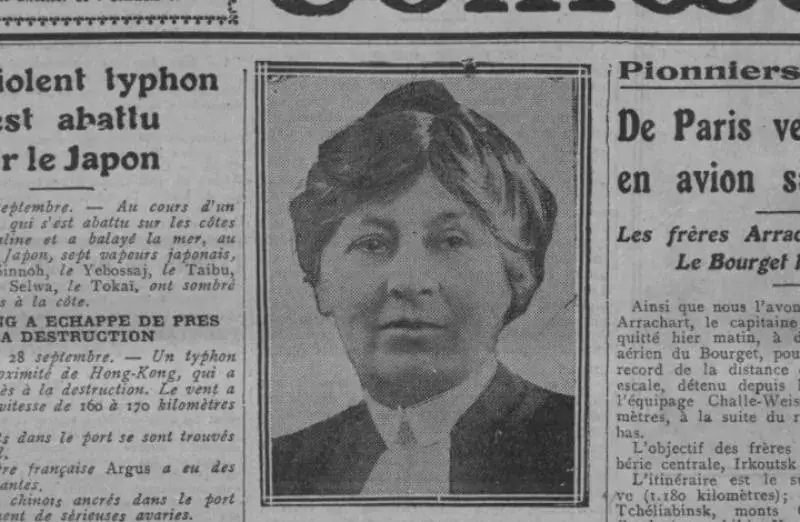
Jeanne Chauvin, a bright and determined young woman, took a significant step in her career on November 24, 1897, when she presented herself to the Court of Appeal in Paris to take the oath of a lawyer. With a doctorate in law and a license in letters, Chauvin was a notable figure, but her application was met with resistance. A journalist from the monarchist newspaper Le Soleil described the scene, noting that Chauvin's presence sparked a mixture of admiration and curiosity among the crowd.
Despite her qualifications, Chauvin was initially rejected, with the court citing that the law did not permit women to practice as lawyers. Undeterred, Chauvin waited three years for a law to be passed on December 1, 1900, allowing women to access the bar and plead. When the law was passed, Chauvin took the oath at the Paris bar in 1900. Her swearing-in ceremony was an extraordinary event, with a large crowd of lawyers, magistrates, and journalists in attendance.
Chauvin began pleading cases in 1901, starting with a highly publicized case involving a railway disaster in Choisy-le-Roi. Her performance received mixed reviews from the press, with some finding her delivery to be dull and lacking in impact. However, others saw potential in the young lawyer, praising her clear voice and confident demeanor. As Chauvin continued her career, she earned a reputation as a dedicated and skilled lawyer.
Over the next twenty years, Chauvin devoted herself to her profession, avoiding the media spotlight. Her dedication and hard work earned her recognition, and she was eventually made a Chevalier of the Legion of Honor. Chauvin's legacy extended beyond her own achievements, as she paved the way for future generations of female lawyers in France.
By the time of Chauvin's death in 1926, there were 125 women registered with the bar or in training. The press paid tribute to Chauvin, describing her as an excellent lawyer and a kind, discreet woman who had dedicated her life to her profession. Chauvin's story serves as an inspiration to women who have followed in her footsteps, pursuing careers in law and other male-dominated fields.
Chauvin's early struggles and perseverance in the face of adversity have been recognized as a significant milestone in the fight for women's rights in France. Her determination to succeed in a field dominated by men helped to challenge societal norms and pave the way for future generations of women to pursue careers in law and other professions.
Today, Jeanne Chauvin is remembered as a pioneer for women lawyers in France, a trailblazer who broke down barriers and opened doors for others to follow. Her legacy continues to inspire women to pursue careers in law and other fields, and her story serves as a testament to the power of determination and hard work in overcoming obstacles and achieving success.
Key points
- Jeanne Chauvin became the first woman to plead in a French court in 1901, marking a significant milestone in the fight for women's rights in France.
- Chauvin's determination and perseverance in the face of adversity helped to pave the way for future generations of female lawyers in France.
- By the time of Chauvin's death in 1926, there were 125 women registered with the bar or in training, a testament to her enduring legacy.
Reporting sources
- Le Radical · Le Radical