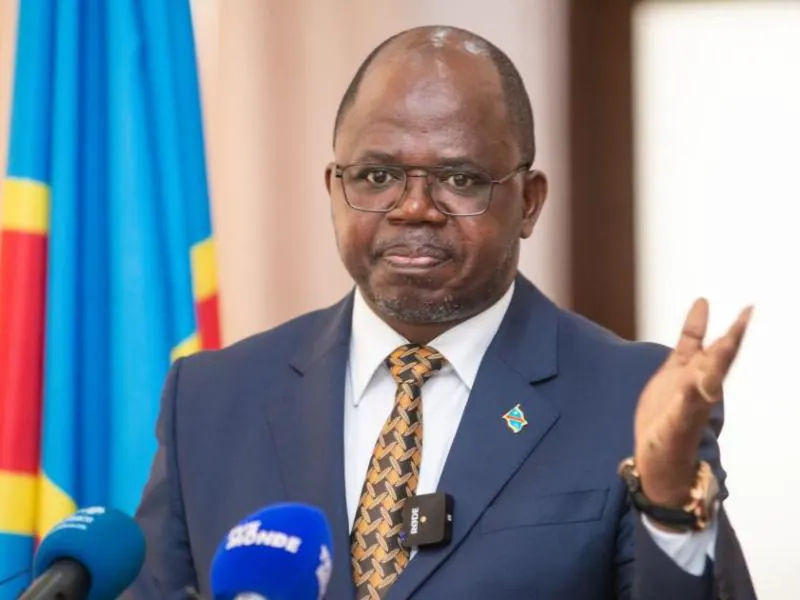
Jean-Claude Tshilumbayi, the first vice-president of the National Assembly, has strongly criticized Joseph Kabila's governance record in the Democratic Republic of the Congo. Speaking on October 11, Tshilumbayi described Kabila's 18-year rule as a period of "mediocrity" marked by conflict, insecurity, and economic mismanagement. He cited the Kasaï region's Kamuina Nsapu conflict, ongoing violence in Ituri, and insecurity in Sankuru as examples of the chaos left behind.
Tshilumbayi also highlighted the dire situation inherited by the current government, including cities overrun by "kulunas" (armed groups), postponed elections in Yumbi and Beni due to violence, and a repressive climate characterized by recurrent internet shutdowns. He further accused Kabila's regime of being responsible for the assassination of UN expert Michael Sharp in Kasaï and numerous other human rights abuses.
On the economic front, Tshilumbayi painted a stark picture of the country's financial situation under Kabila. He claimed that the former president left behind a nominal GDP of $40 billion and foreign exchange reserves of $800 million, compared to the current GDP of around $140 billion and reserves of $8.5 billion. However, he disputed Kabila's assertion that the country was debt-free, alleging that the former president bequeathed a debt of approximately $5 billion, which has since ballooned to around $16 billion.
Tshilumbayi also took issue with Kabila's education policies, accusing him of proliferating universities for "political merchandise" with students attending classes "under trees." He claimed that the previous regime's budgets were "stagnant and unrealistic" and that the current government is working to address the backlog of unpaid salaries for 600,000 teachers and arrears owed to diplomats.
In response, Tharcisse Loseke of the Sauvons la RDC platform contested Tshilumbayi's assertions, claiming that Kabila's regime left behind $3 billion in foreign exchange reserves and that the current debt stands at around $18 billion. The exchange highlights the ongoing debate over the legacy of Kabila's rule and the challenges facing the current government in the DR Congo.
Tshilumbayi's criticism of Kabila's governance record is part of a broader discussion about the country's development and stability. The DR Congo has faced numerous challenges, including ongoing conflict, corruption, and economic mismanagement. As the country continues to navigate these complexities, the assessment of Kabila's legacy and the performance of the current government will remain a contentious issue.
The debate between Tshilumbayi and Loseke reflects the highly polarized nature of politics in the DR Congo, with different stakeholders offering competing narratives about the country's past, present, and future. As the country moves forward, it will be crucial for leaders to engage in constructive dialogue and work towards finding solutions to the country's many challenges.
Key points
- Jean-Claude Tshilumbayi criticizes Joseph Kabila's governance record, citing poor economic management and human rights abuses.