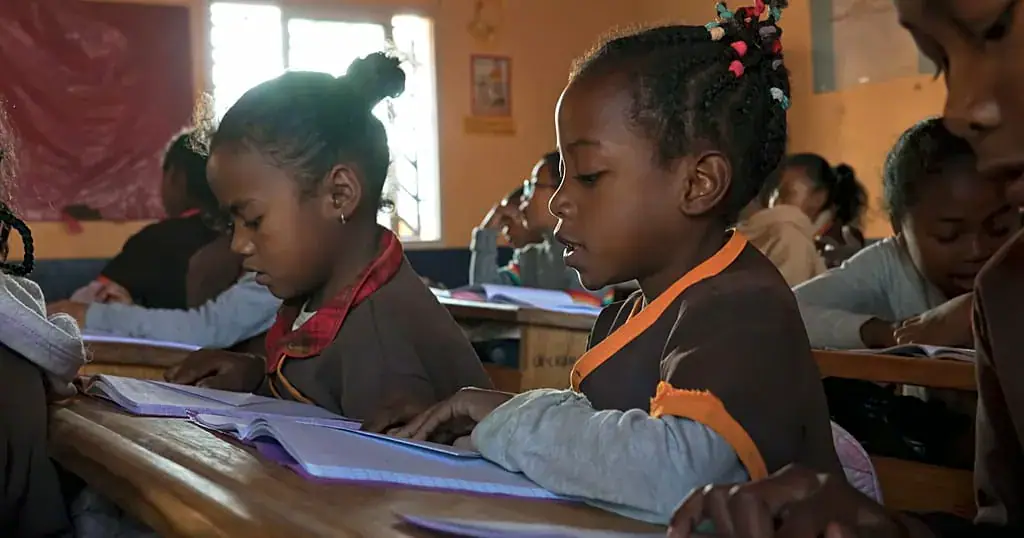
In a collaborative effort to enhance education, the Japan International Cooperation Agency (JICA) has launched the School for All programme in Madagascar. This initiative, which began in Niger in 2004, has expanded to 11 African countries, focusing on sustainable and effective educational development. The programme's approach emphasizes the importance of stakeholder engagement, ensuring that all parties work together to achieve educational goals.
A key component of the School for All programme is the establishment of School Management Committees. These committees, comprising parents, teachers, and local community members, meet regularly to discuss education priorities, finances, and budget allocation. According to Marie Harivola Malala Razanadrasoa, President of the School Management Committee, the committees promote transparency in management and decision-making.
The School for All programme also provides additional support to students, including meals organized by the community and pre-school lessons inspired by Japanese storytelling methods. Tinasoa Helimalala Rabezandry, Primary school director, has witnessed significant improvements in reading skills among students participating in the programme. This approach aims to create a supportive learning environment that fosters academic success.
Masahiro Hara, Chief Advisor at JICA School for All project, highlights the programme's unique approach. By engaging all stakeholders and promoting collaboration, educational development can be sustainable and effective even with limited resources. This methodology has shown promising results in Madagascar and other participating countries.
The programme's impact extends beyond the classroom, promoting community involvement and ownership of education. By empowering local stakeholders to take charge of educational development, School for All encourages a sense of responsibility and accountability. This approach has the potential to create lasting positive change in the education sector.
The success of School for All in Madagascar is a testament to the effectiveness of collaborative approaches to education. By working together, stakeholders can create a supportive learning environment that benefits students and the broader community. As the programme continues to expand, it is likely to have a lasting impact on education in Madagascar and beyond.
The Government of Japan, through JICA, has demonstrated its commitment to improving education in Madagascar. The School for All programme is a significant step towards achieving this goal, and its success will likely be closely monitored by educators and policymakers. With its focus on stakeholder engagement and community involvement, School for All has the potential to serve as a model for educational development in other countries.
Key points
- The School for All programme has been launched in 11 African countries, including Madagascar, to improve education through stakeholder engagement and community involvement.