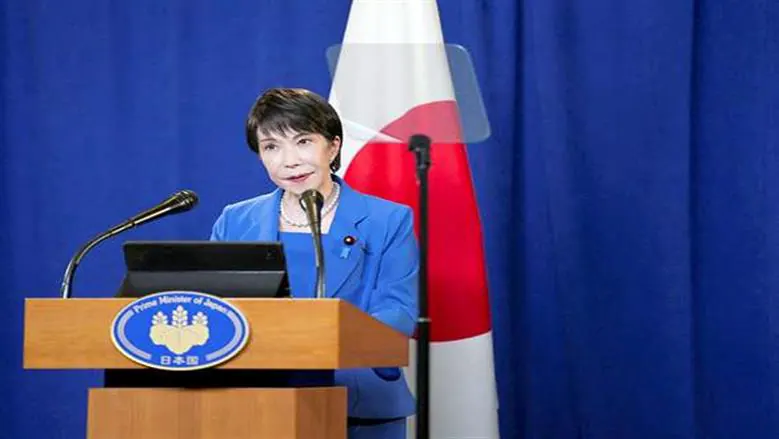
Japanese Prime Minister Sanae Takaiichi's call to remove references to "enemy states" from the UN Charter has ignited a new wave of controversy and outrage in China. This move has brought to the forefront a highly sensitive issue in the history of Sino-Japanese relations: the extent to which Japan has transformed since its defeat in World War II and abandoned its former militaristic ambitions. The Chinese newspaper "China Daily" has criticized Takaiichi's stance, arguing that 81 years after the end of World War II, Japan has not adequately learned from history or made amends for its past actions.
The "China Daily" newspaper published an editorial questioning whether the passage of time has been sufficient to heal the wounds of those who suffered under Japan's militarism. The editorial posed a crucial question: have the references to "enemy states" in the UN Charter become outdated relics of a bygone era, or has Japan's behavior genuinely changed? According to the newspaper, Takaiichi's speech at the UN General Assembly has reignited this debate, with Japan seeking to delete these references based on the 2005 World Summit Outcome document, which proposed eliminating the term "enemy state."
However, "China Daily" argues that Japan is selectively interpreting the document, ignoring that it was not a binding decision but rather a non-binding outcome adopted by the General Assembly without a vote. The Chinese newspaper emphasizes that the deletion of these references was proposed alongside a set of conditions and references, including Resolution 50/52 and related discussions, which highlighted the need for Japan and other defeated nations to demonstrate a complete renunciation of aggression and express genuine remorse for their past crimes.
The editorial also links Japan's current debate to recent shifts in its defense policy, suggesting that Tokyo's actions raise questions about the validity of claims that the "enemy state" clauses have become obsolete. In April, the Japanese government lifted long-standing restrictions on arms exports, allowing it to export lethal military systems. Concurrently, Japan is revising its security strategy and considering a re-evaluation of its "Three Principles on Nuclear Disarmament," while its military is developing capabilities in areas such as space, cybersecurity, and artificial intelligence.
China Daily accuses right-wing currents in Japan of reviving elements of its former militarism by exaggerating perceived external threats and presenting military power as a primary deterrent. The newspaper argues that Japan's use of rhetoric such as "freedom," "order," and "peace" to justify military expansion is reminiscent of its past aggressive behavior. According to "China Daily," 81 years have not been sufficient to close the chapter on Japan's past, and the references to "enemy states" in the UN Charter were not mere historical relics but guarantees established after World War II to address defeated nations.
The Chinese newspaper asserts that deleting these clauses cannot be achieved through a unilateral political decision, as the UN Charter's Article 108 requires a two-thirds majority vote in the General Assembly and ratification by two-thirds of member states, including all five permanent members of the Security Council. Therefore, relying on the 2005 non-binding document as justification for removing these clauses is, in "China Daily's" view, legally flawed and amounts to a political message from Tokyo to the international community.
In conclusion, "China Daily" maintains that the debate is not merely about outdated phrases in an international document but about the political and legal memory of the post-World War II international order. If Japan wishes to convince the world that these clauses have become obsolete, the newspaper argues that it should demonstrate a consistent record of adhering to the principles of its post-war pacifism, rather than simply demanding their removal.
Key points
- Japan's push to remove 'enemy state' references from the UN Charter has sparked concerns in China that Tokyo is not adequately acknowledging its past militarism.
- The debate has highlighted Japan's recent shifts in defense policy, including the lifting of arms export restrictions and revisions to its security strategy.
- China argues that removing the 'enemy state' clauses requires a more substantial demonstration of Japan's commitment to pacifism and a renunciation of its past aggressive behavior.