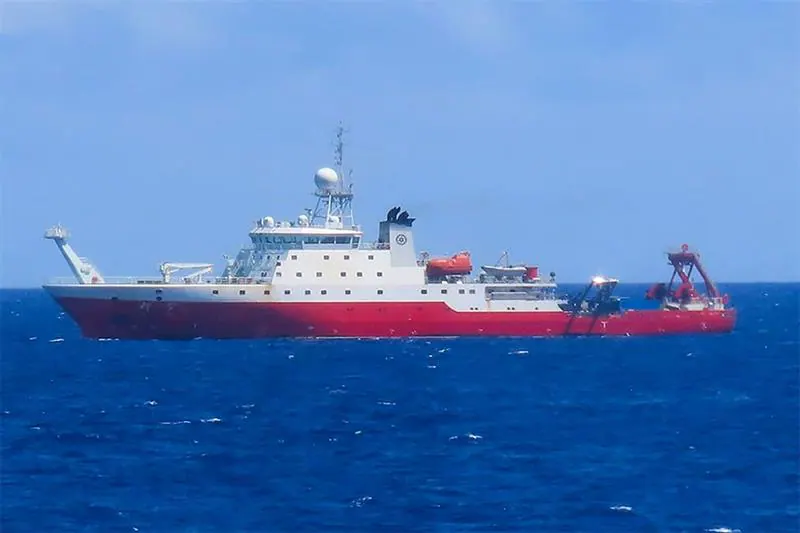
Japan's coast guard announced on October 6 that they had ordered a Chinese research vessel to leave the country's exclusive economic zone (EEZ). The vessel, named Kexue, was first spotted on September 27, approximately 70 kilometers north of Ishigaki Island in Okinawa Prefecture. The coast guard reported that the vessel was deploying cables into the sea, prompting concerns over unauthorized research operations.
According to Masashi Asano, a coast guard spokesperson, the vessel was conducting research without Tokyo's consent, violating the United Nations Convention on the Law of the Sea. The convention stipulates that scientific research in an EEZ requires the agreement of the state with exclusive rights to explore and exploit natural resources. Japan's coast guard sent radio messages to the vessel, demanding it cease operations and leave the area.
The incident is part of a growing trend of unauthorized research operations by Chinese vessels in Japan's EEZ. Asano reported that the number of such incidents has more than doubled compared to last year, with 14 cases recorded so far in 2026, compared to six in 2025, and only one or two cases in each of the previous three years. The increase in incidents has raised concerns about China's intentions and the potential impact on regional relations.
The timing of the incident is significant, as it coincides with Japan and the Philippines' announcement on May 28 to begin negotiations on their maritime boundary. Asano suggested that the frequency of unauthorized research operations has "surged" since then. The incident has also occurred against the backdrop of heightened tensions between Japan and China over territorial disputes, including the Senkaku Islands in the East China Sea.
The Senkaku Islands, administered by Tokyo but claimed by Beijing, have been a point of contention between the two nations. Japanese Prime Minister Sanae Takaichi has sought to stabilize relations with China, describing Beijing as an "important neighbor" in a recent policy speech. However, relations between the two nations have been strained since Takaichi suggested that Tokyo might intervene in the event of an attack on Taiwan, which China claims as part of its territory.
China's claims in the South China Sea have also been a source of tension, with Beijing asserting its rights to a significant portion of the sea despite an international ruling that its claims are unfounded. The incident has highlighted the need for clear communication and cooperation between nations to prevent misunderstandings and potential conflicts.
The Japanese coast guard's actions demonstrate the country's commitment to protecting its territorial waters and upholding international law. As tensions continue to simmer in the region, it remains to be seen how Japan and China will navigate their complex relationship and address the issue of unauthorized research operations in Japan's EEZ.
Key points
- Japan's coast guard ordered a Chinese research vessel to leave its exclusive economic zone due to unauthorized research operations.
- The incident is part of a growing trend of unauthorized research operations by Chinese vessels in Japan's EEZ.
- The timing of the incident coincides with heightened tensions between Japan and China over territorial disputes.