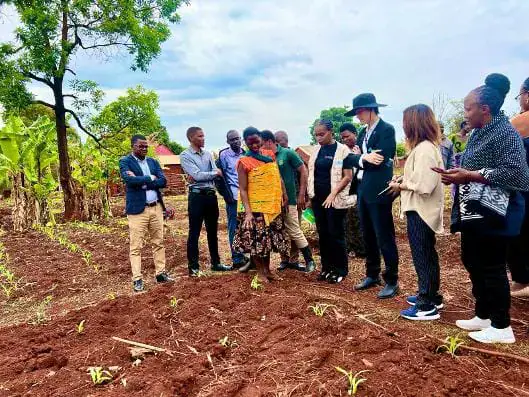
A joint field visit by representatives of the Government of Japan and UN Women to Kigoma Region on November 11 and 12 assessed progress under an initiative aimed at strengthening gender-responsive disaster preparedness and climate resilience. The project, implemented by UN Women in partnership with the Government of Tanzania and Kigoma regional authorities, seeks to improve communities' capacity to anticipate, prepare for and respond to climate-related disasters.
The initiative recognises that climate-related disasters do not affect everyone equally, with women often facing additional challenges due to limited access to resources, information, economic opportunities and decision-making platforms. Lilian Mwamdanga, Programme Specialist for Women's Economic Empowerment at UN Women Tanzania, said addressing these inequalities was essential to strengthening household livelihoods and building communities capable of withstanding and recovering from disasters.
One of the project's major interventions is improving agricultural livelihoods through climate-resilient farming methods. More than 700 farmers from 20 wards have been identified and supported through training programmes covering climate-smart agriculture, soil and water conservation, post-harvest management and community disaster preparedness. Women constitute a significant proportion of the participating farmers, reflecting the importance of their involvement in agricultural development and efforts to protect rural livelihoods against climate-related shocks.
The project has supplied participating farmers with seeds and other agricultural inputs to help them apply the knowledge acquired during the current planting season. At demonstration plots and family farms in Msambara Ward, the delegation observed farmers applying conservation techniques as they prepared for the challenges associated with changing weather patterns.
The importance of such interventions is particularly evident among households that have experienced substantial agricultural losses following extreme weather events. One woman farmer, who lost her entire harvest during last year's floods, has returned to farming after receiving training and agricultural inputs through the project. Her experience illustrates how climate-related disasters can undermine household food security and income.
To achieve the project's broader objective of strengthening communities' ability to anticipate and manage disasters, it is supporting local disaster management committees and promoting women's participation in community planning and decision-making. These committees play an important role in coordinating preparedness activities, identifying potential hazards and supporting responses when emergencies arise.
A draft Gender-Responsive Disaster Risk Reduction Framework for Kigoma Region has been prepared to provide guidance on incorporating gender equality into disaster preparedness, response and recovery. The proposed framework identifies seven priority areas: disaster risk data, governance, women's leadership, financing, early warning systems, economic recovery and protection against gender-based violence.
Key points
- The project aims to improve communities' capacity to anticipate, prepare for and respond to climate-related disasters.
- Women are being empowered to participate meaningfully in decisions affecting their livelihoods, safety and wellbeing.
- A Gender-Responsive Disaster Risk Reduction Framework has been prepared to guide disaster preparedness and response efforts in Kigoma Region.