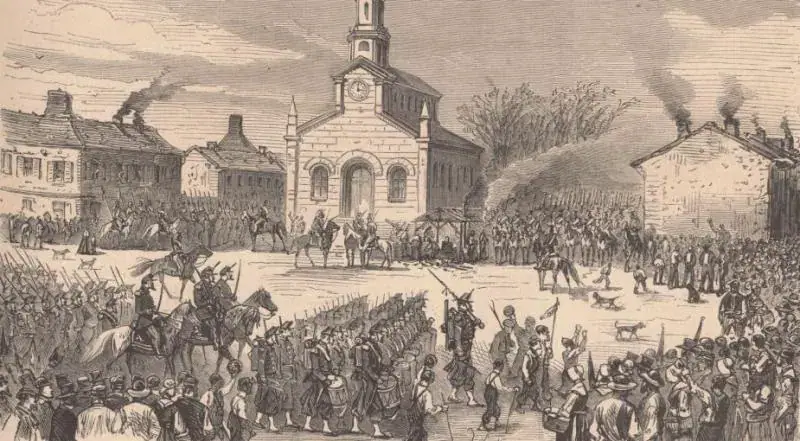
In January 1870, a significant labor uprising occurred at the Schneider factories in Le Creusot, France. The workers, who numbered around 10,000, were dissatisfied with the management of their welfare fund, to which they contributed 2.5% of their salaries. They demanded the right to manage the fund themselves, but Eugène Schneider, the factory owner and Minister of Commerce, initially appeared to accept their demands before appointing loyal foremen to oversee the fund.
The workers were frustrated with Schneider's actions and felt that he was not taking their demands seriously. A committee, led by Adolphe Assi, a mechanic, was elected to manage the welfare fund. However, when Assi was dismissed, the workers went on strike on January 21. The strike was part of a larger trend of labor unrest in 19th-century France, with workers increasingly demanding better working conditions and greater control over their lives.
The strike in Le Creusot was marked by a series of public meetings and discussions, with Assi presiding over the gatherings. When he was dismissed, the workers quickly responded by walking out of the factory. Schneider agreed to meet with the workers' delegates, but refused to negotiate with them, stating that he did not recognize their authority. The workers presented three demands: control over the welfare fund, the reinstatement of dismissed workers, and the dismissal of a hostile foreman.
The French government responded to the strike by sending 4,000 troops to Le Creusot. The presence of armed soldiers brought an end to the strike, which had remained peaceful until that point. Many workers were subsequently dismissed or penalized for their involvement in the strike. The crackdown was widely criticized, with some politicians, including Léon Gambetta, expressing concerns about the government's actions.
Despite the immediate defeat of the strike, the event had a lasting impact on the French labor movement. The strike and subsequent government response highlighted the need for workers to organize and demand better working conditions. In the months that followed, other workers in the region, including miners, went on strike, inspired by the example set by the Le Creusot workers.
The strike also drew attention from the media, with some conservative newspapers welcoming the return to work. However, others noted that the underlying tensions remained, and that the strike had highlighted the need for greater understanding and dialogue between workers and employers. The event marked an important turning point in the development of the French labor movement, highlighting the need for workers' rights and greater social justice.
The legacy of the Le Creusot strike can be seen in the many labor movements that followed. The strike demonstrated the power of collective action and the importance of workers' organization. It also highlighted the need for employers and governments to listen to workers' demands and to address their concerns in a constructive and meaningful way. The event remains an important milestone in the history of the French labor movement.
Key points
- The Le Creusot strike was a significant labor uprising that took place in January 1870, with workers demanding control over their welfare fund and greater autonomy in the workplace.